
Art · Chapter 4
After the window
Hokusai, Monet, Van Gogh, and Cézanne change what a view can be. Hilma af Klint and Kandinsky drop the view. Picasso breaks the single standpoint.
Vincent van Gogh, “The Starry Night”, Public domain, via Wikimedia Commons
A print, four painters of looking, two painters of spirit who are not the same sentence, and one name this chapter will not illustrate.
Hokusai
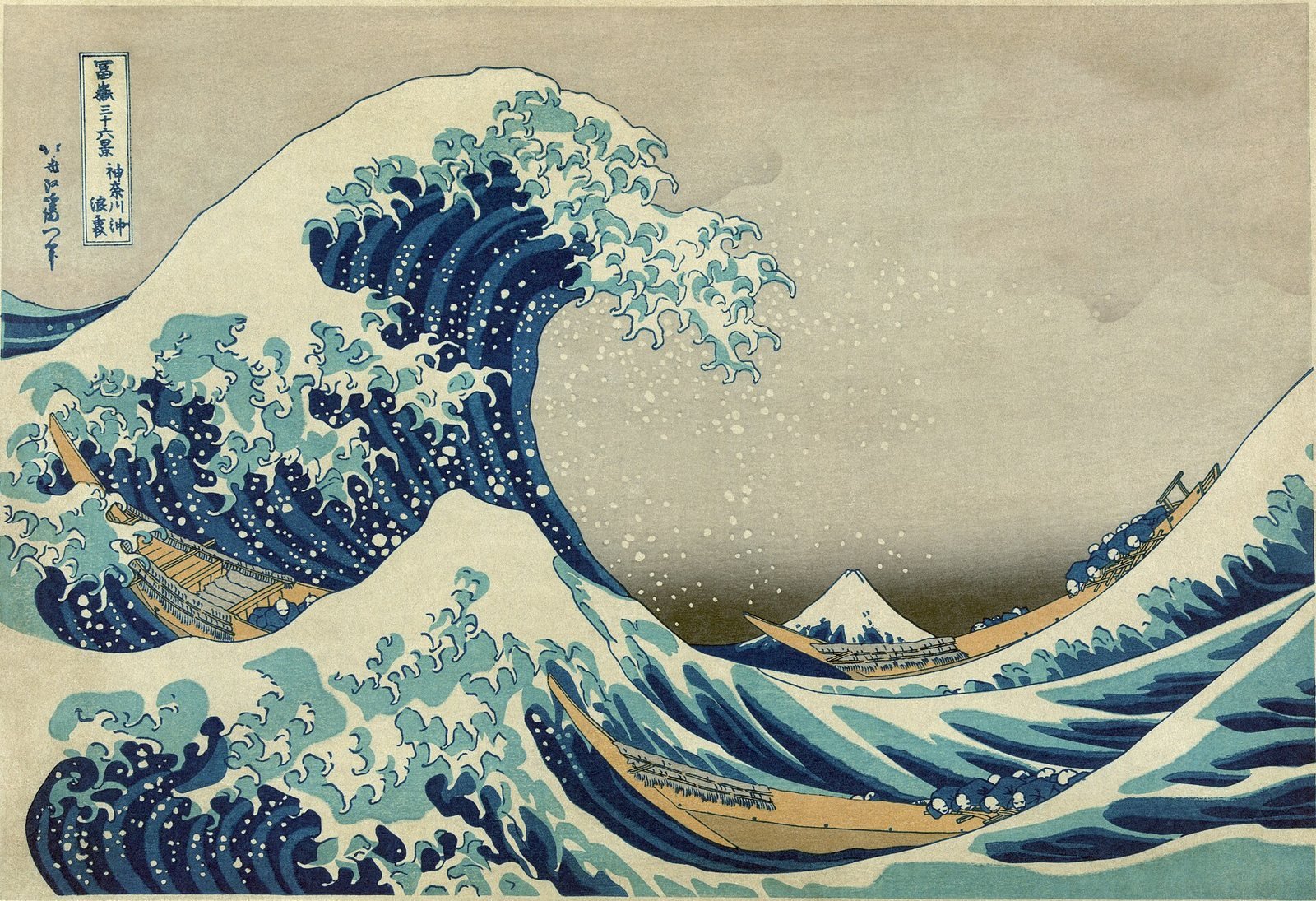
Katsushika Hokusai, 1760 to 1849, designed Under the Wave off Kanagawa around 1831, one sheet of Thirty-six Views of Mount Fuji. It is a colour woodblock, made to be printed many times. The wave is the foreground. Fuji sits small and still inside the curve. The Metropolitan Museum of Art holds an impression and places the series around 1830 to 1832. A print is a picture and a published object at the same time.
Monet
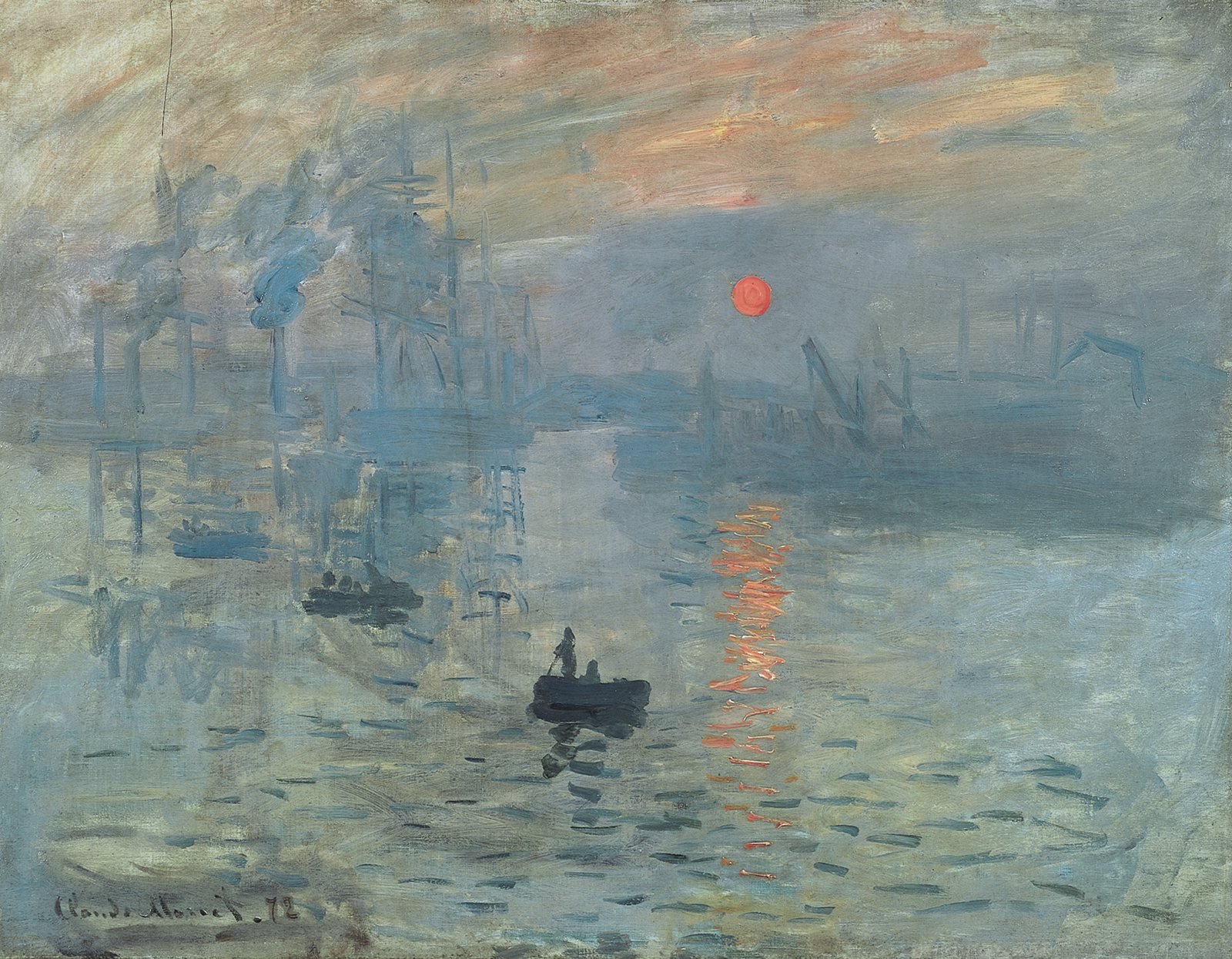
Claude Monet, 1840 to 1926, painted Impression, Sunrise in 1872. It hangs at the Musée Marmottan Monet in Paris: a harbour, an orange sun, a few strokes of boats. In 1874 a critic used the title as a slight, and the slight became the name Impressionism. The canvas is small. The late water-lily rooms at the Orangerie give the same attention to light a whole wall.
Van Gogh
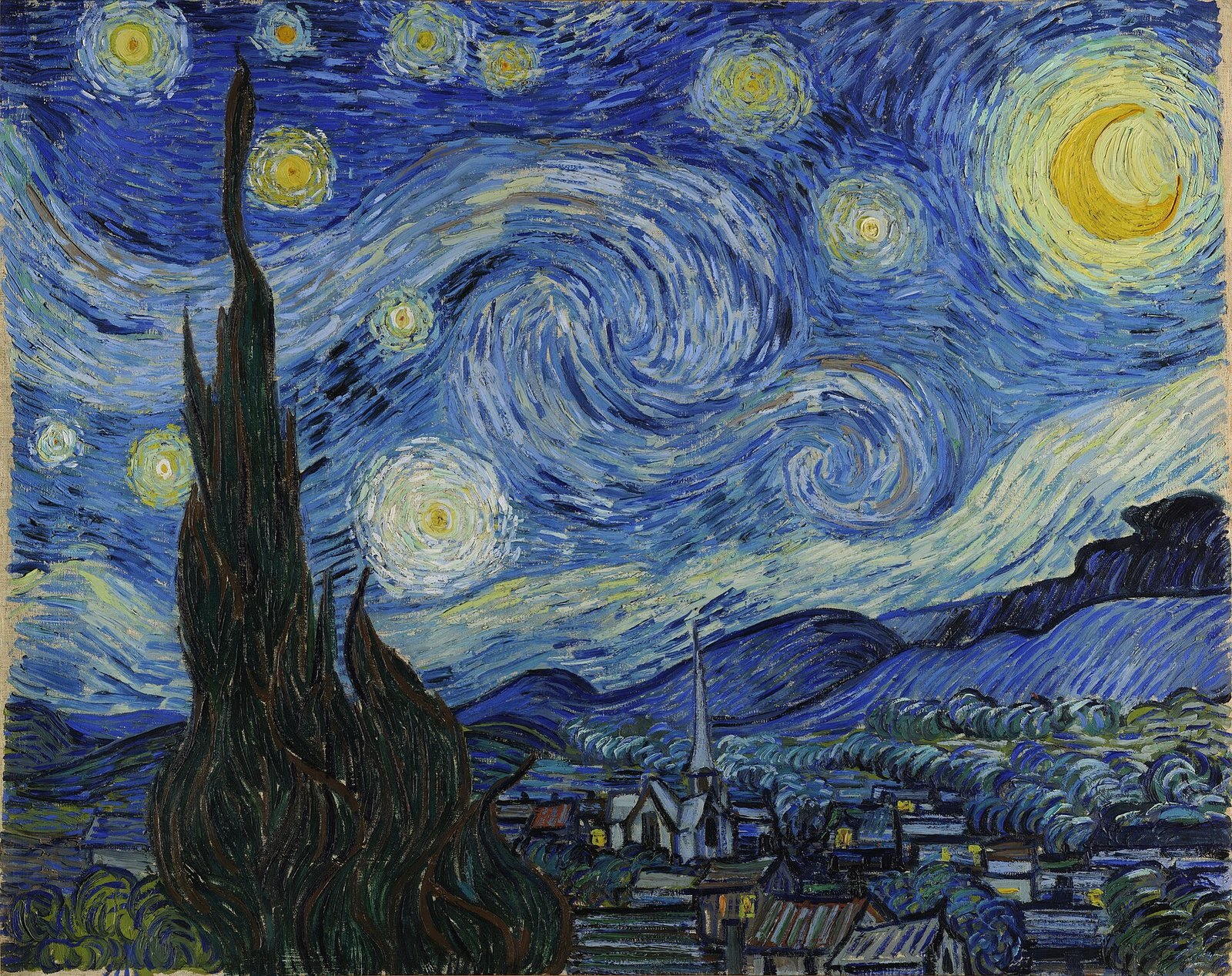
Vincent van Gogh, 1853 to 1890, painted The Starry Night in June 1889 while he was at the asylum in Saint-Rémy. The Museum of Modern Art in New York holds it. Cypress, village, and sky are all in motion. His letters to his brother Theo, published by the Van Gogh Museum, are his own account of the work and the days. Those letters are the place to hear him. A film is a later voice.
Cézanne
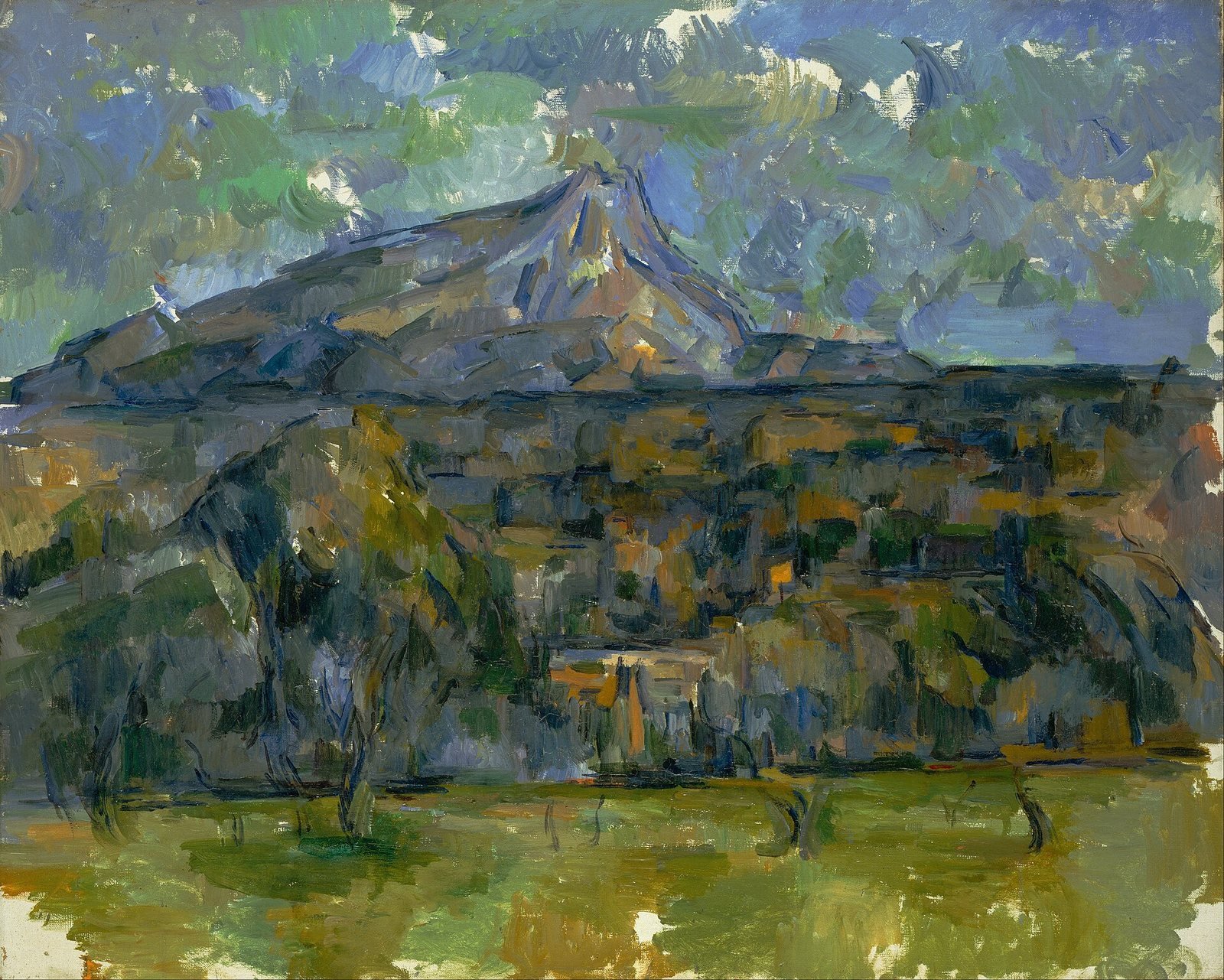
Paul Cézanne, 1839 to 1906, painted Mont Sainte-Victoire, the mountain near Aix, again and again from the 1880s until his death. The mountain stays. Patches of colour do the drawing. Picasso and Braque, in the next generation, treated those late landscapes as a way into a picture built from facets. That debt belongs to their looking. Cézanne’s canvases do not describe Cubism. The painters who came after him did.
Hilma af Klint
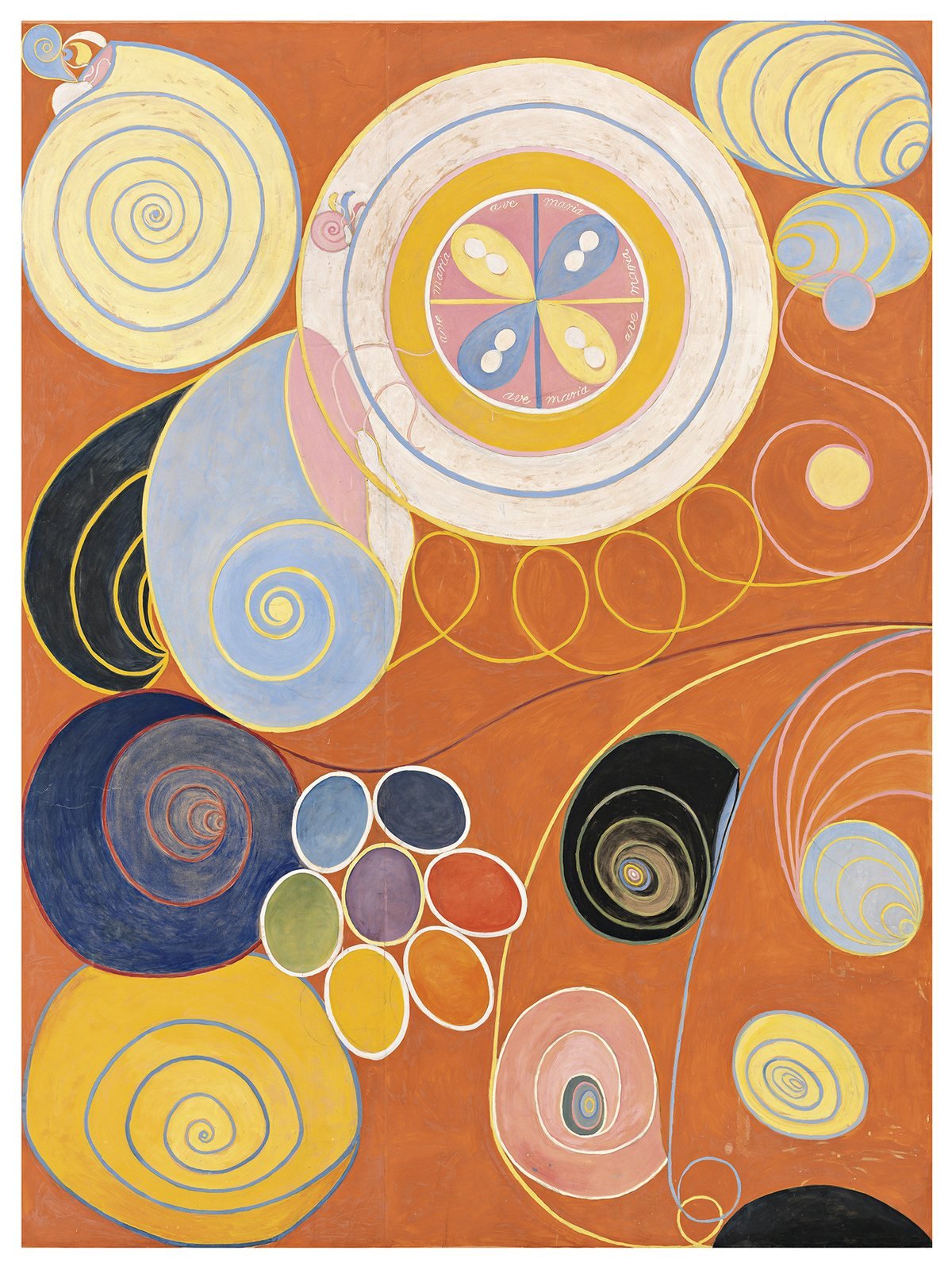
Hilma af Klint, 1862 to 1944, painted The Ten Largest in 1907, huge canvases inside a project she called Paintings for the Temple. No. 3 is titled Youth. She worked in a spiritualist circle and understood the pictures as received, and she asked that they not be shown until twenty years after her death. A public history of abstract painting often starts with Kandinsky around 1911. Her series is earlier, and it was made as a spiritual practice. The Guggenheim’s exhibition of 2018 is what put that order in front of a large public. The paintings are hers. The claim that a spirit dictated them stays her claim.
Kandinsky
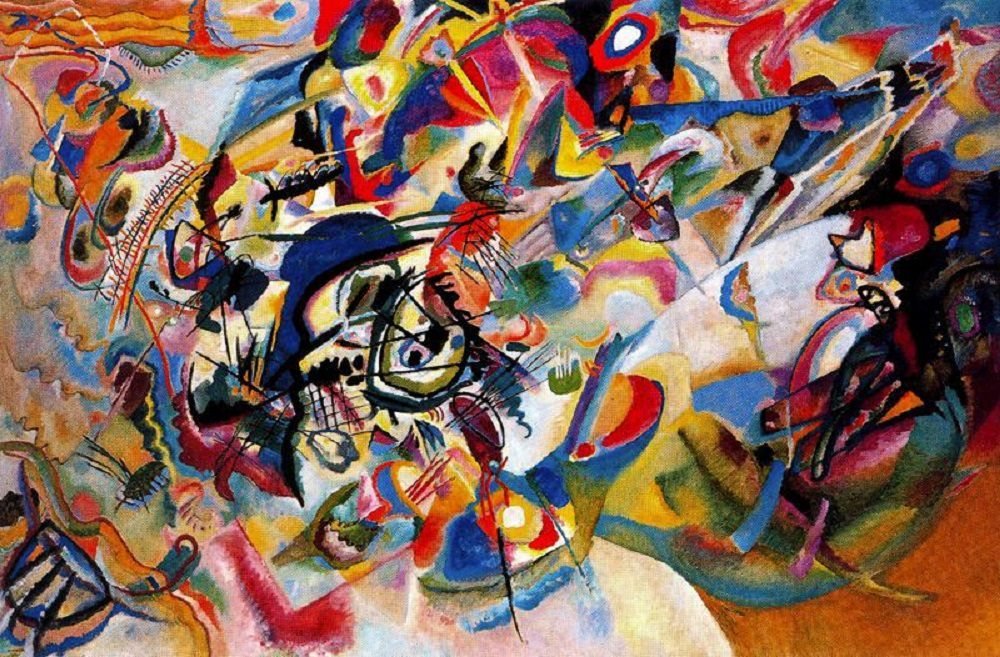
Wassily Kandinsky, 1866 to 1944, published Concerning the Spiritual in Art in 1911. He argued that colour and line could carry meaning without depicting an object. Composition VII, of 1913, in the Tretyakov Gallery in Moscow, is one of the large canvases that follow the book. The book is a teaching about painting. The canvas is the object. His “spiritual” and af Klint’s are two different practices, even where the word is shared.
Picasso, named and not shown
Pablo Picasso, 1881 to 1973, painted Les Demoiselles d’Avignon in 1907. It is in the Museum of Modern Art. With Georges Braque he then built Cubism, more than one viewpoint on a single surface. Guernica, 1937, painted after the bombing of the Basque town, hangs at the Museo Reina Sofía in Madrid. His canvases remain in copyright, so this page names them and reproduces none. The break they mark is the end of the single window.
Sources
- The Metropolitan Museum of Art. “Under the Wave off Kanagawa, Katsushika Hokusai.” www.metmuseum.org. Accessed 28 October 2026.
- Musée Marmottan Monet. “The museum of Monet, including Impression, Sunrise.” www.marmottan.fr. Accessed 28 October 2026.
- The Museum of Modern Art. “The Starry Night, Vincent van Gogh.” www.moma.org. Accessed 28 October 2026.
- Van Gogh Museum. “Vincent van Gogh: The Letters.” vangoghletters.org. Accessed 28 October 2026.
- Solomon R. Guggenheim Museum. “Hilma af Klint exhibition.” www.guggenheim.org. Accessed 28 October 2026.
- Solomon R. Guggenheim Museum. “Vasily Kandinsky.” www.guggenheim.org. Accessed 28 October 2026.
- The Museum of Modern Art. “Les Demoiselles d’Avignon, Pablo Picasso.” www.moma.org. Accessed 28 October 2026.
- Museo Nacional Centro de Arte Reina Sofía. “Guernica, Pablo Picasso.” www.museoreinasofia.es. Accessed 28 October 2026.