
Art · Chapter 3
Light
Caravaggio, Vermeer, Rembrandt, Velázquez, and Turner each make light do the work that a story used to do.
Five pictures, five rooms: a chapel in Rome, the Mauritshuis, the Rijksmuseum, the Prado, and the National Gallery in London.
Caravaggio
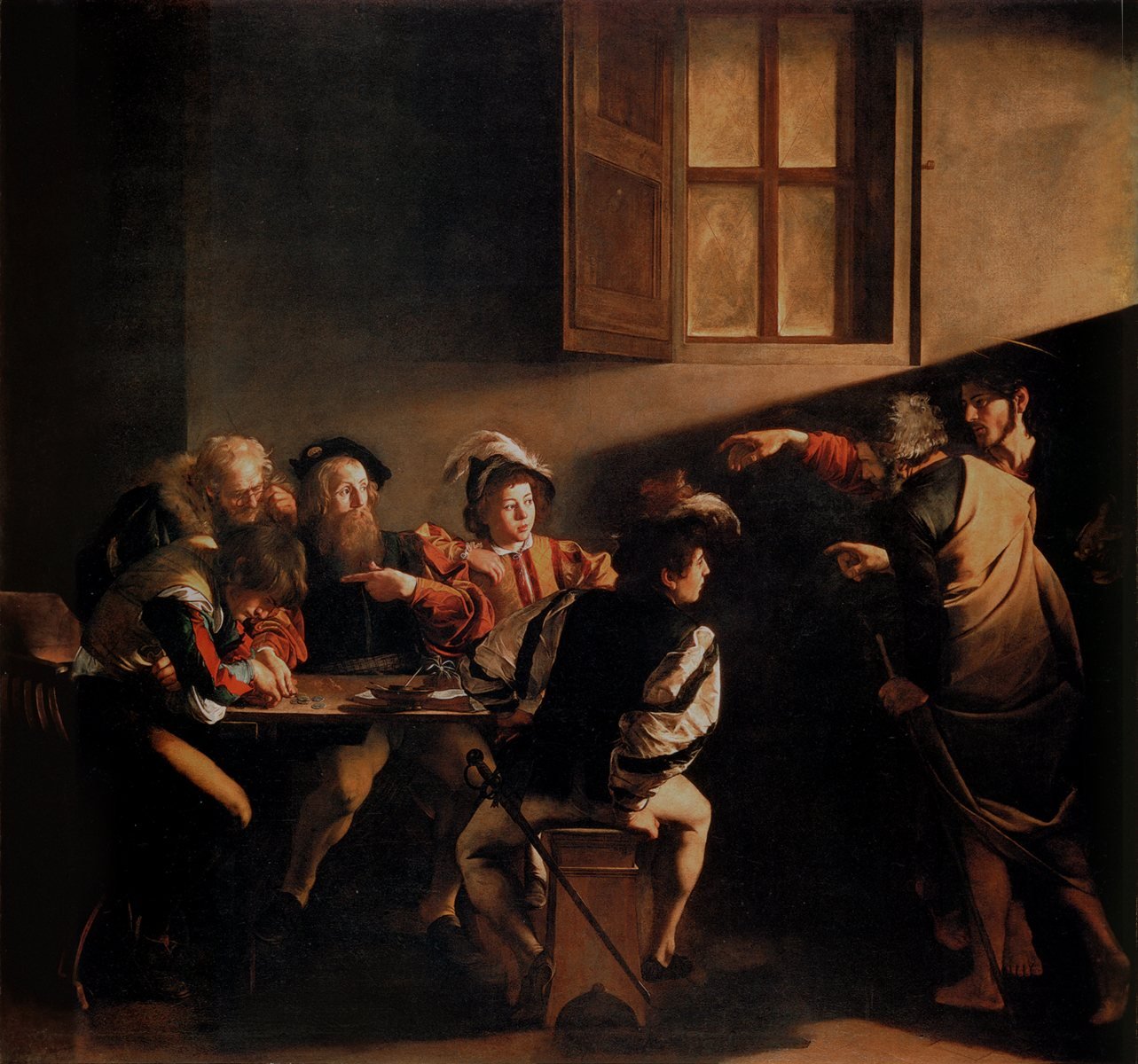
Michelangelo Merisi, called Caravaggio, lived from 1571 to 1610. He painted The Calling of Saint Matthew for the Contarelli Chapel of San Luigi dei Francesi in Rome in 1599 and 1600. A band of light crosses a room of men in the clothes of his own time. Matthew’s hand is still among the coins. The light is the event the picture was built to deliver, in a chapel dark enough for it to arrive.
Vermeer
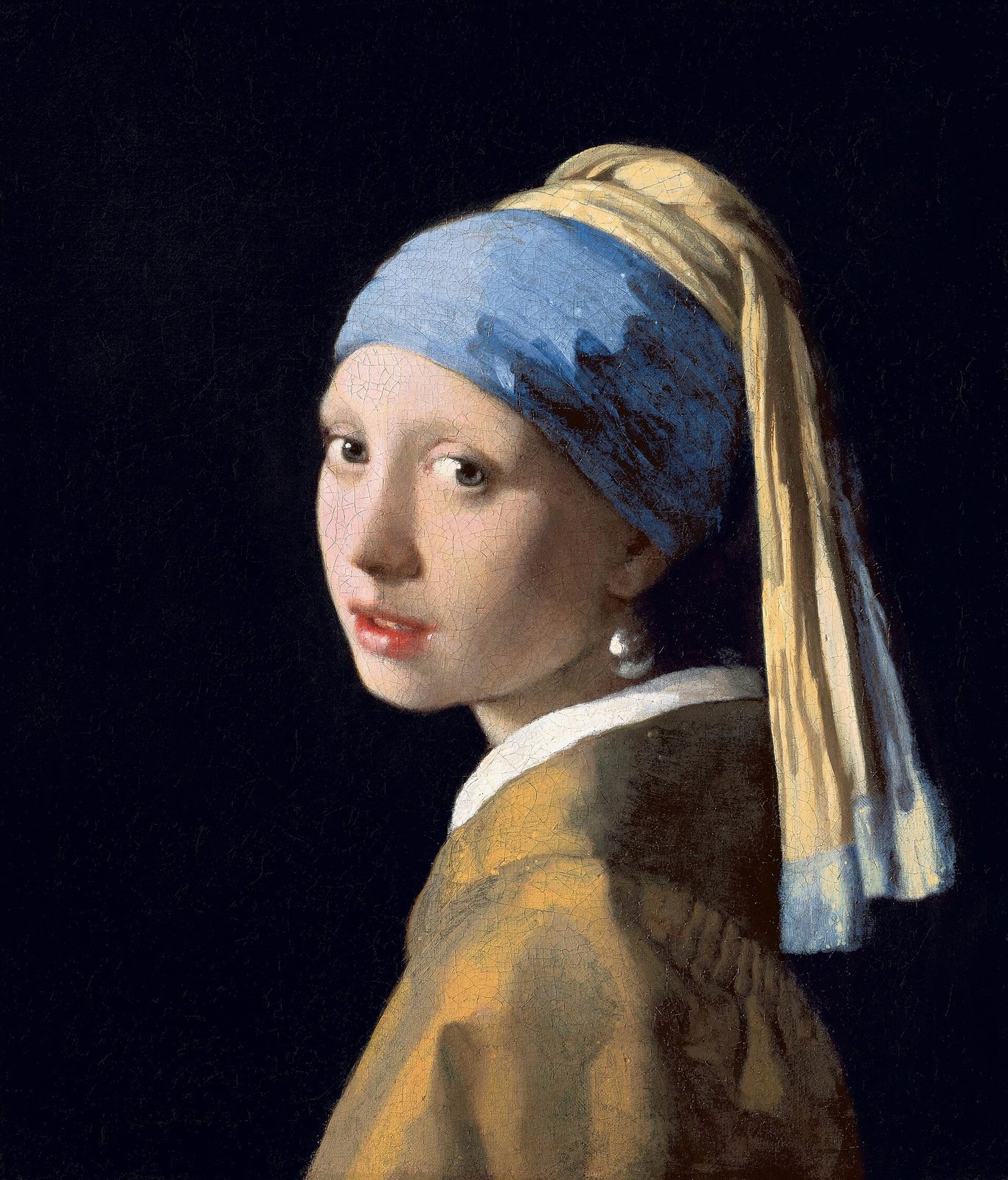
Johannes Vermeer, 1632 to 1675, worked in Delft. The Mauritshuis in The Hague holds Girl with a Pearl Earring, dated about 1665. The paintings scholars accept as his number only in the thirties. The turban, the pearl, and the turn of the head are the whole occasion. Novels and films have since given her a life. The panel does not tell that life. It tells a turn of the face in a dark room.
Rembrandt
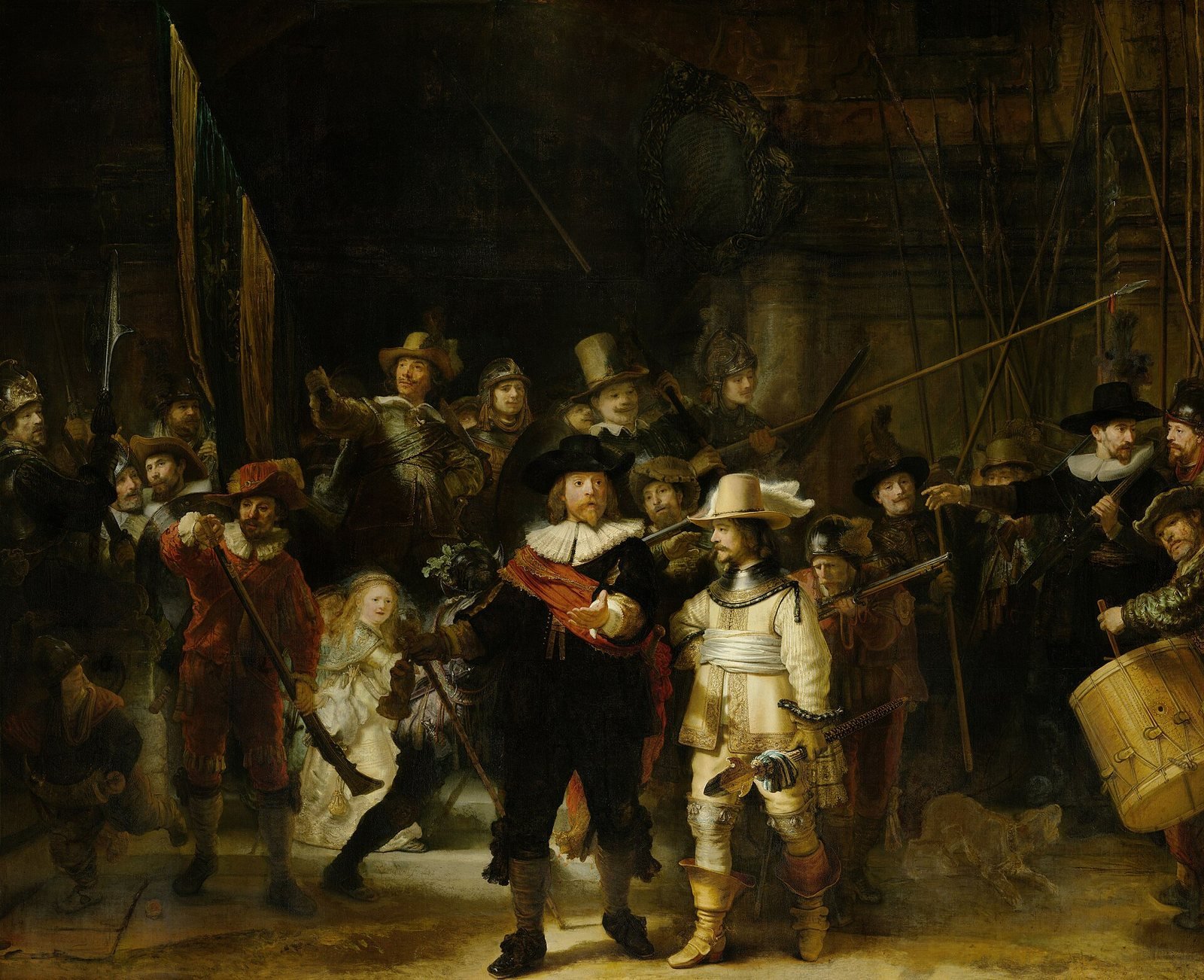
Rembrandt van Rijn, 1606 to 1669, painted a civic-guard portrait in 1642 that the Rijksmuseum still holds. The museum’s title is Militia Company of District II under the Command of Captain Frans Banninck Cocq. The nickname Night Watch settled on the canvas while dirty varnish made the daylight look like night. A captain in black and a lieutenant in pale yellow step forward through a press of men, a child, and a dog. It is a company portrait arranged as a movement.
Velázquez
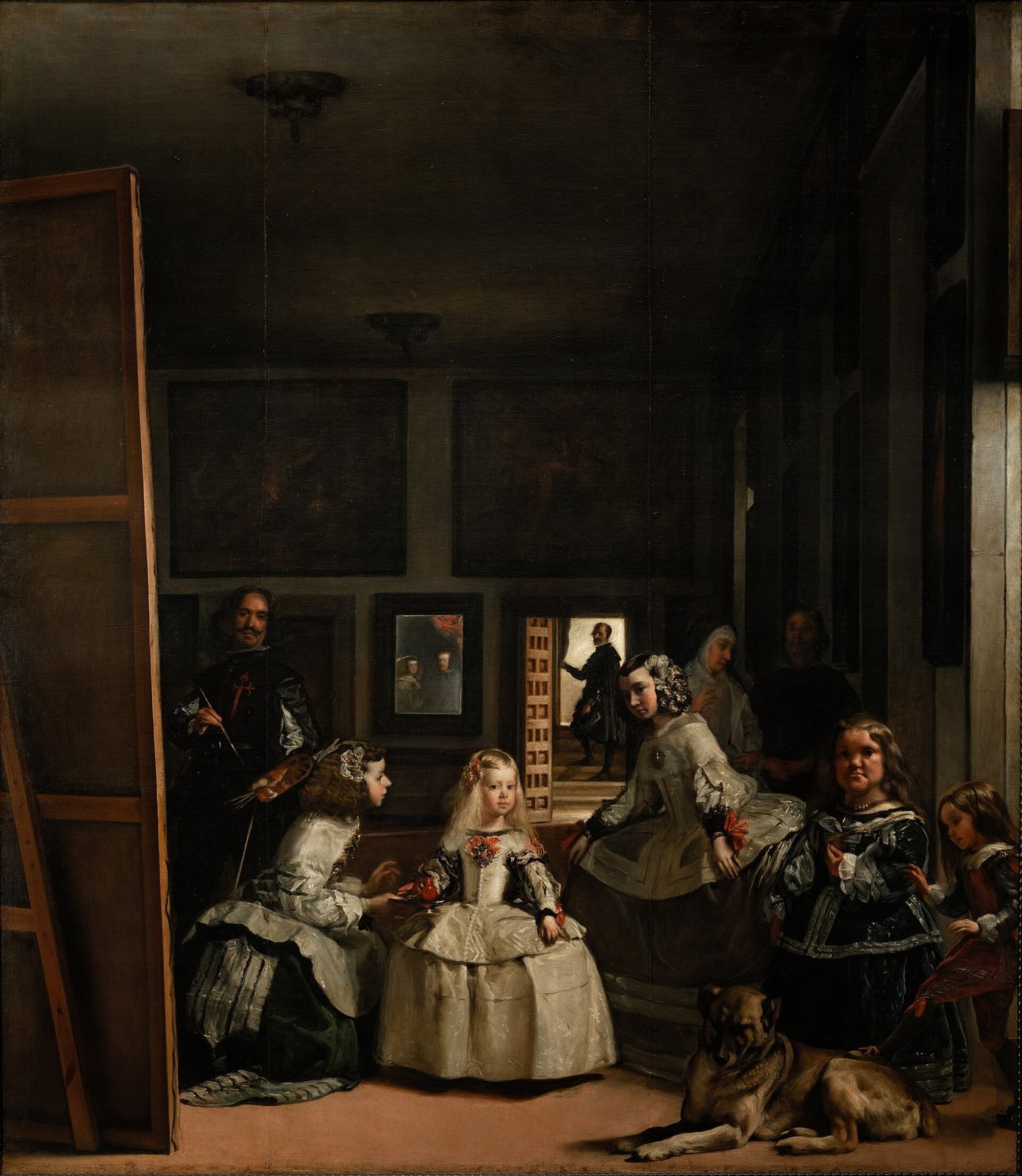
Diego Velázquez, 1599 to 1660, court painter to Philip IV, painted Las Meninas in 1656. It hangs in the Prado. He stands at a canvas inside the picture. The infanta and her maids occupy the foreground. The king and queen appear as a reflection in a mirror on the back wall. Who is being looked at is a question the picture builds, rather than a riddle added by a caption. The Prado’s entry is the catalogue record.
Turner
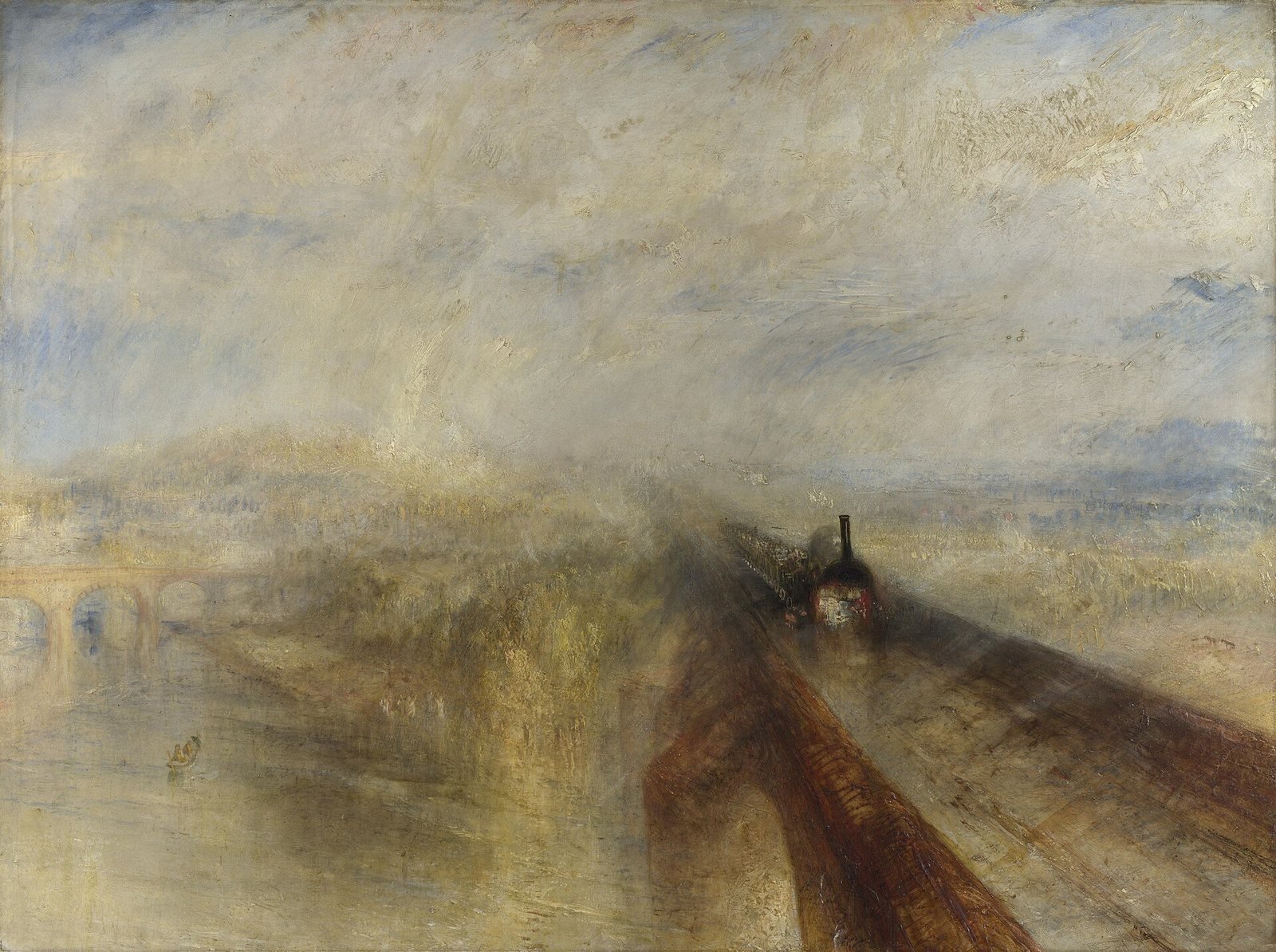
J. M. W. Turner, 1775 to 1851, painted Rain, Steam and Speed — The Great Western Railway in 1844. It hangs in the National Gallery in London. A train crosses a bridge, and the weather is doing as much of the picture as the engine. The Tate holds the Turner Bequest, the contents of his studio left to the public, which is why so many of his works sit in one city. This canvas is the one that puts a new machine inside a sky.
Sources
- Mauritshuis. “Girl with a Pearl Earring, Johannes Vermeer.” www.mauritshuis.nl. Accessed 28 October 2026.
- Rijksmuseum. “The Night Watch, Militia Company of District II under the Command of Captain Frans Banninck Cocq.” www.rijksmuseum.nl. Accessed 28 October 2026.
- Museo Nacional del Prado. “Las Meninas, Diego Velázquez.” www.museodelprado.es. Accessed 28 October 2026.
- The National Gallery, London. “Rain, Steam, and Speed — The Great Western Railway, J. M. W. Turner.” www.nationalgallery.org.uk. Accessed 28 October 2026.