
Art · Chapter 2
The figure
Giotto gives the body weight. Leonardo, Michelangelo, and Raphael each take that body somewhere else. Artemisia Gentileschi signs her own Judith.
Leonardo da Vinci, “Mona Lisa”, Public domain, via Wikimedia Commons
These five are the European high point of the observed figure, from a chapel in Padua to a canvas in the Uffizi. Each work is still where the paragraph says it is.
Giotto, in a chapel still open
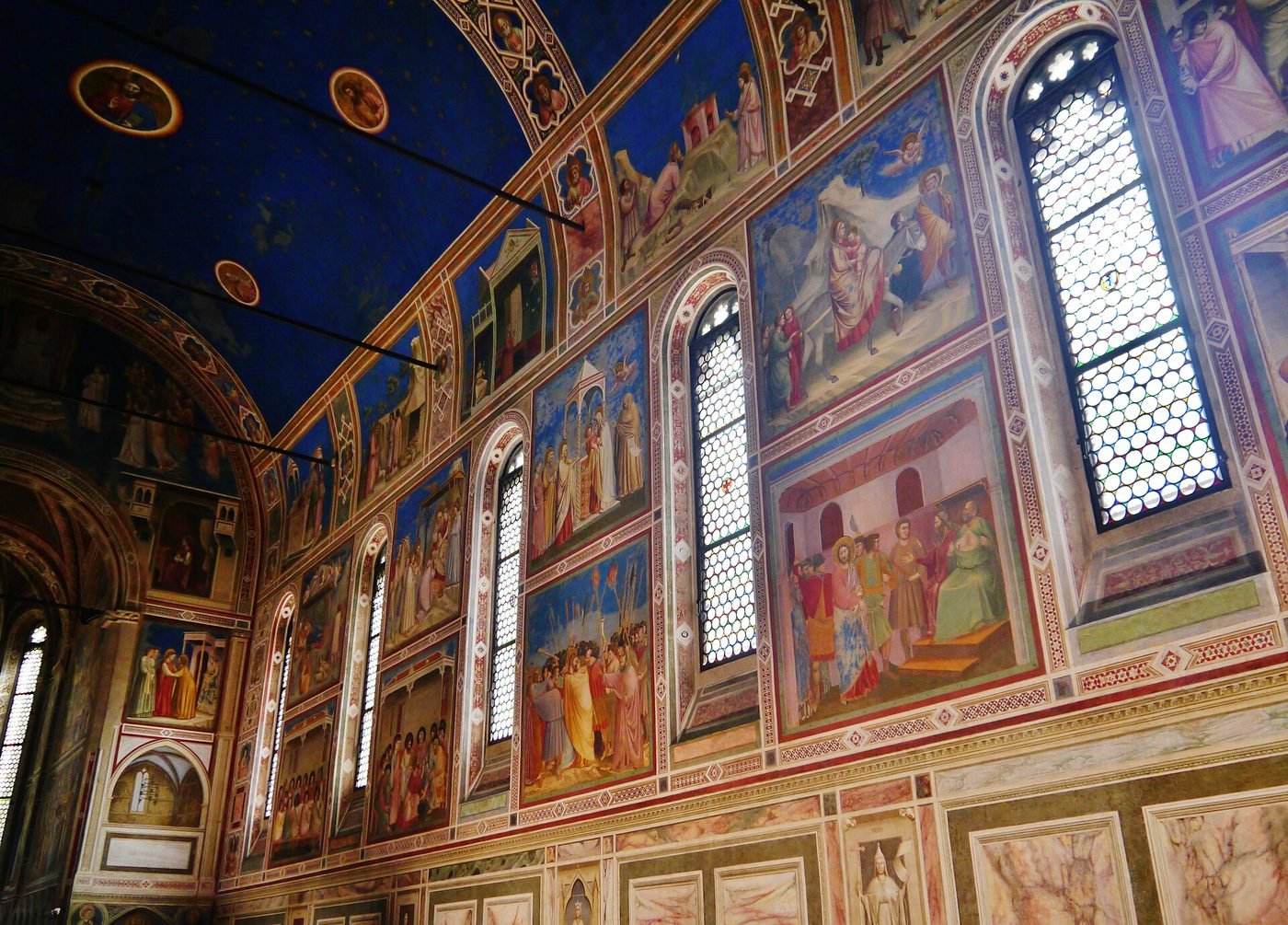
In Padua, Enrico Scrovegni had a chapel painted in the first years of the fourteenth century. The fresco cycle is generally dated about 1303 to 1305, and the chapel’s own site is the place to confirm a visit. Giotto’s figures stand on a ground, turn toward one another, and carry the weight of a body. Later historians of European painting treated the cycle as a turn away from the flat gold ground. That is a reading of one tradition. It leaves the rest of the world’s pictures in their own rooms.
Leonardo
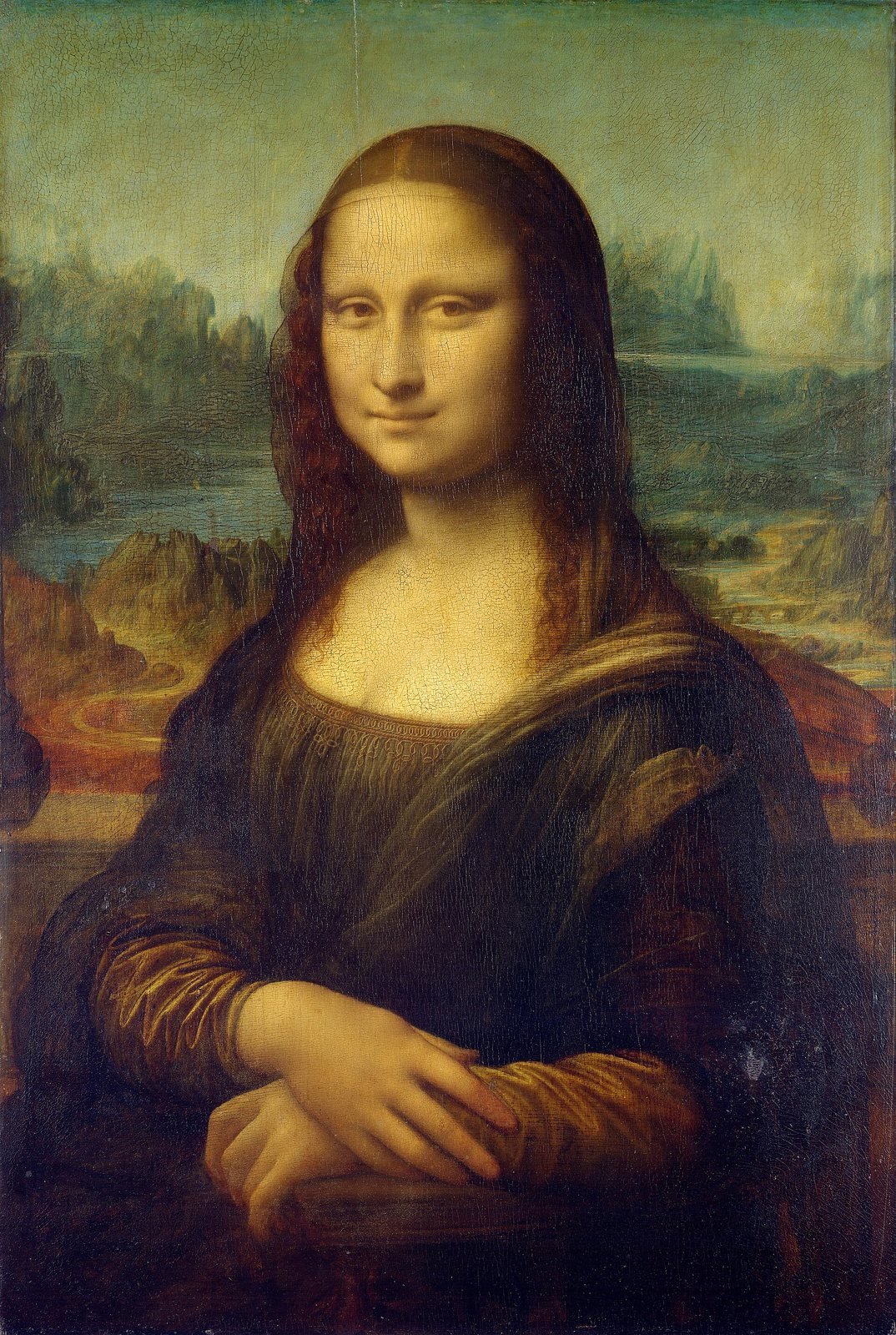
Leonardo da Vinci was born in 1452 and died in France in 1519. The Mona Lisa, in the Louvre, is the panel he kept with him. The museum dates it from about 1503 across his later years. The landscape behind her is weather, not a curtain. The Vitruvian Man, a drawing of about 1490 in the Gallerie dell’Accademia in Venice, sets a body inside a circle and a square. It is a study of proportion. A later writer who wants it to be the plan of a building has to bring the evidence for that plan.
Michelangelo, painter and architect
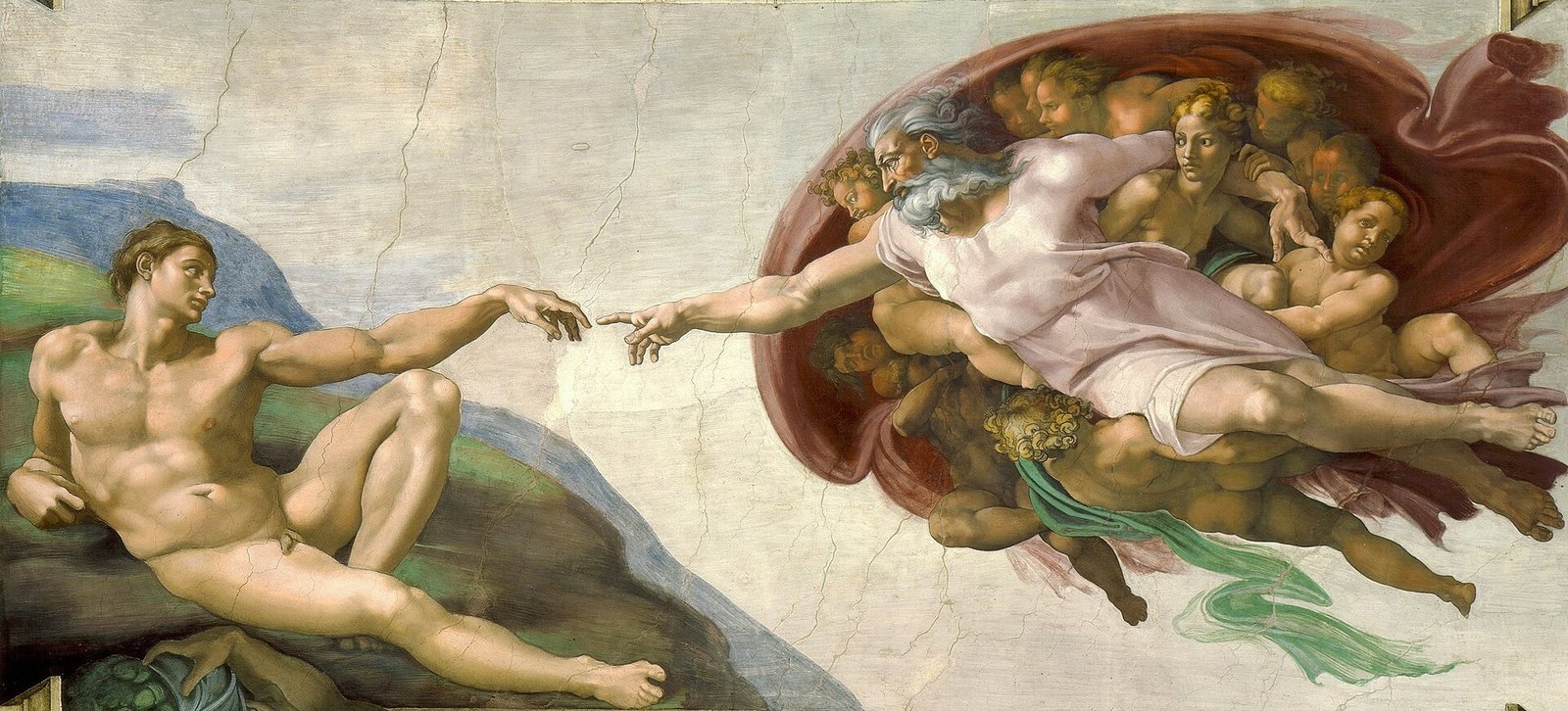
Michelangelo Buonarroti, 1475 to 1564, carved the Pietà for St Peter’s at the end of the 1490s and the David, now in the Galleria dell’Accademia in Florence, between 1501 and 1504. From 1508 to 1512 he painted the ceiling of the Sistine Chapel for Pope Julius II. The Creation of Adam is one scene on that ceiling: two hands, a small gap, and a crowd of figures held in a cloak. From 1546 he directed the building of St Peter’s. The carver, the painter, and the architect are one working life, taken up at different ages.
Raphael’s hall of philosophers
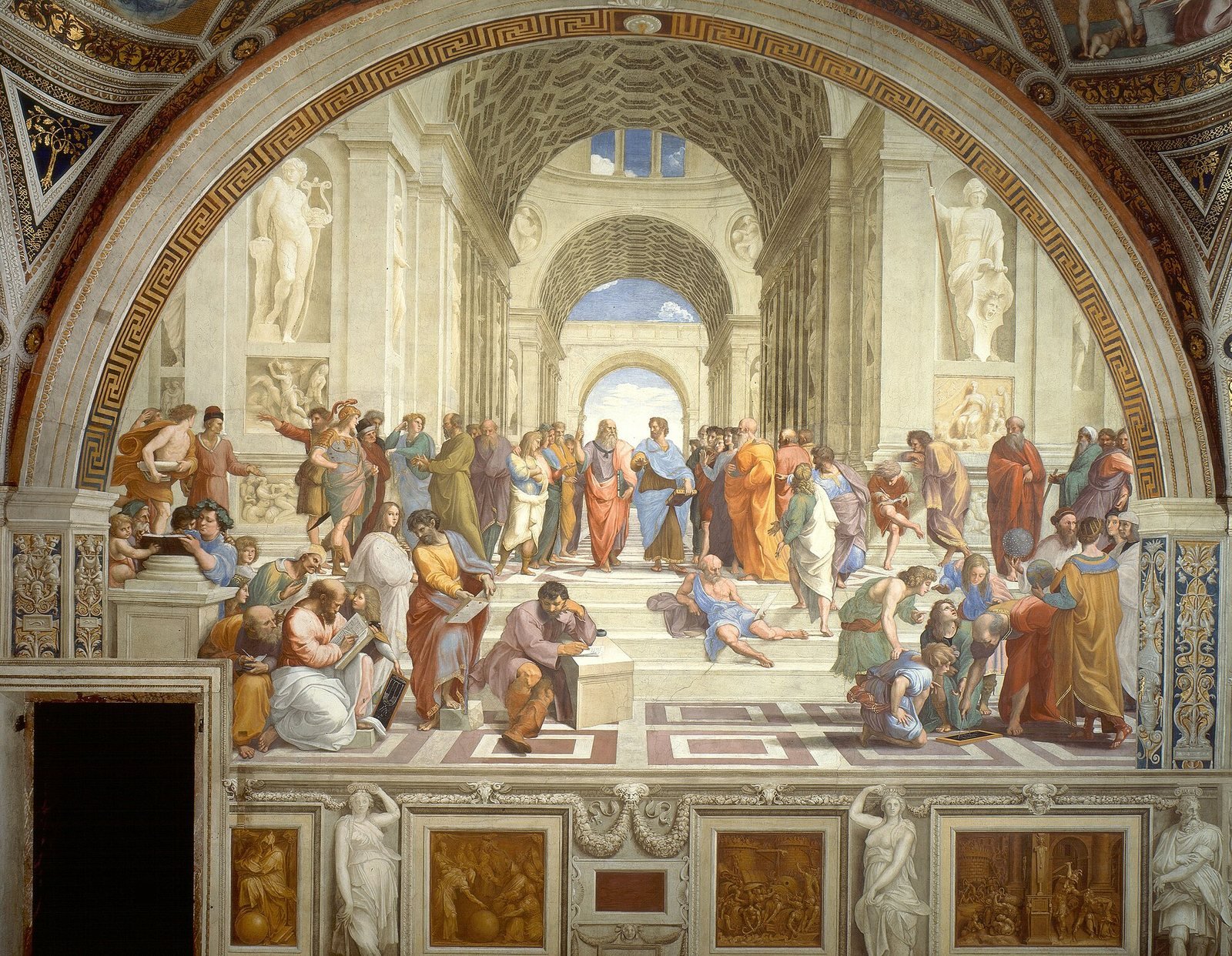
Raphael, 1483 to 1520, painted The School of Athens in the Stanza della Segnatura about 1509 to 1511. Plato and Aristotle walk at the centre of a painted architecture. Plato’s hand points upward. Aristotle’s hand stays level. The fresco gathers a library of philosophers into one room, for a pope’s apartment. Raphael puts Michelangelo into the company, and himself at the edge. A gathering in paint is the painter’s choice of who belonged there.
Artemisia Gentileschi
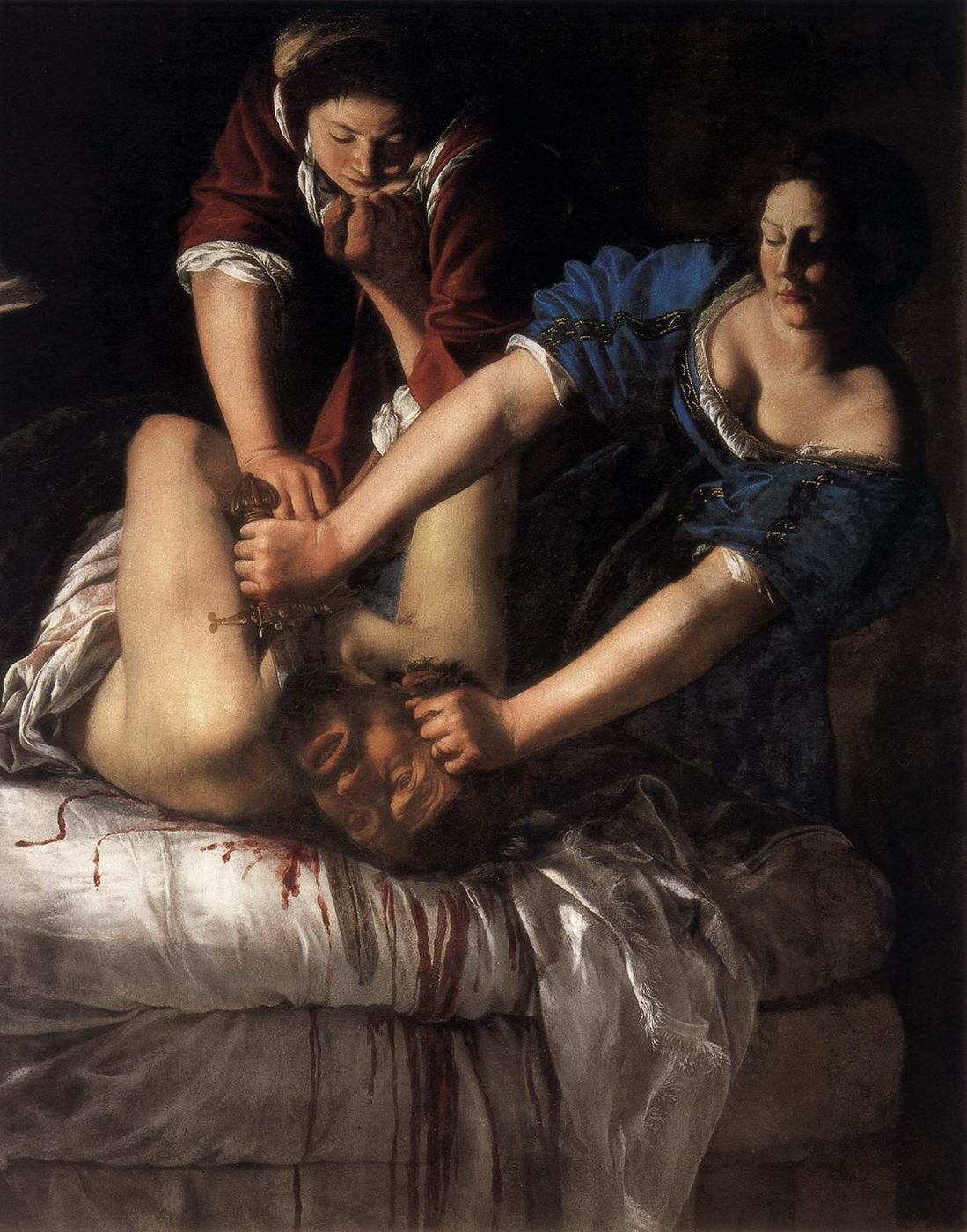
Artemisia Gentileschi, 1593 to about 1656, kept a workshop and signed canvases. The Uffizi’s Judith Beheading Holofernes, painted around 1620, is the picture most often asked to stand for her whole career. Judith and her servant do the work of the story with their arms. The subject was already a common one. The painting is a history picture of its century, made with a command of bodies in strain. The Uffizi’s page is the catalogue record to start from.
Sources
- Cappella degli Scrovegni. “The Scrovegni Chapel, Padua.” www.cappelladegliscrovegni.it. Accessed 28 October 2026.
- Musée du Louvre. “Portrait of Lisa Gherardini, wife of Francesco del Giocondo, known as the Mona Lisa.” collections.louvre.fr. Accessed 28 October 2026.
- Vatican Museums. “Sistine Chapel.” www.museivaticani.va. Accessed 28 October 2026.
- Vatican Museums. “The School of Athens, Stanza della Segnatura.” www.museivaticani.va. Accessed 28 October 2026.
- Le Gallerie degli Uffizi. “Judith Beheading Holofernes, Artemisia Gentileschi.” www.uffizi.it. Accessed 28 October 2026.