
History · Chapter 11
The sites, the Americas
People walked at White Sands about 22,000 years ago. Lidar has mapped pre-Hispanic cities under Amazon forest. Those finds rewrite an empty-continent textbook. They do not, by themselves, prove a lost Ice Age donor culture.
Photograph-like image made for this site. Not a licensed travel photo.
Where the two lanes meet, archaeology and the series agree. Where a dotted line runs, the claimed age rests on sea level, star alignment, or disputed cores, not on a dated layer.
White Sands and Amazon lidar rewrote the old empty-continent picture. takes that rewrite as a door to an Ice Age culture that taught the rest. The footprints are dated. The donor civilisation is his step. Palenque’s calendars are Maya. A reported Bashar line that the original Maya came from off Earth is a different sentence, answered by bone.
Watch A Stranger in a Time of Chaos on Netflix. Watch The Americas on Netflix. The series stays with the publisher.
White Sands, New Mexico
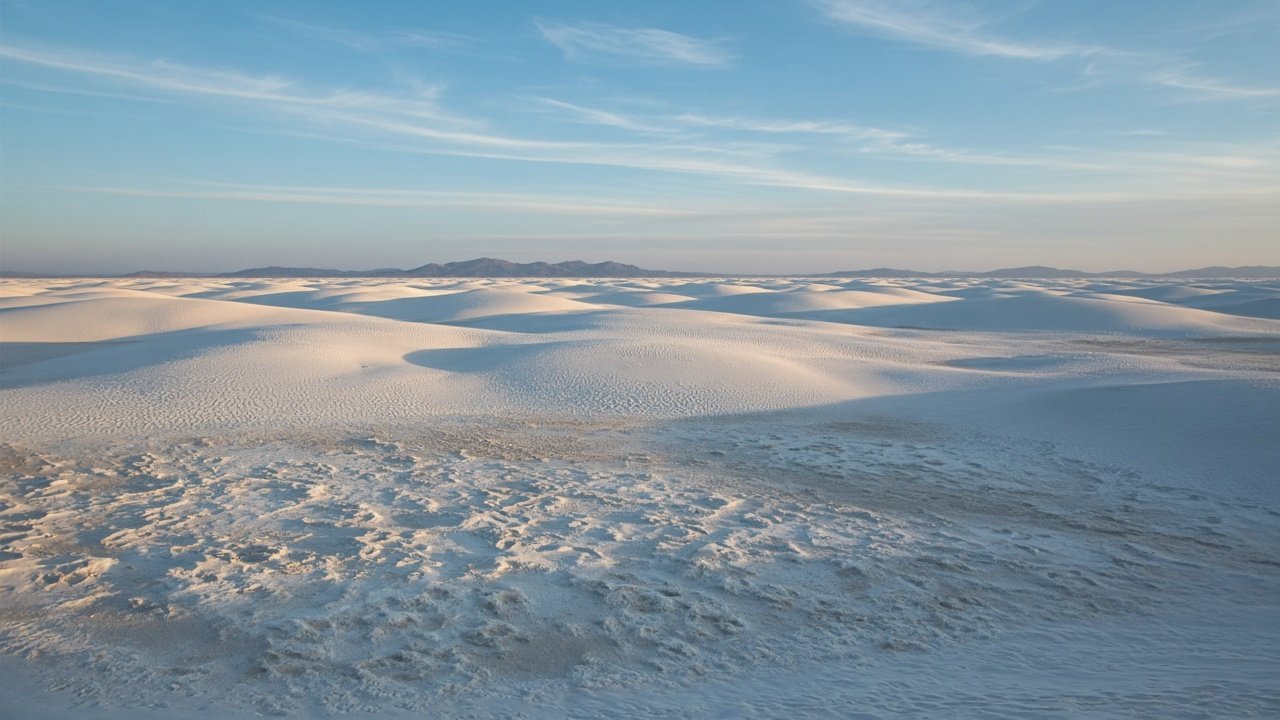
Human footprints in the gypsum of an old lake at White Sands were dated by seeds in 2021 (Bennett and colleagues) and confirmed by pollen and quartz in 2023 (Pigati and colleagues). About 23,000 to 21,000 years ago, people were walking south of the ice. That is older than the textbook Clovis-first story, and it is not a reading. reports it as ground, correctly. The inference he adds is that such early people needed teachers from a broken civilisation. The prints do not say that. They say people were here.
The Amazon under the canopy
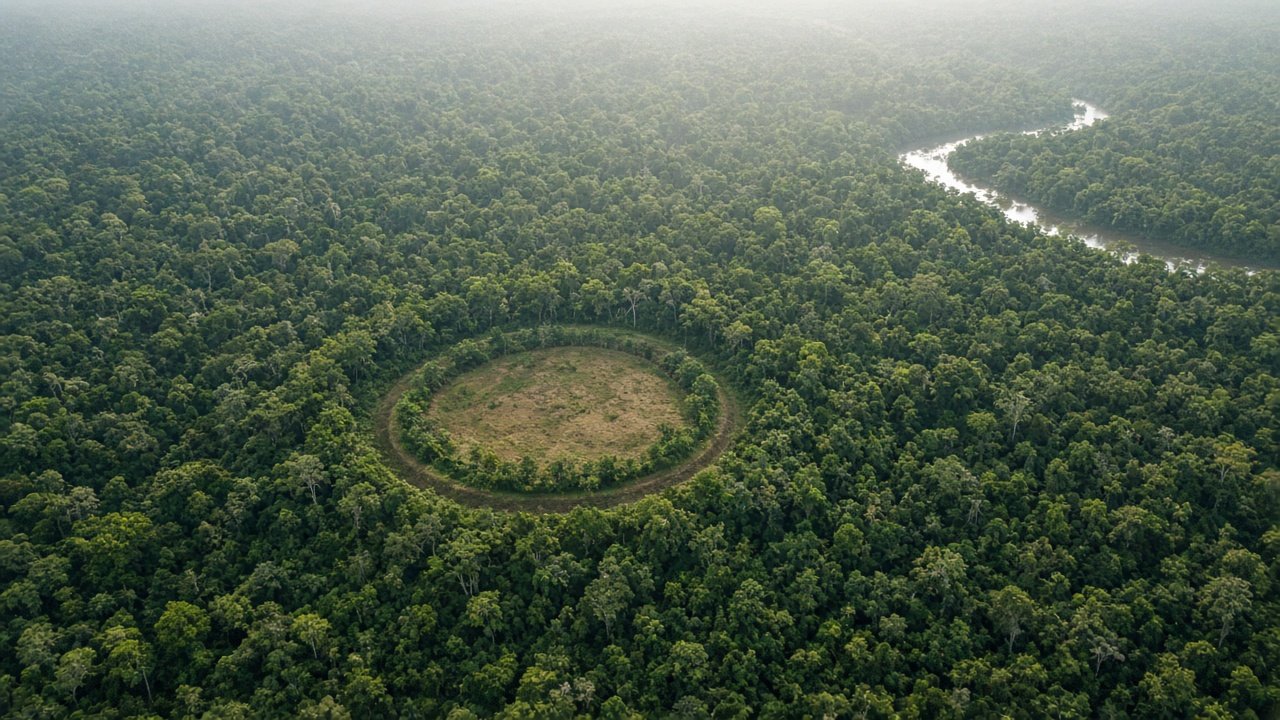
Acre’s geometric earthworks are about 2,500 years old as standing ditches and banks, with charcoal underneath to about 10,000 years (Watling and colleagues, 2017). Lidar has since found pre-Hispanic urbanism in the Llanos de Mojos of Bolivia (Prümers, 2022) and two thousand years of garden cities in the Upano Valley of Ecuador (Rostain, 2024). Monte Alegre’s painted cave, on the Amazon itself, is dated to about 13,200 years (Roosevelt, 1996). The old empty-forest picture is finished.
None of that work needs a lost donor civilisation. All of it is Native American urbanism, earthwork, and art, some of it Ice Age in date, most of it later. files the lidar cities as what the drowned coasts would look like if we could see them. The papers file them as what the living forest already was.
Rapa Nui
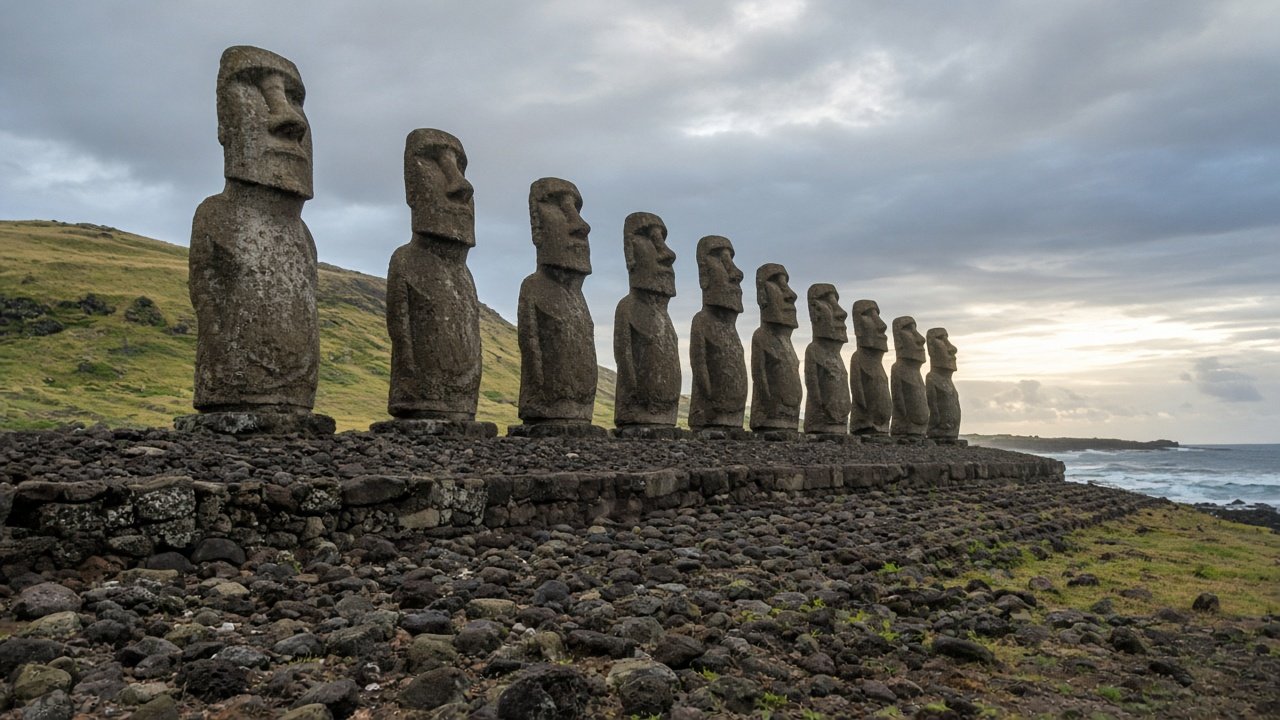
Polynesian landfall on Rapa Nui is placed between about 800 and 1,100 years ago. The moai cannot be carbon-dated as stone; the platforms they stand on, and the coral eyes and tools around them, date the culture that carved them. UNESCO’s file is a Polynesian sacred landscape, not an Ice Age quarry. accepts the late dates and asks whether the idea of the statue is older than the island. That is a claim about ideas. It is not a date on a moai.
Sacsayhuamán
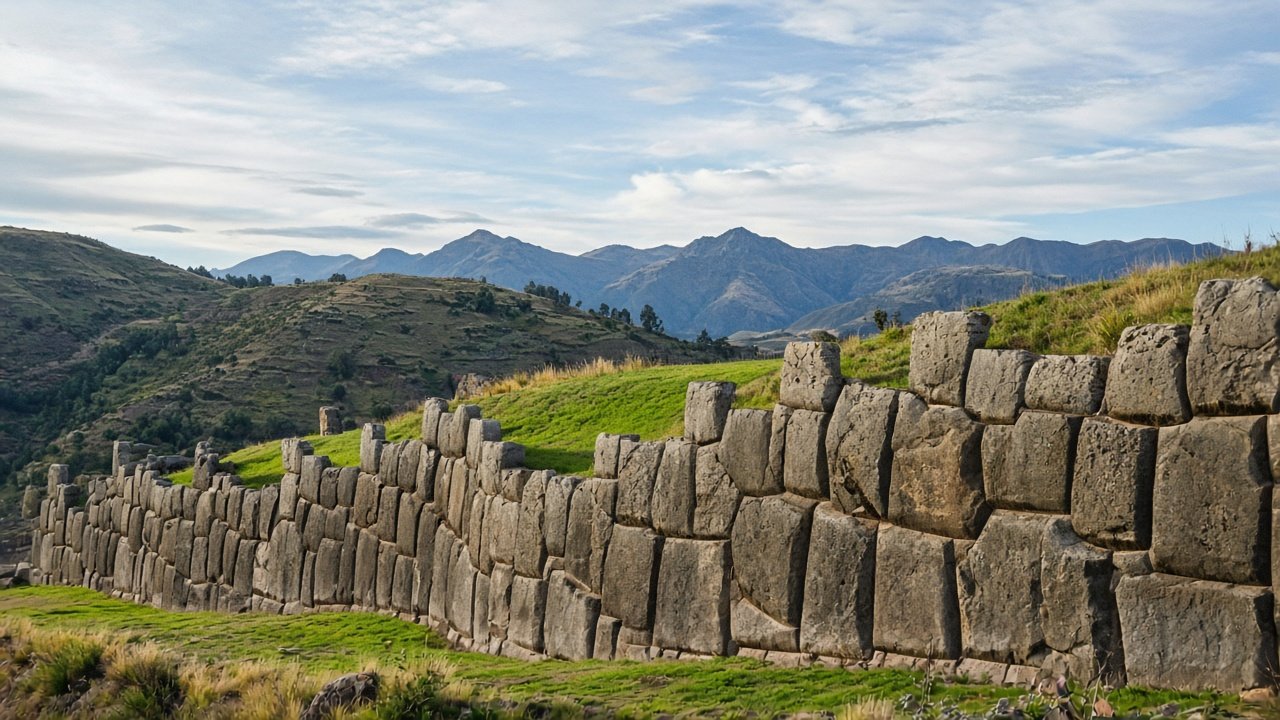
Above Cusco, zigzag walls of fitted limestone — some blocks of many tens of tons — are Inca work of the fifteenth century on earlier foundations. Spanish chroniclers watched the Inca build. does not move the masonry into the Ice Age. He claims the fitting, the angles, and the scale remember an older school of stone. The walls are Inca. The older school is his reading.
Chaco Canyon
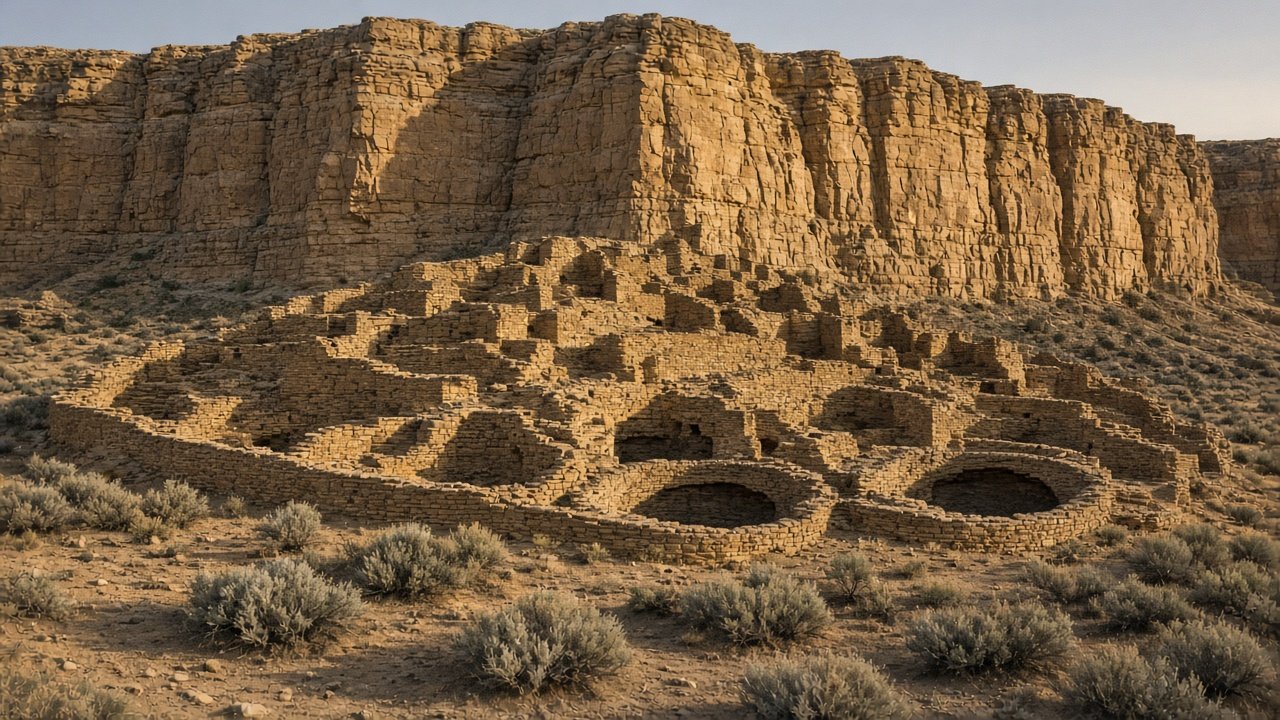
Chaco’s great houses — Pueblo Bonito and its neighbours — are about 1,000 years old, aligned to solar and lunar standstills, built of dressed sandstone in a high desert canyon. Ancestral Puebloan work, dated by tree rings. again accepts the masonry dates and claims the sky knowledge is older than the rooms. Chaco is a dated culture with a sophisticated sky. An older teacher is not required by the alignments.
Serpent Mound
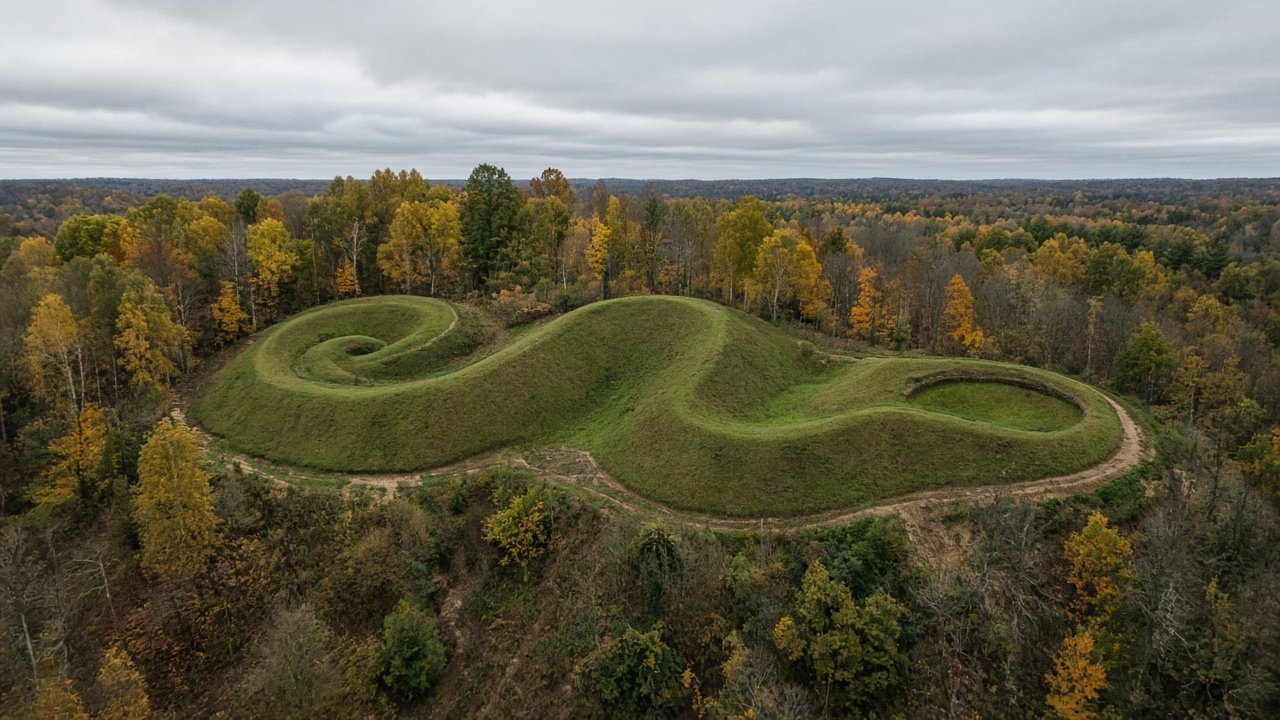
The Serpent Mound in Ohio is a sinuous earthwork on a ridge, excavated dates around 1000 CE and, in an earlier phase, around 321 BCE. ’s 12,800-year figure is not a sample from the body of the snake. It is an obliquity calculation: a solstice sunset aligned to Earth’s changing tilt, run backward to the Younger Dryas. Ohio History Connection publishes the excavated dates. An alignment can be real and still not be a carbon date.
Watch America’s Lost Civilization on Netflix. The series stays with the publisher.
Poverty Point
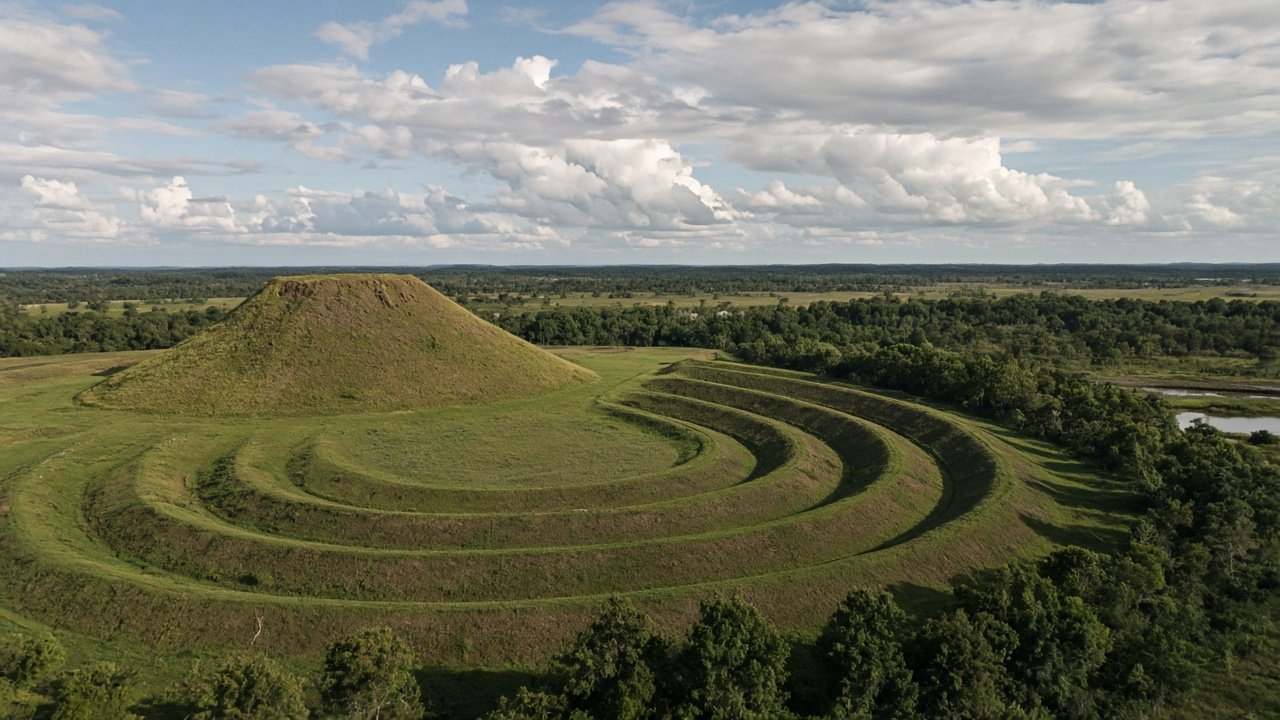
Poverty Point, in Louisiana, is a complex of concentric C-shaped ridges and mounds, about 3,700 years old in its main phase, with an older 5,500-year anchor in the landscape. UNESCO lists it as Archaic Native American public architecture. The surveying is impressive. agrees the dates and still asks whether the geometry came from elsewhere. The earthworks are the geometry. They are also the people who lived there.
Watch America’s Lost Civilization on Netflix. The series stays with the publisher.
Palenque, and two Maya sentences

Palenque’s Temple of the Inscriptions holds the tomb of K’inich Janaab’ Pakal, seventh century CE, in a rainforest city with a palace tower and a long count of kings. Base-20 numbers with zero, three interlocking calendars, and a Venus cycle counted exactly: that is Maya, and it is on the monuments. The 2012 end-of-the-world story is a modern caption; ’s series corrects it. His own window for the close of an age, about 2000 to 2080, is his reading of their cycles, not theirs.
A 19 June 2021 transcript attributed to includes a line that the original belonged to another species arriving from off-world. That is a different sentence from Hancock’s, and from the monuments. Ancient genomes from Chichén Itzá (Barquera, 2024) and Belize (Kennett, 2022) show continuity with Indigenous peoples of the region. The Maya test chapter walks that result. Palenque does not need an off-world founder to be extraordinary.
Sources
- Ancient Apocalypse, Season 2: The Americas. Graham Hancock (presenter). Netflix, 2024. Summarised, not transcribed.
- Bennett, M. R., et al. (2021). Evidence of humans in North America during the Last Glacial Maximum. Science. doi:10.1126/science.abg7586
- Pigati, J. S., et al. (2023). Independent age estimates resolve the controversy of ancient human footprints at White Sands. Science. doi:10.1126/science.adh5007
- Watling, J., et al. (2017). Impact of pre-Columbian “geoglyph” builders on Amazonian forests. Proceedings of the National Academy of Sciences. doi:10.1073/pnas.1614359114
- Prümers, H., et al. (2022). Lidar reveals pre-Hispanic low-density urbanism in the Bolivian Amazon. Nature. doi:10.1038/s41586-022-04780-4
- Rostain, S., et al. (2024). Two thousand years of garden urbanism in the Upper Amazon. Science. doi:10.1126/science.adi6317
- Roosevelt, A. C., et al. (1996). Paleoindian cave dwellers in the Amazon: the peopling of the Americas. Science. doi:10.1126/science.272.5260.373
- Skoglund, P., et al. (2015). Genetic evidence for two founding populations of the Americas. Nature. doi:10.1038/nature14895
- UNESCO World Heritage Centre. “Rapa Nui National Park.” whc.unesco.org. Accessed 28 October 2026.
- UNESCO World Heritage Centre. “City of Cuzco.” whc.unesco.org. Accessed 28 October 2026.
- UNESCO World Heritage Centre. “Chaco Culture.” whc.unesco.org. Accessed 28 October 2026.
- Ohio History Connection. “Serpent Mound.” www.ohiohistory.org. Accessed 28 October 2026.
- UNESCO World Heritage Centre. “Monumental Earthworks of Poverty Point.” whc.unesco.org. Accessed 28 October 2026.
- UNESCO World Heritage Centre. “Pre-Hispanic City and National Park of Palenque.” whc.unesco.org. Accessed 28 October 2026.