
Aliens · Chapter 12
Ancient teachers and human origins
The accounts in this course propose several different pasts. Some describe earlier human cultures whose knowledge survived catastrophe. Others describe non-human teachers, biological intervention, the arrival of souls from other worlds, or consciousness taking physical form. These proposals overlap around a shared intuition: the familiar history may be incomplete. They disagree about what would complete it.
Illustration made for this site. Not a photograph of the claim.
Lost civilisations, inherited knowledge and the proposed interventions in humanity’s past.
Reviewed 30 October 2026.
1. Who or what shaped humanity?
The accounts in this course propose several different pasts. Some describe earlier human cultures whose knowledge survived catastrophe. Others describe non-human teachers, biological intervention, the arrival of souls from other worlds, or consciousness taking physical form. These proposals overlap around a shared intuition: the familiar history may be incomplete. They disagree about what would complete it.
The inquiry becomes clearer when divided into four questions. Did earlier humans possess capabilities now poorly represented in the surviving record? Did traditions preserve memories of teachers, migrations or disasters? Was human biological development affected by another intelligence? Does a spiritual account concern the origin of consciousness rather than the ancestry of bodies?
An answer to one question can inform another without settling it. A newly discovered monument can change an estimate of ancient social complexity. It does not, without further evidence, identify a non-human builder. A teaching about incarnation can describe a spiritual origin without supplying a genetic mechanism.
This chapter follows the actual proposals before comparing them. Its aim is to establish where the accounts agree, where they conflict and which parts could be investigated through texts, material remains or biological evidence.
2. Atlantis in Plato: what the early text contains
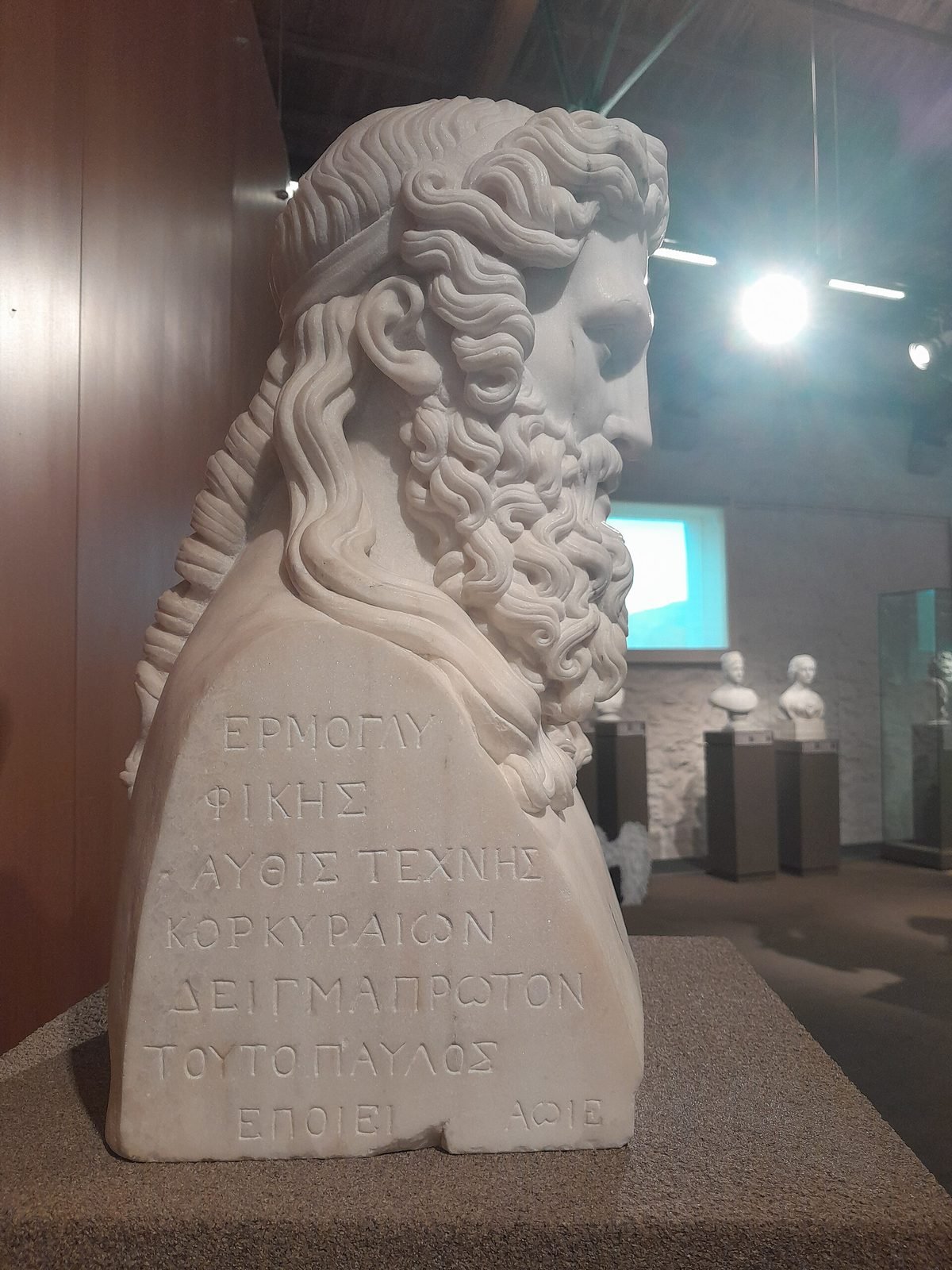
Plato’s Timaeus presents the Atlantis story through a chain of narration associated with Solon and Egyptian priests. It describes an earlier conflict, destructive changes and the loss of an island power. Critias develops the island’s geography, institutions and divine ancestry: Poseidon and the mortal Cleito become ancestors of its ruling families. The narrative also connects moral deterioration with the misuse of prosperity and power. [1]
Those features explain why Atlantis can support several later readings. One reader sees inherited historical memory; another, political philosophy; another, a story of extraordinary ancestry and lost knowledge. The existence of those interpretations should not conceal the difference between Plato’s text and what later writers add.
The dialogue’s claimed Egyptian transmission is an internal part of its story. Establishing that a corresponding Egyptian record existed would require additional evidence. Similarly, Poseidon’s divine identity is not automatically a statement that he was a biological extraterrestrial.
An important editorial detail arises in the freely accessible Jowett edition: the translator’s introduction appears before the dialogue. Its arguments are Jowett’s, not additional statements by Plato. A quotation taken from the introduction can otherwise be misrepresented as ancient testimony.
The text gives us an early, richly developed Atlantis narrative. It does not give a modern excavation report, a genetic sample or an identified extraterrestrial technology.
3. Hancock and Collins: teachers who may have been human
Graham Hancock explicitly distinguishes his lost-civilisation argument from ancient-astronaut explanations. In his 2016 statement, he considers a lost human civilisation a better explanation for the historical anomalies at issue and disputes the need for the Sitchin-style package. He nevertheless treats the wider encounter phenomenon as a serious mystery. [2]
That distinction is central to this course. A survivor carrying navigational, astronomical or agricultural knowledge could become remembered as an extraordinary teacher without being extraterrestrial. This is an explanatory possibility, not a demonstration that a particular survivor existed.
Andrew Collins’s From the Ashes of Angels offers another human-centred reconstruction. His presentation links Watchers and related traditions to a remembered human elite associated with the emergence of civilisation in Anatolia and the Near East. It is a hypothesis about the historical background of traditions, rather than a finding that each named deity was a visitor from space. [3]
These accounts overlap with intervention narratives in the role given to teachers. They differ on who the teachers were. “Knowledge came from elsewhere” could refer to another settlement, a migrating population, an earlier surviving culture, another planet or an otherworld experience. Each location changes what evidence should be sought.
The useful comparison therefore concerns routes of transmission: what knowledge, carried by whom, from where, to which recipients, and at what time? A general image of a wise stranger cannot identify that route by itself.
4. Göbekli Tepe: a discovery that changed a human history
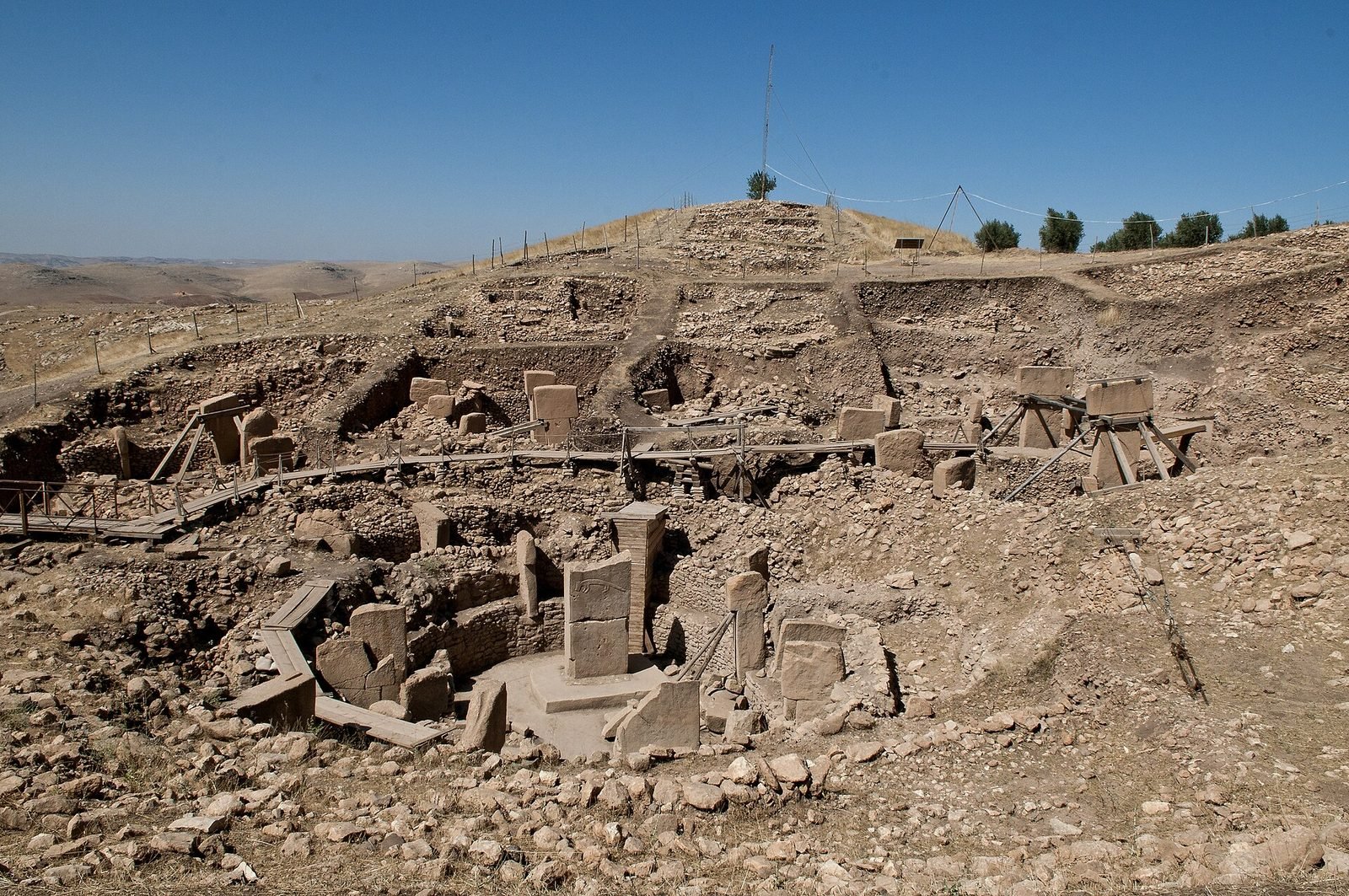
Göbekli Tepe provides a concrete example of why the record should remain open to revision. The excavation team’s research places the site in the early Neolithic, approximately 9500–8000 calibrated BCE, within the transition from foraging to farming. Monumental construction and elaborate imagery belong to that researched setting. [4]
A discovery of this kind expands what we know ancient communities could organise and build. It supplies an actual place, stratigraphy, materials and a programme of investigation. Its significance does not depend on assigning the builders a more technologically familiar way of life.
It also sharpens the ancient-teacher hypothesis. If a proposed outside group transmitted a specific technique, identify that technique and the evidence connecting it to another place. A demonstrable earlier parallel, a distinctive manufacturing sequence or a dated movement of people could make the proposal stronger. Similar appearance alone may leave several explanations available.
The same discipline applies to claims about the Sphinx, pyramids or precision-made objects. Date, function, method and maker are separate questions. Revising the age of an object would not automatically establish a proposed function; uncertainty about a tool does not identify an extraterrestrial artisan.
What excavation contributes is a way to turn surprise into further knowledge. A challenging artifact should generate more measurements and better comparisons, rather than a requirement to choose a complete alternative history immediately.


5. Anunnaki in the ancient texts
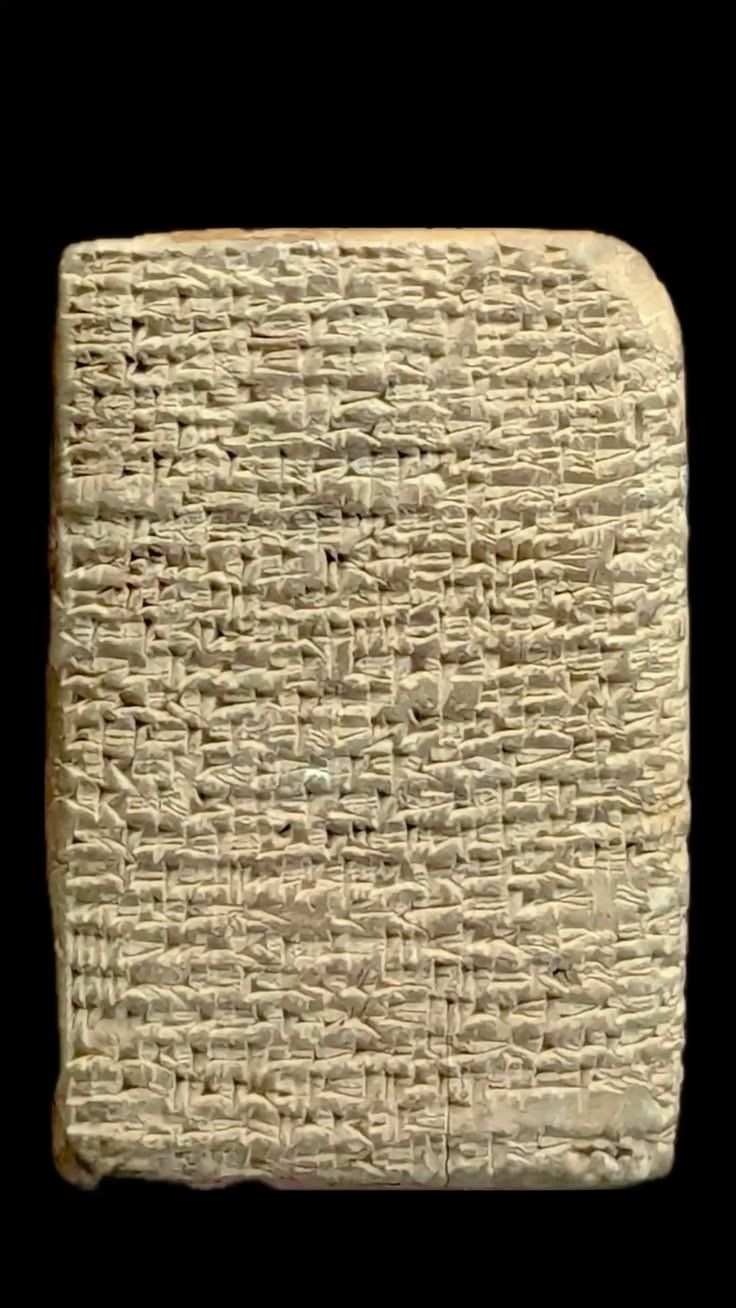
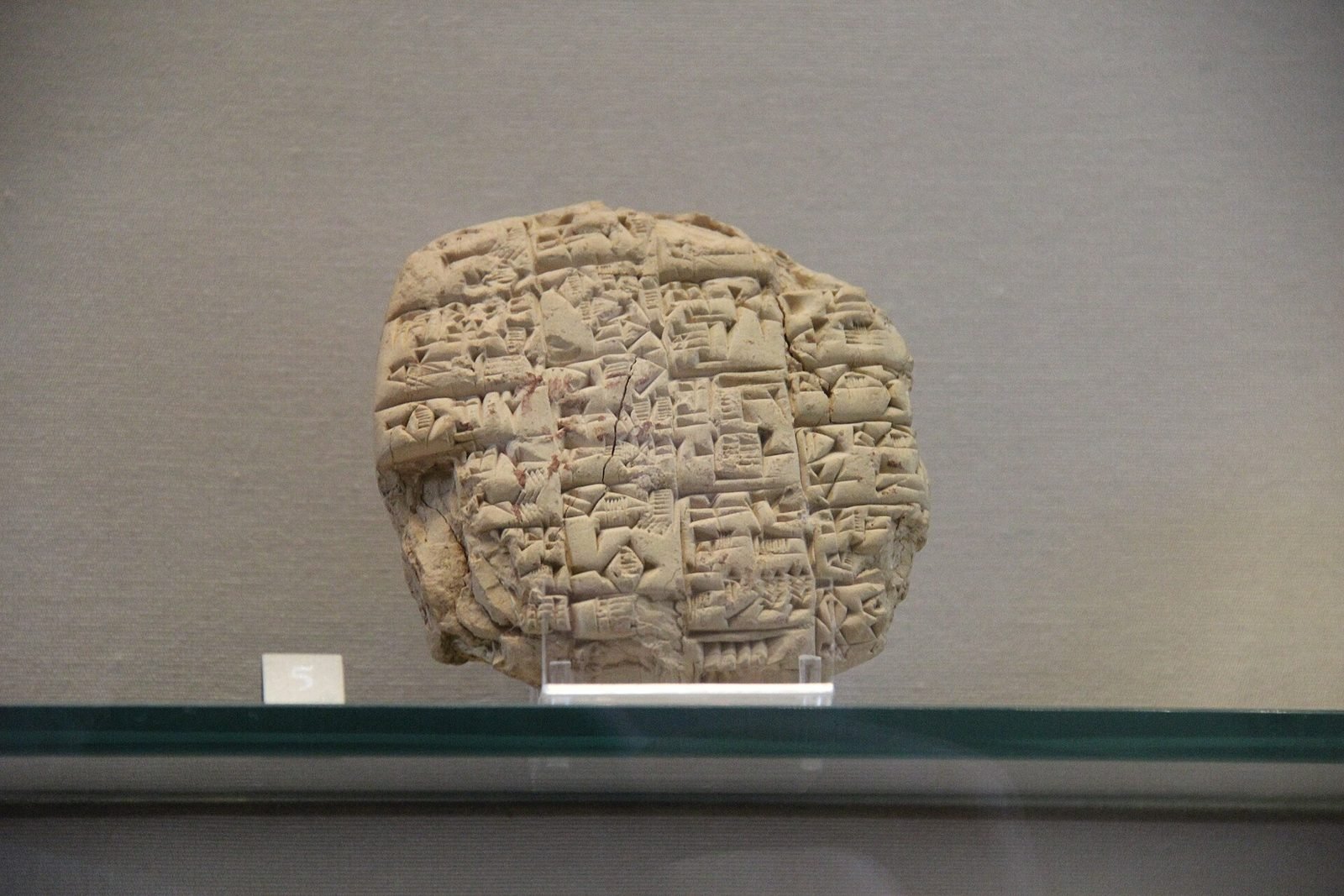
Nicole Brisch’s specialist account identifies Anunna/Anunnaki as a changing designation for groups of Mesopotamian deities. Its uses vary across periods and settings, including high gods, a city’s pantheon and underworld associations. The historical term does not have one timeless technical meaning. [5]
A primary composition makes the comparison more concrete. In the Oxford edition of Enki and Ninmah, gods labour and complain; a substitute is proposed; clay and birth goddesses enter the making of humans, who take on work. The edition marks damaged and uncertain passages. These creation-and-labour themes are genuinely present, rather than wholly supplied by modern writers. [6]
The interpretive step comes when clay, divine action and birth are translated into a laboratory procedure. That may be proposed as a reading, but the modern biological vocabulary must be identified as an interpretation. It is not established merely by replacing the ancient terms with technical ones.
The correct unit of comparison is also a particular text. Enki and Ninmah, Atrahasis and later biblical narratives have related themes but are not one document. Names, roles and sequences should remain attached to the composition in which they occur.
This preserves something important for an open inquiry: the ancient sources really do contain questions about who made humanity and why. What remains disputed is how those sources relate to historical events and biological development.

6. Sitchin and Bashar: one inherited name, different accounts
Zecharia Sitchin interprets the Anunnaki as visitors from Nibiru who used genetic engineering to fashion humans from an existing species. His own discussion of genetics identifies Enki and Ninti as scientific agents and reads elements of creation literature as a reproductive procedure. The official presentation also connects the visitors’ activities with gold and a labour requirement. [7]
His claim is therefore stronger than saying the ancient story resembles modern science. He proposes that its underlying events were technological. To assess it, compare the language of each cited passage, its context and his technical substitution. The possibility of genetic engineering does not independently authenticate a particular translation.
A reproduced Bashar session dated 28 January 2023 uses Anunnaki in another intervention narrative. The questioner assumes an earlier genetic contribution; the attributed reply affirms subsequent matings, explains demigod traditions through additional inheritance and describes differences among lineages. The public catalogue identifies the session series, while the detailed text used here is a third-party reproduction. [8]
That is a meaningful narrative overlap: another intelligence contributes to humanity’s ancestry. It is not yet independent biological corroboration. Sitchin’s public work predates this session, and the shared ancient name was already widely circulated.
The selected passage also does not establish that Bashar endorses every component of Sitchin’s Nibiru, gold and labour narrative. Agreement on one proposition must not be expanded into agreement on the entire system.
7. Ra: bodies, arriving consciousness and attempted assistance
The Law of One combines terrestrial development with claimed arrivals from elsewhere. Session 9 describes a transfer associated with Mars roughly 75,000 years before the 1981 session, involving Guardians and preparation for incarnation. It also acknowledges evolution of terrestrial forms within its own framework of densities. This is not simply a claim that a spacecraft delivered the first anatomically modern humans. [9]
Session 18 adds an account of Yahweh-related genetic changes intended to assist spiritual development. Its dialogue includes cloning-like and reproductive language, then describes an unintended tendency towards elitism. The questioner’s suggestion about Orion is corrected in the reply, so that suggestion should not be extracted as the teaching’s final answer. [10]
Two kinds of history coexist here: the preparation of bodies and the movement or development of consciousness. If they are merged, the source can appear to make a conventional fossil claim that it has actually framed differently.
The comparison with other teachings should preserve those distinctions. Ra’s Guardians are not automatically Kryon’s Pleiadians; a claim about souls arriving is not already a claim about an identifiable sequence entering a chromosome. The ethical theme is also specific: assistance can have unintended consequences when recipients understand difference as superiority.
A historical investigation would still need an independent bridge to the asserted events. The spiritual purpose supplied by a transcript explains the narrative’s meaning; it does not supply the physical evidence for its history.
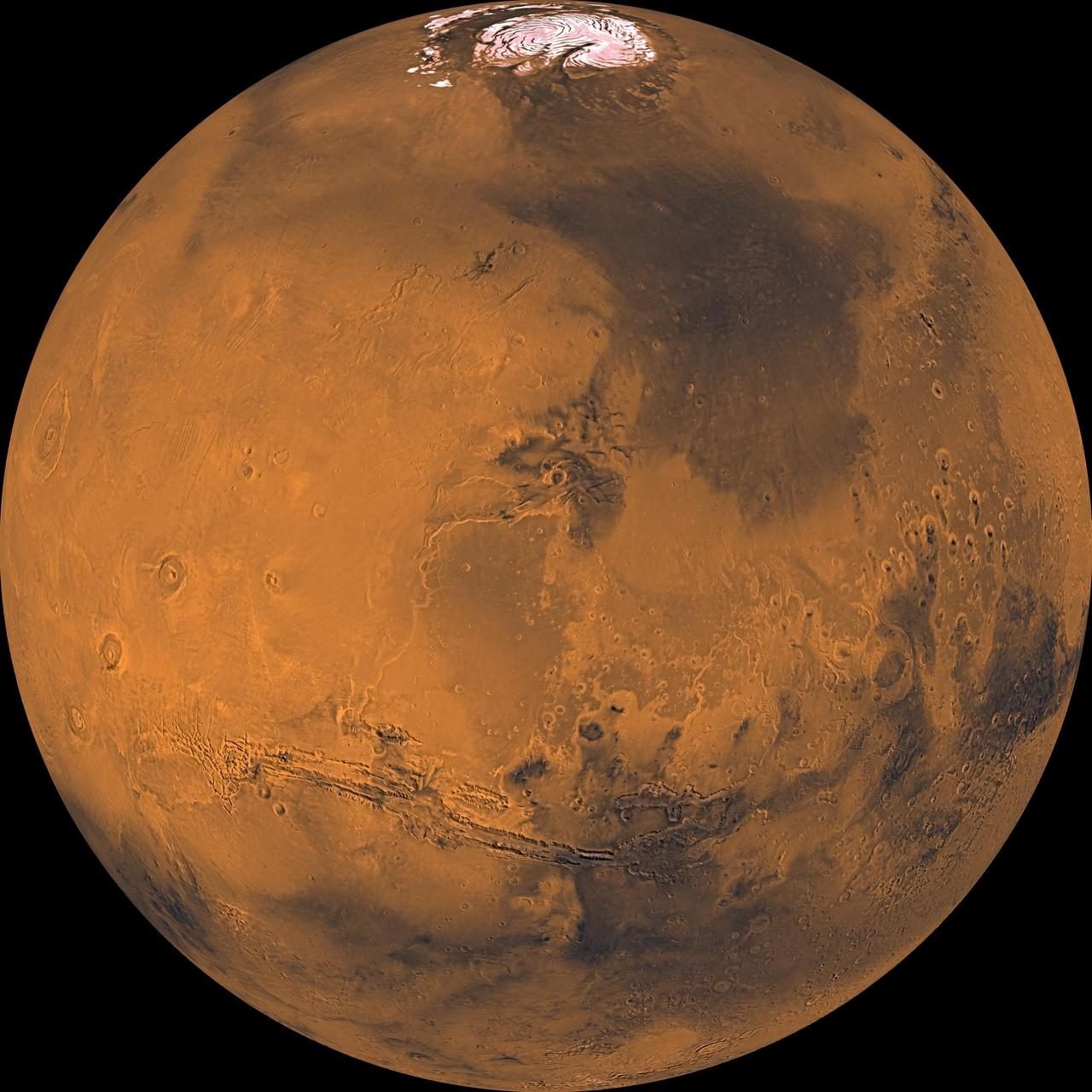
Sessions 9 and 10 give a war about 705,000 years ago. A 15 May 2006 interview attributed to keeps Maldek, then Mars, then Earth, and gives Maldek a different death: a close passage, not a war. Those are not the same claim. Later sessions in the Law of One also revise some of these figures, so one session’s number is not the whole account. Session 21.8 associates an intensified with the Martian transfer. That statement is separate from the narrative in which teachers in Egypt were received as gods. The longer chronology is kept at History with humans.
8. Cayce and Ra on lost worlds
Edgar Cayce’s reading 364-3, dated 16 February 1932, locates Atlantis broadly between the Gulf of Mexico and Mediterranean, points towards possible surviving evidence and describes early beings in terms of thought forms becoming more fixed in physical expression. The reproduced reading belongs to a psychic account of origins, rather than an archaeological observation. [11]
Ra’s session 10.15 gives separate accounts of Mu/Lemuria and Atlantis. It places their beginnings at approximately 53,000 and 31,000 years before the session, respectively, then describes Atlantean technological development, conflict, inundation and surviving groups. These are dates and events within that teaching. [12]
The shared vocabulary invites comparison, especially the relationship among capacities, misuse and destruction. But a name such as Atlantis already had a long literary and esoteric history before either source. Its repetition cannot establish an independent memory of one place.
The stronger questions concern distinctive details. Do locations match? Are the proposed causes of destruction compatible? Does a specific artifact fit both the claimed period and cultural setting? Does an apparent agreement survive when each date retains its original reference point?
A common moral pattern can remain valuable even if the physical histories differ. The warning that power can exceed wisdom does not require all accounts to describe the same ancient technology. Conversely, the value of that warning cannot authenticate a submerged continent.
9. Pleiadian intervention: Kryon and Marciniak
Kryon’s officially published Mt Shasta message of 14 June 2014 describes DNA alteration beginning around 200,000 years ago, attributed to Pleiadians and given a spiritual purpose. The page labels itself an enhanced transcript, explaining that material may be clarified or added after live delivery. It should therefore not be presented as an untouched verbatim record. [13]
Barbara Marciniak’s Bringers of the Dawn gives a different intervention history. Its account associates a takeover around 300,000 years ago with restriction of human capacities and presents twelve-strand DNA within a narrative of loss and recovery. [14]
The overlap is substantial at the thematic level: human potential, outside involvement and a relationship between biology and consciousness. The selected claims differ in dates, purpose and the action being described. Assistance that advances development and intervention that restricts it are not interchangeable events.
The shared Pleiadian label also needs care. It identifies sources within the respective teachings; it does not establish that the speakers are one collective or that every disagreement has already been reconciled.
“DNA” can carry more than one meaning in this literature. If it refers to molecular structure, a mechanism and measurable consequence can be requested. If it refers to a spiritual capacity, that interpretation should be stated. Moving between those meanings whenever a difficulty arises would make the biological claim impossible to evaluate.
10. Cannon’s garden and the question of incarnation
The publisher’s presentation of Dolores Cannon’s Keepers of the Garden describes a young man undergoing regression who reports earlier existences on other worlds and in other dimensions. It also frames present humanity as a garden with extraterrestrial gardeners. The narrative brings off-world incarnation and ongoing involvement together. [15]
That makes it relevant to both ancestry and consciousness. Yet an earlier reported life on another world is not the same proposition as an extraterrestrial gene entering a human family line. A garden metaphor can concern cultivation, design, protection or control; the particular action still needs to be identified.
This source also arrives through a different process from a tablet edition or an excavation. To investigate a specific regression claim, preserve the questions, responses, sequence of sessions and any information known to the participants beforehand. The resulting account may contain an independently checkable lead. The publisher’s description alone does not establish that such a lead has been verified.
Anthony William’s official “Aliens: Prophets & Monsters” page likewise places human origins, earlier civilisations, disasters, Mars and Noah among its announced questions. It supplies a route for further source work. A topic list is insufficient to reconstruct his complete answers, so this chapter does not turn its questions into an additional detailed ancient history. [16]
Including a perspective responsibly sometimes means identifying exactly what remains to be extracted from its original recording.
11. What fossils and genomes can actually test
The Jebel Irhoud studies published in 2017 describe early Homo sapiens remains in Morocco associated with an estimated age of 315 ± 34 thousand years. The morphology and archaeological context contribute to a longer and more geographically complex account of our species’ emergence. An approximate fossil age is not a measurement of a single instant when every human characteristic appeared. [17]
The numerical proximity to a teaching’s “300,000 years” can be recorded as a comparison. It does not establish the proposed action or actor. A restriction of capacities, an origin of skeletal traits and a population’s existence are different events, even if their dates sound similar.
Human chromosome 2 supplies a molecular example. IJdo and colleagues identified sequence evidence for fusion of two ancestral chromosomes. The existence of a fusion is therefore supported by a specific biological signature. An external intention does not follow from the presence of that signature. [18]
Ancient DNA also demonstrates how a surprising ancestry claim can become testable. The 2010 Neanderthal genome study found evidence supporting gene flow into ancestors of non-African populations. That conclusion came from comparative genetic patterns, not resemblance to a story about hybrids. [19]
For proposed extraterrestrial ancestry, the corresponding challenge is to identify a sample, sequence or other biological feature that discriminates the hypothesis from terrestrial alternatives. An unidentified stretch of DNA would initially be an unidentified stretch of DNA. Contamination, technical error and unknown terrestrial ancestry would still need examination.
Even a genuine engineered feature would raise a further question: who engineered it? Mechanism and origin remain separate findings. The scope for discovery is real, but so is the work needed to identify what has been discovered.
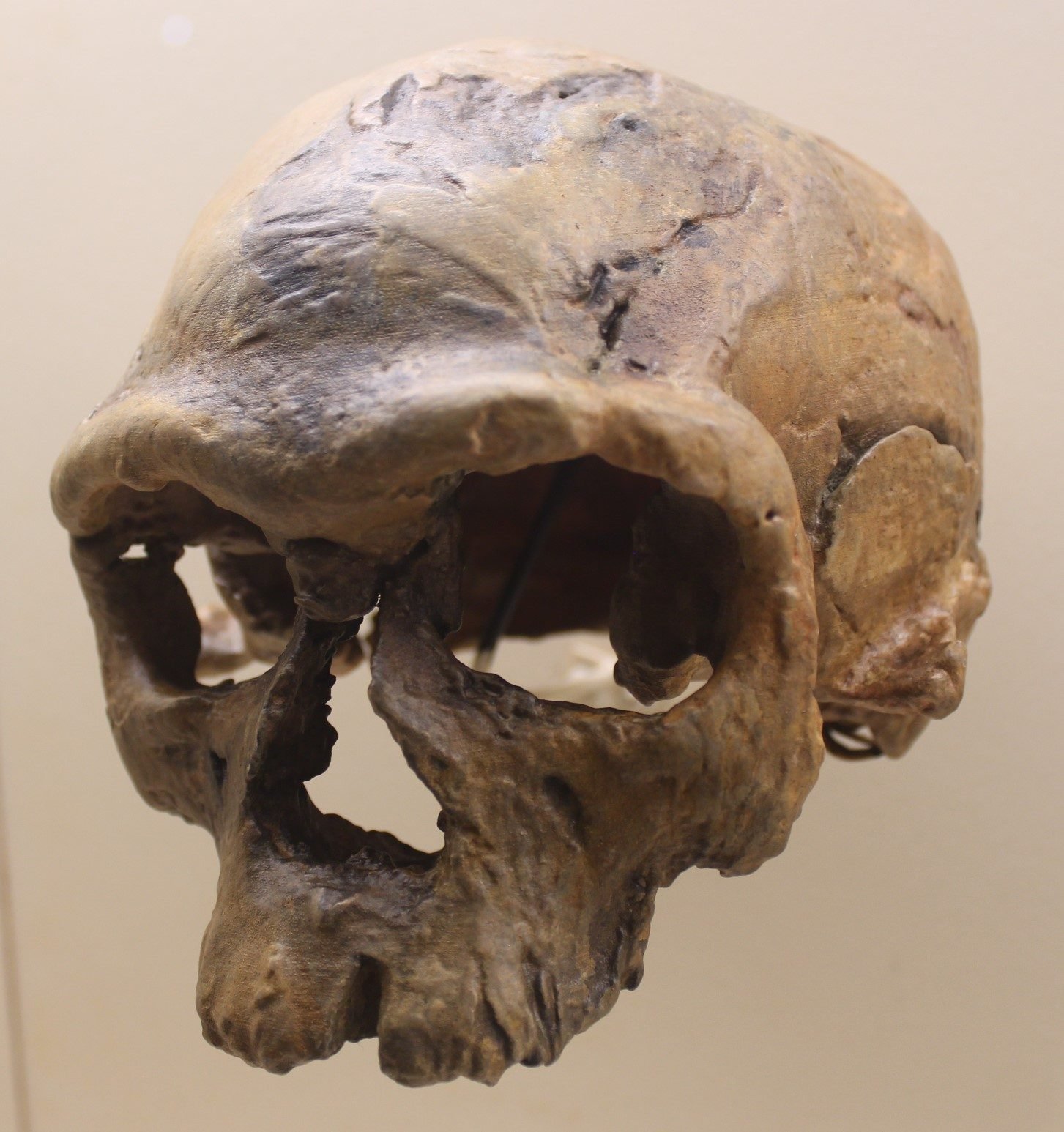
A 2021 transcript attributed to includes a line that the original were an off-world species. Genomes from Chichén Itzá and Belize show continuity with Indigenous peoples of the region for the populations that were sampled. That result answers the claim for those samples. It does not decide Maldek, and it does not decide the Anunnaki.
12. Where the histories converge and conflict
| Account | Proposed agent or process | Main proposition compared here | Important distinction |
|---|---|---|---|
| Hancock | Earlier humans | Knowledge survives a lost civilisation | Does not require ancient astronauts |
| Collins | Remembered human elite | Teacher traditions retain historical memory | Specific migrations and influence remain hypotheses |
| Sitchin | Nibiru / Anunnaki visitors | Engineered humans and labour | Modern technical reading of ancient texts |
| Bashar | Anunnaki-related ancestry | Genetic contribution and later lineages | Selected reproduced session does not establish Sitchin’s whole narrative |
| Ra | Guardians, Yahweh-related assistance | Bodies, incarnation and spiritual development | Physical and consciousness claims coexist |
| Cayce | Thought becoming physical; Atlantis | Psychic account of origins and lost civilisation | Not a conventional genetic mechanism |
| Kryon | Pleiadian assistance | Spiritual alteration around 200,000 years ago | Enhanced published message |
| Marciniak | Intervening intelligences | Restricted capacities and recovery | Different proposed action and chronology |
| Cannon | Gardeners and off-world lives | Cultivation and incarnation | Hypnosis-based narrative, not a biological sample |
The shared structure is consequential: humanity is placed within a larger history of relationship, knowledge and responsibility. The accounts repeatedly ask whether capacities were received, lost or restricted, and whether development can recover a wider awareness.
But the overlap does not yet select one literal history. Teachers may be human or non-human; development may be biological or spiritual; intervention may assist or dominate. Several interpretations could preserve the ethical theme while disagreeing about the asserted events.
A useful next investigation would choose one sufficiently specific claim. Identify its earliest source, derive a prediction and look for evidence that could fail to match it. The most persuasive convergence would connect independent lines—text, dated material and biological evidence—without changing the claim after each result.
The present material establishes a rich landscape of proposed origins, a real ancient literature of human creation and significant discoveries that have changed our understanding of the past. It does not yet establish that extraterrestrials created humanity. That conclusion remains an open hypothesis whose decisive evidence would need to go beyond the recurrence of its story.
Questions for study
- Which accounts concern biological ancestry, and which concern the origin or development of consciousness?
- What remains of an overlap when dates, mechanisms and named agents are compared?
- How would you test a proposed ancient teacher’s influence at one specific site?
- What could a genome establish about intervention, and what would still be needed to identify its source?
- Which source comparison would most improve this chapter’s provisional understanding?
Next: Chapter 13 · The beings described.
References and source notes
The references distinguish a witness’s statement, an investigator’s assessment and the chapter’s own analysis. An official host authenticates a document’s provenance; it does not automatically establish every assertion within it. URLs were checked or their indexed source text consulted during this review.
Plato, Timaeus 20d–25d and Critias 108e–121c, Benjamin Jowett translations.
https://www.gutenberg.org/cache/epub/1572/pg1572-images.html
https://www.gutenberg.org/files/1571/1571-h/1571-h.htm
Locator: Atlantis narrative: chain through Solon; catastrophe; Poseidon, Cleito and the ruling families. Use the dialogues, not Jowett’s separately labelled introduction, for Plato’s statements. Source type: Primary philosophical/literary texts in a nineteenth-century English translation. Use and limits: A narrative’s internally claimed transmission is not an independently verified Egyptian archive. The text’s divine genealogy is not automatically an extraterrestrial genetic account.
Graham Hancock (2016), “Ancient Aliens or a Lost Civilization?”, 11 May.
https://grahamhancock.com/49103-2/
Locator: Opening paragraphs distinguishing his lost-human-civilisation explanation from ancient-astronaut interpretations. Source type: Author’s own public position. Use and limits: Supports the distinction between Hancock’s two lines of inquiry. It is not archaeological confirmation of the proposed lost civilisation.
Andrew Collins, author-hosted biography and From the Ashes of Angels preview.
https://www.andrewcollins.com/page/articles/andrew_collins.htm
https://www.andrewcollins.com/page/articles/ashes/ashespreview.html
Locator: Human Watchers / remembered elite interpretation of Near Eastern traditions. Source type: Proponent-hosted account of his historical hypothesis. Use and limits: Used to identify the proposed human explanation, not as independent confirmation of a migration, elite group or influence at a particular site. The hosted biography includes third-person material; the author’s preview supplies a direct presentation.
Lee Clare (2020), “Göbekli Tepe, Turkey. A brief summary of research at a new World Heritage Site (2015–2019)”, e-Forschungsberichte des Deutschen Archäologischen Instituts; project introduction.
https://publications.dainst.org/journals/efb/article/view/2596
https://www.dainst.blog/the-tepe-telegrams/home/
Locator: Research summary and project scope: early Neolithic site, approximately 9500–8000 calBC and transition from foraging to farming. Source type: Original excavation-team research and project documentation. Use and limits: Supports the site’s researched setting. No claim is made that every building’s function or every construction sequence has been settled.
Nicole Brisch, “Anunna (Anunnaku, Anunnaki) (a group of gods)”, Ancient Mesopotamian Gods and Goddesses, ORACC / University of Pennsylvania.
https://oracc.museum.upenn.edu/amgg/listofdeities/anunna/index.html
Locator: Functions, periods, city pantheons and underworld associations. Source type: Original specialist reference research grounded in Mesopotamian texts. Use and limits: Used for the term’s varied historical usage. The entry is not a general proof about all possible non-human intervention.
Electronic Text Corpus of Sumerian Literature, University of Oxford, Enki and Ninmah, composition 1.1.2, translation.
https://etcsl.orinst.ox.ac.uk/section1/tr112.htm
Locator: Lines 1–37: divine labour, complaints, Enki, Namma, clay and human labour; later sections on bodily conditions and destinies. Source type: Scholarly edition/translation of a primary Sumerian composition. Use and limits: The edition marks uncertainty and fragmentary lines. This composition is not silently substituted for Atrahasis or every text Sitchin discusses. Gene-editing vocabulary is a modern interpretation, not wording established by this translation.
Zecharia Sitchin, “Genetics: So What Else Is New?”; official website overview of The 12th Planet and related works.
https://sitchin.com/genetics.htm
Locator: Article’s “Sumerian Creation Texts” section; official overview on Nibiru, gold and primitive workers. Source type: Proponent’s own account of his interpretation. Use and limits: Establishes what Sitchin asserts, including the genetic reading. Descriptions of him as a specialist on his own website are not substituted for checking readings against editions and language evidence.
Bashar / Darryl Anka (2023), Becoming a Galactic Citizen, part 1, 28 January; third-party text reproduction and official series locator.
https://www.superphysics.org/research/other/alien/essassani/transmissions/2023/2023-01-28/
https://tv.bashar.org/checkout/new?o=p3073672
Locator: Reproduced Q&A, “Energetic Bodies and Anunnaki Genetics”; separate questioner’s assumptions from attributed Bashar replies. Source type: Channelled-session text in a third-party reproduction; official catalogue/highlight locators for the series. Use and limits: No complete audiovisual verification is claimed. The catalogue authenticates the series listing, not every word in the reproduction. No precise ancient date is assigned from this passage.
L/L Research, The Law of One, session 9, 27 January 1981, questions 9.6–9.16.
Locator: Mars, Guardians, claimed transfer approximately 75,000 years ago; terrestrial evolution and source-specific density terminology. Source type: Primary channelled transcript. Use and limits: The stated time is relative to the session; it is not a dated fossil horizon. The source combines claims about consciousness and bodily preparation rather than supplying a conventional population-genetics model.
L/L Research, The Law of One, session 18, 4 February 1981, questions 18.14–18.23.
https://www.lawofone.info/s/18
Locator: Yahweh, genetic changes, intended spiritual development and unintended elitism; the questioner’s mistaken suggestion and the reply’s correction. Source type: Primary channelled transcript. Use and limits: Retain the distinctions and corrections in the dialogue. The narrative is not treated as an authenticated ancient laboratory record or identified with other named intervention accounts.
Edgar Cayce (1932), reading 364-3, 16 February; reproduced transcript; Foundation identification of series 364.
https://archive.edgarcayce.ch/Reading%200364-0003.html
https://edgarcayce.org/edgar-cayce/recipients-officially-identified-by-the-edgar-cayce-foundation/
Locator: Reading 364-3, paragraphs 3–5: Atlantis location, suggested evidence and thought-form account; Foundation list labels series 364 Atlantis / Creation. Source type: Psychic-reading transcript in a third-party archive, with official series-identification reference. Use and limits: No full Cayce archive audit is claimed. The reading’s statement that Atlantis is being proved is part of the reading, not a finding established by this chapter. No racial hierarchy is adopted.
L/L Research, The Law of One, session 10, 27 January 1981, question 10.15.
https://www.lawofone.info/s/10#15
Locator: Separate Lemuria/Mu and Atlantis narratives; approximate dates, technology, conflict and claimed survivor destinations. Source type: Primary channelled transcript. Use and limits: Dates are reported as the teaching gives them, measured back from the session, not as archaeological ages. The transcript’s asterisks flag editorial issues in particular terms; no astronomical derivation is attempted here.
Kryon / Lee Carroll (2014), “The Fast-Track Systems”, Mt Shasta, 14 June.
https://kryon.com/CHAN2014/k_channel14_SHASTA-14.html
Locator: Final section: proposed Pleiadian DNA alteration beginning about 200,000 years ago and spiritual purpose. Source type: Officially published enhanced channelled transcript. Use and limits: The page explicitly says that the live message was revisited and may contain added information. It is not labelled a verbatim recording or a molecular finding.
Barbara Marciniak (1992), Bringers of the Dawn: Teachings from the Pleiadians; publisher description and reproduced text.
https://www.innertraditions.com/books/bringers-of-the-dawn
https://ivo-benda.org/english/svetelna_knihovna/htm/en/en_kniha_bringers_of_the_dawn.htm
Locator: Chapter “Who Your Gods Are”, intervention around 300,000 years ago; discussions of twelve-strand DNA. Source type: Channelled book, accessed through indexed text reproduction and publisher metadata. Use and limits: Full publisher-page access was restricted. Used narrowly for the narrative’s content, not as independently verified biological history. No unverified page number is assigned.
Dolores Cannon, Keepers of the Garden, Ozark Mountain Publishing; publisher/imprint presentation at Red Wheel/Weiser.
https://redwheelweiser.com/book/keepers-of-the-garden-9780963277640/
Locator: “About the Book”: young man’s regression, off-world existences, current-life encounters and garden/creator framing. Source type: Publisher description of a hypnosis-based narrative. Use and limits: The underlying recordings and interview sequence were not audited. The description is sufficient to identify the account’s framing, not every detailed claim in the book or a general finding about hypnotic memory.
Anthony William (2022), “Aliens: Prophets & Monsters”, official podcast page, 26 September.
https://www.medicalmedium.com/blog/aliens-prophets-and-monsters
Locator: Introductory text and episode topic list: ancient civilisations, origins, disasters, Mars and Noah. Source type: Source’s own programme introduction and topic index. Use and limits: Only the public page was inspected for this reference. Questions listed as episode topics are not rewritten as answered historical findings. No health claims from the page are adopted.
Jean-Jacques Hublin and colleagues (2017), “New fossils from Jebel Irhoud, Morocco and the pan-African origin of Homo sapiens”, Nature 546, 289–292; Daniel Richter and colleagues (2017), dating study, Nature 546, 293–296.
https://www.nature.com/articles/nature22336
https://www.nature.com/articles/nature22335
Locator: Abstracts: early Homo sapiens morphology, archaeological context and thermoluminescence age 315 ± 34 thousand years. Source type: Original palaeoanthropological and dating research. Use and limits: An age estimate for material in a studied context does not identify a species-wide instant of creation. The chapter does not equate the uncertainty range with a prediction by a channelled source.
J. W. IJdo and colleagues (1991), “Origin of human chromosome 2: an ancestral telomere-telomere fusion”, PNAS 88(20), 9051–9055, doi:10.1073/pnas.88.20.9051.
https://pubmed.ncbi.nlm.nih.gov/1924367/
https://pmc.ncbi.nlm.nih.gov/articles/PMC52649/
Locator: Abstract and reported sequence evidence for the ancestral fusion junction. Source type: Original molecular-genetic research. Use and limits: Supports the fusion explanation, not a precise intervention date or identification of an external engineer. A claim of intention requires evidence beyond the existence of a genetic change.
Richard E. Green and colleagues (2010), “A Draft Sequence of the Neandertal Genome”, Science 328, 710–722, doi:10.1126/science.1188021.
https://pmc.ncbi.nlm.nih.gov/articles/5100745/
Locator: Abstract and comparison of Neanderthal and present-day human genomes. Source type: Original ancient-DNA research in an author-manuscript repository. Use and limits: A concrete example of testing biological ancestry and gene flow. Neanderthal ancestry is not evidence of extraterrestrial ancestry; present-day models extend beyond this historical paper.