
Aliens · Chapter 8
Secrecy and recovered-craft allegations
The most consequential claim in the modern UAP debate is that the public is not simply waiting for better observations. It is that evidence has already been collected, including technology and biological material, and that some institutions have deliberately concealed it.
Illustration made for this site. Not a photograph of the claim.
Hidden information, insider testimony and the search for inspectable evidence
Reviewed 30 October 2026.
This claim deserves direct examination. If substantiated, it would change the investigation from the interpretation of fleeting encounters to the examination of recoverable objects and documented activity. It would also raise questions about public accountability and who has been allowed to know what.
There is already a documented history of secrecy surrounding aerospace programmes and UAP-related information. Establishing the proposed contents of hidden non-human programmes is a further task. This chapter follows that distinction through the strongest public allegations, the institutional disagreement and the evidence that could resolve it.
1. Begin with the strongest claim
A retrieval allegation is stronger and more specific than a sighting report. It says an object was located, secured, transported and held. A reverse-engineering allegation adds technical work, personnel, equipment, records and some sustained organisational structure.
That specificity creates investigative opportunities. A physical transfer should leave potential witnesses, logistical records or custody information. A technical programme should involve budgets, facilities and work products. Even where direct records are restricted, separate paths may converge on the same activity.
The question is therefore not merely whether a witness sounds credible. It is what the witness’s account predicts should exist and where a competent investigation could look for it.
At the same time, a programme name can circulate without the programme being authentic. A person can sincerely misinterpret a briefing. A real classified project can acquire an inaccurate explanation outside its compartment. These possibilities should be tested against the specific allegation rather than assumed as a general dismissal.
2. A documented history of concealment
CIA historian Gerald Haines describes misleading public explanations connected with protected reconnaissance flights, including U-2 and OXCART activity. This establishes a real example in which what observers reported and what the public was told were shaped by secrecy around human technology. [1]
The example matters in two directions. It shows why an official public explanation should be examined against later records. It also shows that concealed activity can be terrestrial even when it generates extraordinary reports.
Historical concealment is therefore a reason to investigate particular decisions and records. It is not a shortcut to identifying the concealed subject. Evidence that a government misled the public about one programme does not establish the proposed nature of another.
A useful secrecy history asks who made the decision, which information was protected, what explanation was issued and what later became available. That can reveal patterns of institutional behaviour without inventing what remains unseen.


3. Why information might be withheld
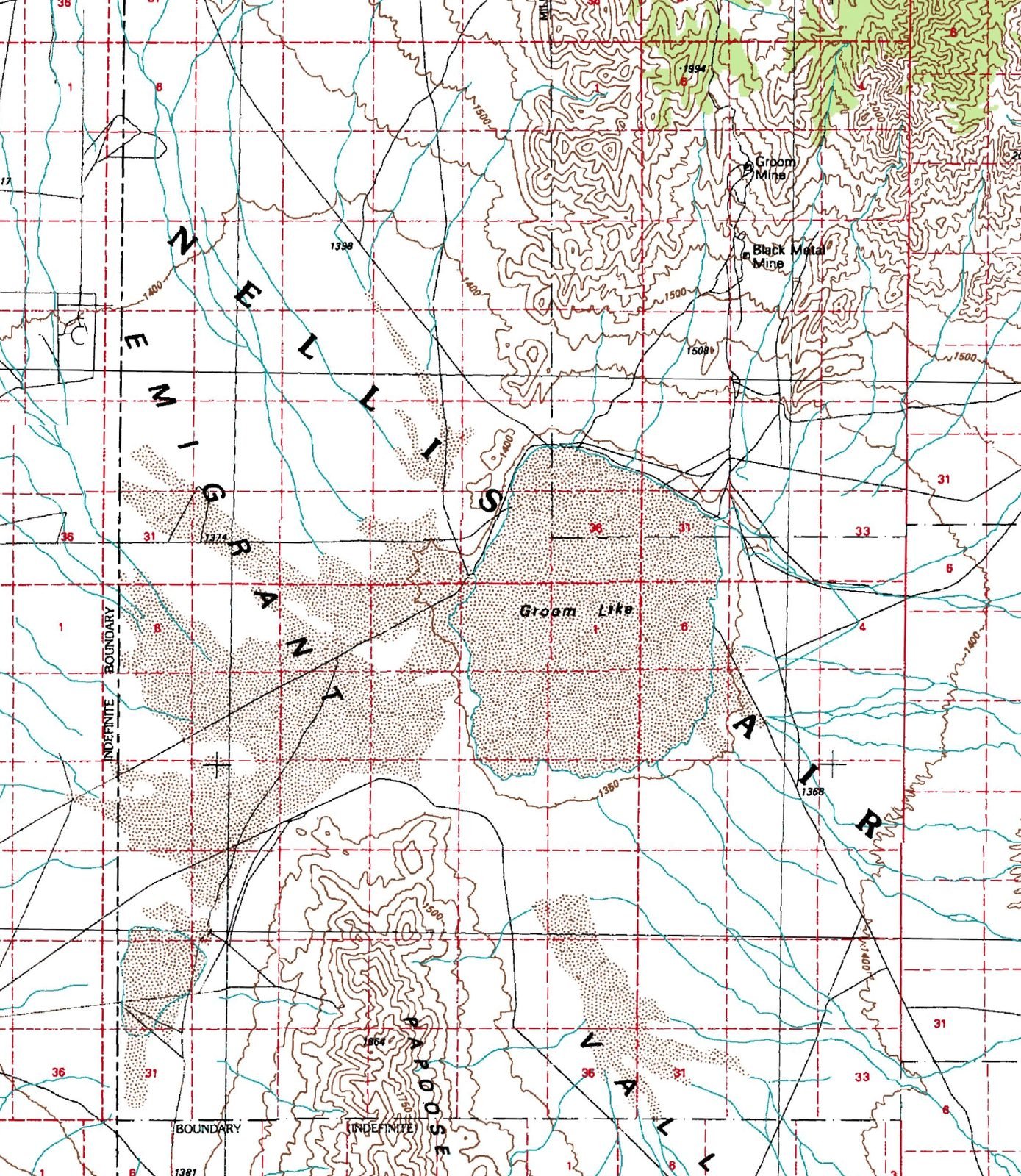
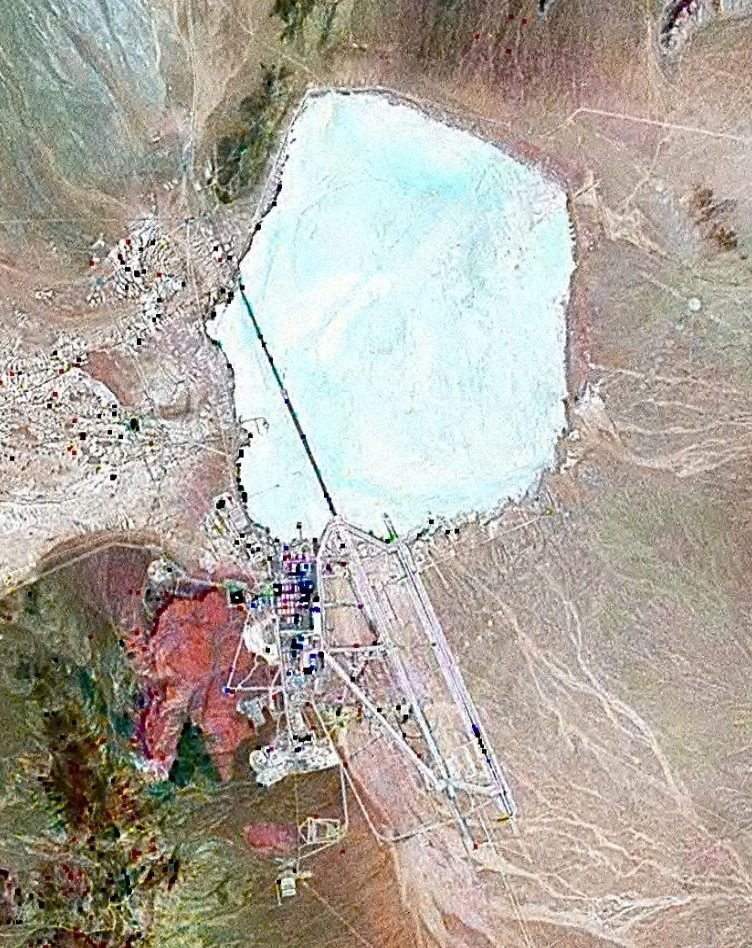
Several possible reasons can coexist: protecting a sensor’s capabilities, concealing an operational location, safeguarding a person, protecting a programme’s engineering or avoiding an adversary’s inference from apparently small details.
Other proposed motives are more troubling: institutional embarrassment, concealment of misconduct, commercial advantage or resistance to oversight. Their possibility does not establish their presence in a particular case. Investigators need evidence linking the reason to the decision.
The National Archives’ restriction guidance identifies categories involving defence, intelligence sources and methods, confidentiality and privacy in the UAP collection context. These are stated grounds for restriction, not proof that every individual withholding is justified. [2]
A recording can reveal more about the observing platform than about the target. This gives a possible reason to restrict some original data even if the object is ordinary. Conversely, protecting a sensor would not necessarily justify suppressing every general fact about an encounter. Whether a narrower release is possible is a concrete disclosure question.
The chapter does not assume that all withholding is either legitimate or evidence of an alien secret. It asks what was withheld, under whose authority and with what consequences for investigation.
4. Compartments and the limits of seniority
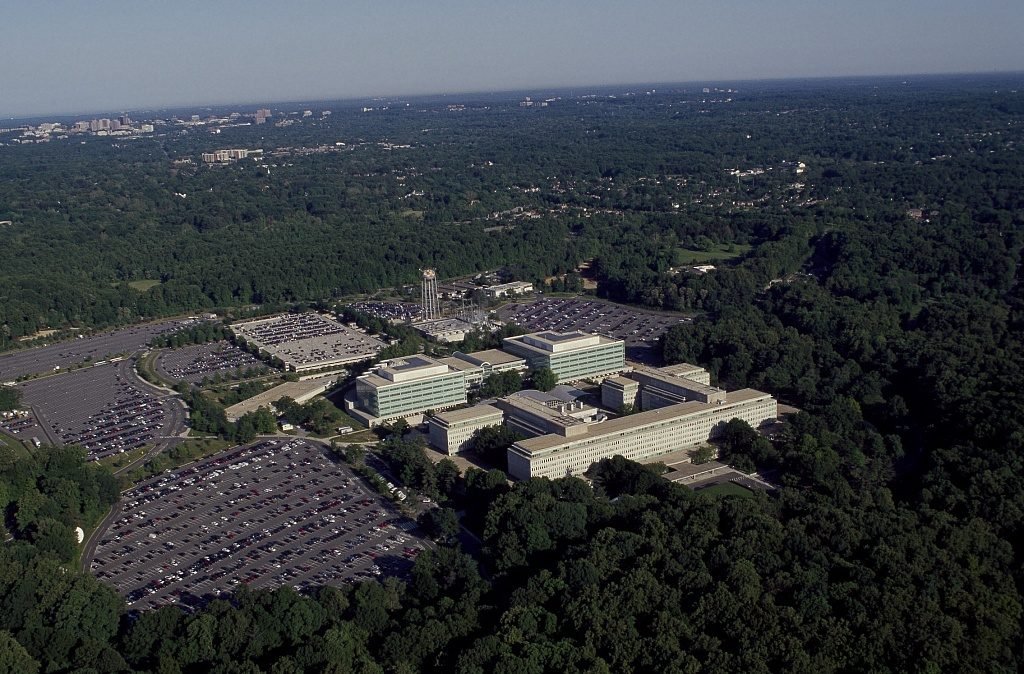
A compartmented organisation can distribute knowledge unevenly. Holding high office does not logically mean knowing every operational detail. Equally, the claim that even senior leaders were excluded requires evidence about actual access and oversight.
Rubio’s later clarification is relevant here. He said programme allegations in his earlier interview concerned what people had reported to him, rather than firsthand knowledge. He nevertheless retained concern about unexplained incursions. That position should remain distinct from personally verifying an unlawful programme beyond presidential knowledge. [3]
A meaningful access investigation would identify the office involved, the records requested, the person refusing access and the reason given. “I was not briefed” and “the programme was unlawfully concealed from every authorised body” are different claims.
Contractor involvement introduces further possible records, but a corporate boundary is not evidence of a particular secret by itself. A researcher should seek the actual contractual relationship, work product and information flow. A plausible organisational diagram is not an authenticated programme history.
5. Grusch: an investigation alleging a hidden programme
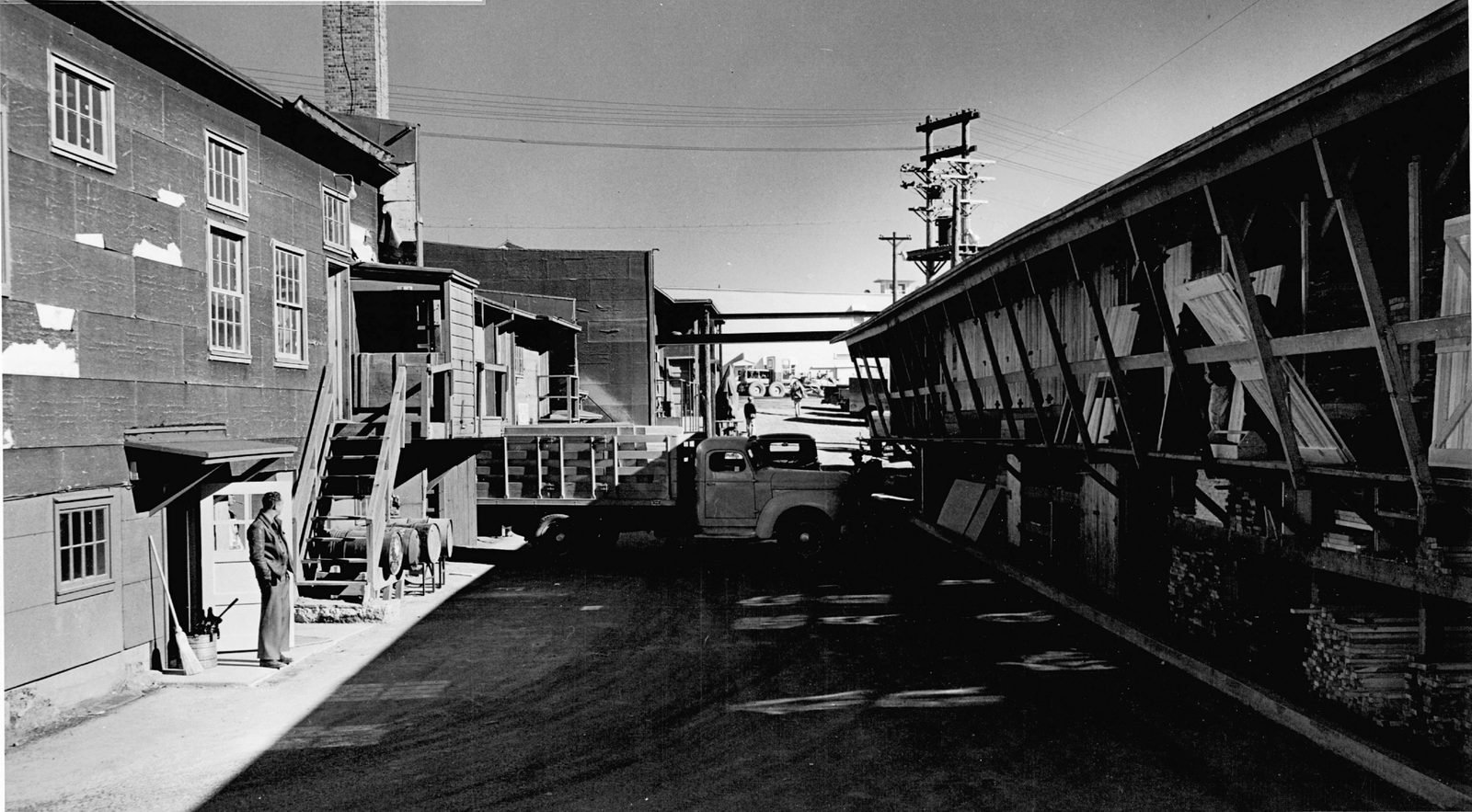
Grusch’s 2023 written statement describes information obtained through his official investigation and alleges a retrieval and reverse-engineering programme to which he was denied access. His public contribution is an account of investigative findings and access barriers, rather than an exhibited vehicle. [4]
In the hearing’s biologics exchange, he attributed the non-human assessment to people with direct programme knowledge whom he had interviewed. That stated basis belongs to that answer. It should not be silently converted into personal observation or projected onto every later statement. [5]
This is a substantial investigative allegation. Its strength could grow if independent sources identify the same facilities, transfers or records without relying on one another. Its weaknesses could become clearer if apparent corroboration returns to a shared informant or if documents establish a different programme.
The important distinction is between an allegation triggering investigation and the outcome of that investigation. A referral, protected disclosure or complaint can establish that concerns were formally raised. It does not, merely through its procedural existence, verify extraterrestrial technology.
The next step should be as specific as the claim: identify the relevant source’s access, the object or activity described and the record that would corroborate it.
6. Elizondo, Stratton and stronger assertions
Elizondo’s 2024 congressional statement alleges possession of UAP technology and a concealed arms race. That is a stronger position than acknowledging unidentified targets. It deserves to be represented accurately and then examined through programme and material evidence. [6]
The film-related source register accompanying Chapters 1–6 separately treats Stratton’s attributed personal-observation claim. His former UAP Task Force role is documented independently. Programme responsibility and claimed observation are both relevant, but one does not verify every detail of the other. [7]
A person who says they saw an unfamiliar object should be asked how its origin was established. Was the identification based on an observed characteristic, an analysis, a briefing or information supplied by someone else? A genuine direct observation can still contain a separately inferred identity.
Nell’s public SALT position adds an explicit declaration of confidence in non-human presence. His public reasoning is another source to examine, not an additional recovered specimen. [8]
These statements become most valuable when they open distinct routes to evidence. A named person, a defined role and a specific allegation allow more focused scrutiny than an anonymous general story. Their significance should be preserved without allowing several respected names to substitute for independent corroboration.
2024 House UAP hearing
7. Immaculate Constellation: submission and authentication
In his 2024 written testimony, Michael Shellenberger discusses a source’s report alleging a programme called Immaculate Constellation and an archive of observations from different collection systems. He presents this as consequential information provided for congressional attention. The statement relays an allegation; it is not itself an authenticated programme record or the claimed underlying image archive. [9]
The name should therefore remain attached to its source history. Who supplied it? How did they know it? Was the document created in the alleged programme or written afterwards as an account of it? Which parts can be checked independently?
A document’s appearance can be misleading. Official-looking formatting does not establish provenance. Conversely, an informally written account can identify a real activity. Authentication depends on its creation history, custody, corroborating records and demonstrable access.
The alleged imagery also raises a separate question. A descriptive catalogue of remarkable videos is not equivalent to releasing those videos with their metadata. The description can guide a search; the original material would permit technical analysis.
A serious investigation should preserve the report, its versions and the stated basis for its claims. It should then seek the records predicted by the account rather than treating either the programme name or the submission venue as proof.
8. The institutional disagreement
AARO’s 2024 historical assessment states that it found no evidence confirming extraterrestrial technology in the investigations reviewed and no empirical support for the reverse-engineering narrative it examined. This is a substantive counterposition to stronger insider allegations. [10]
The disagreement cannot be resolved by choosing a title. A claimant may allege access to material the office did not obtain. An office may possess records that explain a claimant’s interpretation. Both possibilities require specific evidence.
Ask which allegations were actually investigated and which records were accessed. Did an investigator examine the claimed object, inspect programme records or ask a potentially implicated organisation for an assurance? Those are different evidential steps. The same scrutiny applies to the claimant: what was personally inspected and what was accepted through another person’s authority?
A transparent resolution would match allegation to finding. It would identify the relevant programme or event, describe what was checked and explain why the proposed interpretation succeeded or failed. Some supporting detail may remain restricted, but the public explanation should not gain more certainty than the underlying work warrants.
The chapter preserves this disagreement because it is part of what must be understood. It does not treat an unresolved conflict as proof of either a concealed craft or the absence of one.
9. What would a recovered object establish?
A retrieved object would be an extraordinary opportunity because it could be examined repeatedly. But the examination would still contain several questions.
First comes custody: where was it found, who handled it and what happened before analysis? Then composition and structure: what is it made of, how is it organised and what processes could have produced it? Function and origin are further questions.
Nolan, Vallée, Jiang and Lemke’s materials paper discusses analytical techniques and their application to unusual material, including comparison with earlier isotopic work. It provides a technical research direction. The existence of such analysis does not independently establish a sample’s alleged origin or a recovered extraterrestrial vehicle. [11]
A persuasive result would distinguish natural material, ordinary manufacturing, contamination and unfamiliar engineering. If several laboratories examine portions of one sample, that can test a result’s reproducibility. It does not independently reproduce the sample’s recovery history.
An unusual isotope ratio is therefore a question to explain, not a species label. A layered structure needs comparison with known processes. A feature that appears technological may establish manufacture before it establishes who manufactured it.
The strongest evidence would connect physical properties, function and provenance through independently checkable records. A functioning device with reproducible behaviour would offer another level of investigation beyond an unexplained fragment.
10. Biological material and claims about occupants
Claims of bodies or biological material are even more consequential because they could connect technology to a being. They also require a separate evidential chain.
Photographs, descriptions and testimony can identify an investigation target. A biological conclusion requires an authentic sample, provenance, appropriate examination and independent checking. The laboratory must be able to distinguish contamination and terrestrial material from the proposed alternative.
“Not identified” does not mean “non-human”, and “non-human” does not mean “extraterrestrial”. Earth already contains non-human organisms. An unfamiliar specimen could also reflect damage, manipulation or an incomplete comparison. Each step requires its own support.
Conversely, a properly authenticated finding should not be dismissed merely because its implications are unfamiliar. The purpose of independent examination is to create a result that remains persuasive beyond a person’s initial expectations.
Claims about particular races, names or intentions go further still. Even a genuine biological discovery would not authenticate every portrait or genealogy in contact literature. Such connections would need evidence of their own.
11. Reprisals and the preservation of testimony
A claim of retaliation deserves investigation in its own right. A person’s treatment can be wrongful regardless of whether their interpretation of a programme is ultimately correct. Equally, mistreatment does not independently establish the content of the underlying extraordinary claim.
Preserve the two investigations separately: what information was reported, and what happened to the person afterwards. Communications, employment records, access changes and named witnesses may help establish the latter. Programme records and physical evidence address the former.
Gallaudet’s communication history offers a related example of why information handling matters. His testimony concerns an email and its disappearance, alongside his interpretation of the event. The archive or recipients could help test that history independently of the filmed target’s eventual identification. [12]
A university should not require a witness to endure humiliation before their account is worth hearing. Respectful, precise interviewing improves the chance of obtaining useful information. It also helps preserve uncertainty rather than pressuring a witness into an overstated answer.
12. Disclosure as a record process
The U.S. National Archives describes an ongoing UAP collection, with agency review, digital transfer and public access to releasable records. The collection’s statutory scope includes records about technologies of unknown origin and non-human intelligence. Those categories define what records are sought; they do not certify that every proposed technology or intelligence exists. [13]
This process can nevertheless change the enquiry substantially. A dated operational record may corroborate an earlier account. Correspondence can reveal who was informed. A technical report can show which explanations were tested. A release can also establish that a widely repeated story began with a misunderstanding.
Do not count pages as discoveries. An archive becomes useful when records can be linked to claims, dates and people. Preserve identifiers, document versions, redactions and the distinction between an original and a later summary.
The same principle applies internationally. A released national file is evidence of what its creators recorded and did. Its implications depend on the contents and their relation to other evidence.
The film’s wider claim map and the nuclear-classification question
The earlier research material identifies a wider set of allegations in The Age of Disclosure than a single recovered-craft claim. They deserve to remain visible as research questions. The unofficial transcript and the film’s presentation are sources for what is asserted, rather than independent evidence that each event occurred. [15]
| Claim area in the film | What a useful follow-up would establish |
|---|---|
| Claimed direct encounters and a concealed retrieval programme | Named access, dated roles and independently authenticated records |
| US, Soviet and Chinese possession or competition | Separate national records rather than a circulating US account |
| Roswell, alleged Holloman contact and multiple kinds of beings | Event-specific provenance and biological evidence |
| Reported injuries and alleged impact planning | Defined cohorts, clinical records and identifiable planning documents |
| Religious resistance, Vatican knowledge and information management | Named decisions, dates, archives and the chain of testimony |
| Nuclear interest, unusual flight and proposed new physics | Raw observations separated from an explanatory model |
| Oceanic origins, time travel and alleged technological gifts | Predictions that distinguish these alternatives |
These rows collect claims, not endorsements. Do not assign an unlabelled montage statement to a famous participant simply because the editing places their face nearby. The film’s reported illness figures also concern an alleged selected group: without recruitment criteria, denominators, comparison groups and clinical verification they cannot become a public encounter-risk estimate.
The Department of Energy connection warrants a more precise question. DOE publicly describes a nuclear-information classification system including Restricted Data and Formerly Restricted Data, alongside review and declassification responsibilities. NARA explains that “Formerly Restricted Data” remains classified; the name does not mean public release. [16] [17]
That documented framework makes nuclear secrecy a relevant institutional subject. It does not establish that recovered extraterrestrial material was placed inside it, that a particular allegation falls within its definitions or that all oversight is legally excluded. To connect the framework to a UAP programme, seek an authenticated classification decision, programme record or competent, specifically sourced testimony. The existence of a secrecy mechanism and proof of its alleged use are two different findings.


13. A practical retrieval-claim ledger
| Claim | Evidence that could strengthen it | Conclusion not supplied automatically |
|---|---|---|
| A craft was recovered | Timed recovery records, custody and independent observers | Non-human manufacture |
| A programme exists | Authentic records, personnel access and work products | Every claim made about that programme |
| A sample is unusual | Reproducible analysis and adequate comparisons | Extraterrestrial origin |
| A witness saw beings | Specific circumstances and corroborating evidence | A particular species or home world |
| Information was suppressed | A documented decision and its effects | The exact nature of what was concealed |
| A source was retaliated against | Records connecting treatment to disclosure | The truth of every underlying allegation |
Mellon’s public standard of distinguishing firsthand knowledge from opinion and identifying sources where possible provides a useful discipline for this ledger. It is a standard stated by a disclosure advocate, not a reason to exclude strong claims from consideration. [14]
The next useful question is always specific: which record, observation or examination would most change the present assessment?
The Age of Disclosure — trailer
14. What can presently be understood?
The material supports a serious investigation into both concealed information and allegations of concealed objects. Named officials have made consequential claims. Institutions have issued contrary findings. Records provide ways to test parts of the competing accounts, while important evidence remains unavailable or disputed.
Secrecy is not an empty topic, and uncertainty is not a final explanation. The work is to connect a claim to evidence that can withstand examination by people who do not already share the conclusion.
For discussion:
- Which retrieval claim provides the clearest route to independently obtainable evidence?
- What does the source know through observation, documents, interviews or inference?
- Which records would distinguish a real unfamiliar programme from a misinterpreted human one?
- What part of a material or biological claim depends on custody rather than laboratory measurement?
- What evidence would resolve a specific disagreement between a claimant and an investigating office?
The next chapter, Hitler, wartime technology and extraterrestrial claims, examines a particularly tangled historical branch. It will distinguish documented wartime research, postwar narratives and allegations of contact, while tracing when the strongest claims actually entered the record.
References and source notes
The references distinguish a witness’s statement, an investigator’s assessment and the chapter’s own analysis. An official host authenticates a document’s provenance; it does not automatically establish every assertion within it. URLs were checked or their indexed source text consulted during this review.
Gerald K. Haines (1997), “CIA’s Role in the Study of UFOs, 1947–90”, Studies in Intelligence; reproduced by FAS.
https://sgp.fas.org/library/ciaufo.html
Locator: U-2/OXCART passages and public explanations. Source type: CIA institutional history via an archival reproduction. Use and limits: Supports specific concealment involving human technology. It does not identify the content of alleged non-human programmes.
U.S. National Archives, Specific Access Restriction Authority List.
https://www.archives.gov/research/catalog/lcdrg/authority-lists/specific-access-restriction
Locator: UAP postponement codes under section 1843 and other access restrictions. Source type: Official archival authority guidance. Use and limits: Provides stated restriction categories. It does not establish that a particular withholding decision is justified or identify the hidden content.
Marco Rubio / U.S. Department of State (2025), interview with Sean Hannity, 2 December; transcript reproduced by Mirage News on 3 December.
https://www.miragenews.com/sec-rubio-joins-hannity-on-fox-news-1582394/
https://www.foxnews.com/video/6385881667112
Locator: Opening exchange about The Age of Disclosure, before the interview moves to other policy topics. Source type: Department of State-attributed transcript reproduction; broadcaster’s original video link. Use and limits: Rubio distinguishes received programme allegations from firsthand knowledge and maintains his concern about unidentified incursions. The Fox page is a video locator, not the text relied on for his wording.
David Grusch (2023), written statement to the House UAP hearing, 26 July.
https://docs.house.gov/meetings/GO/GO06/20230726/116282/HHRG-118-GO06-Wstate-GruschD-20230726.pdf
Locator: Investigative access and alleged retrieval/reverse-engineering programme. Source type: Named investigative testimony. Use and limits: Describes what he says his official investigation uncovered; does not publicly exhibit a craft or biological sample.
U.S. House (2023), UAP hearing transcript, 26 July.
https://www.govinfo.gov/content/pkg/CHRG-118hhrg53022/html/CHRG-118hhrg53022.htm
Locator: Nancy Mace’s biologics question and Grusch’s stated information basis. Source type: Official hearing record. Use and limits: Preserves the 2023 answer’s attribution to people he interviewed. Do not extrapolate that basis to every later statement.
Luis Elizondo (2024), written testimony, “Unidentified Anomalous Phenomena: Exposing the Truth”, 13 November.
https://oversight.house.gov/wp-content/uploads/2024/11/Written-Testimony-Elizondo.pdf
Locator: Pp. 1–2, technology, possession, programme and intimidation claims. Source type: Named witness’s statement to Congress. Use and limits: A distinct, attributable public statement by a central film participant. Its allegations are not presented as findings adopted by Congress.
Radiance Technologies (2022), “John F. Stratton Jr. Joins Radiance Technologies as SME for Intel Strategy”, company release distributed by PR Newswire.
Locator: Career paragraph identifying his former UAP Task Force role. Source type: Employer-issued biographical announcement. Use and limits: Corroborates the relevant former role, not the content of his subsequent extraordinary claims.
Karl Nell / Alex Klokus (2024), SALT iConnections New York conversation, recorded 21 May, uploaded 22 May.
https://www.youtube.com/watch?v=Rpl0FrdJWfs
https://wherearethey.info/video/zero-doubt-non-human-intelligence-on-earth-col-karl-nell-alex
Locator: Approximately 3:15–5:15: existence claim, confidence and public reasoning. Source type: Original conference video; third-party automatic-caption access copy. Use and limits: The claim is attributed and paraphrased. Captions were inspected; no complete audiovisual verification is claimed. These are locators for the SALT video, not film timecodes.
Michael Shellenberger (2024), written testimony to the House UAP hearing, 13 November.
https://oversight.house.gov/wp-content/uploads/2024/11/Written-Testimony-Shellenberger.pdf
Locator: Section on Immaculate Constellation, including p. 6. Source type: Reporter’s congressional testimony relaying a source and submitted account. Use and limits: A submission to Congress is not equivalent to institutional authentication of an alleged programme. The underlying claimed image archive was not inspected here.
AARO (2024), Report on the Historical Record of U.S. Government Involvement with UAP, vol. I, February; released March.
https://www.aaro.mil/Portals/136/PDFs/AARO_Historical_Record_Report_Vol_1_2024.pdf
Locator: Executive summary. Source type: Official historical assessment. Use and limits: States its lack of evidence for confirmed extraterrestrial technology or reverse-engineering claims. This is a dated institutional assessment, not an exhaustive proof about every possible concealed record.
Garry P. Nolan, Jacques F. Vallée, Sizun Jiang and Larry G. Lemke (2022), “Improved instrumental techniques, including isotopic analysis, applicable to the characterization of unusual materials with potential relevance to aerospace forensics”, Progress in Aerospace Sciences 128, 100788.
https://doi.org/10.1016/j.paerosci.2021.100788
https://www.sciencedirect.com/science/article/pii/S0376042121000907
Locator: Abstract and stated analytical scope. Source type: Original peer-reviewed materials-methods paper. Use and limits: Relevant publisher abstract/indexed text consulted. A methods paper and a sample’s alleged history do not independently establish extraterrestrial manufacture.
Tim Gallaudet (2024), updated written testimony to the House UAP hearing, 13 November.
https://oversight.house.gov/wp-content/uploads/2024/11/Updated-Testimony-Gallaudet.pdf
Locator: Pp. 1–2, 2015 safety email, attached video and subsequent disappearance. Source type: Retired rear admiral’s firsthand account of receiving information. Use and limits: His receipt of the message is distinct from witnessing the recorded target. His conclusions about classification are identified as inferences.
U.S. National Archives, UAP Records Collection: Frequently Asked Questions.
https://www.archives.gov/research/topics/uaps/faqs
Locator: Collection scope, review, transfers and public access. Source type: Official archival guidance. Use and limits: Describes the collection process. The legal category includes records about claims; it does not certify that claimed objects or programmes exist.
Christopher Mellon (2025), “UAP Disclosure Fund”, 13 May.
https://christopherkmellon.substack.com/p/uap-disclosure-fund
Locator: Board policy on firsthand knowledge, opinion/belief and source disclosure. Source type: Author’s own public statement. Use and limits: Provides an explicit standard from a disclosure advocate. It is used to assess claims, not to dismiss them.
The Age of Disclosure, unofficial full-transcript reproduction
https://ufopedia.fyi/raw/transcripts/age-of-disclosure-documentary-full-transcript.txt
Locator: Passages concerning retrievals, foreign programmes, injuries, impact planning, proposed physics and alternative origins. Use and limits: Unofficial text, without a complete licensed-film or caption audit. Montage speaker attribution remains limited. No invented timecodes.
US Department of Energy, Office of Classification
https://www.energy.gov/ehss/office-classification
Locator: Public description of nuclear-information categories, review and declassification functions. Use and limits: Institutional background, not evidence of a UAP programme or a legal opinion about a particular record.
National Archives, ISOO marking frequently asked questions
https://www.archives.gov/isoo/faqs/marking
Locator: Restricted Data and Formerly Restricted Data terminology. Use and limits: The terminology concerns nuclear information; it does not itself authenticate an extraterrestrial claim.