
Aliens · Chapter 13
The beings described
Who might be here? The material offers many answers, but the names do not all describe the same kind of thing. Grey is often a description of appearance. Sassani names a proposed civilisation. Confederation names an alliance. Bashar names an alleged communicating individual. Wanderer describes a proposed form of incarnation.
Illustration made for this site. Not a photograph of the claim.
Reported forms, proposed civilisations, named voices and the question of intentions.
Reviewed 30 October 2026.
1. A directory of claims, relationships and reported forms
Who might be here? The material offers many answers, but the names do not all describe the same kind of thing. Grey is often a description of appearance. Sassani names a proposed civilisation. Confederation names an alliance. Bashar names an alleged communicating individual. Wanderer describes a proposed form of incarnation.
Keeping those differences visible makes the subject more understandable. Otherwise, a list can make an organisation look like a species, turn a spiritual category into an ancestry claim and imply that every witness who reports a similar face has met the same people.
This chapter presents the principal identities used in the course, then asks what can be understood about their reported intentions. It does not assign an illustrated portrait to a Navy video. No source reviewed here establishes a verified census of visiting populations.
The central questions for each entry are straightforward: who uses the name, how did that person acquire it, what is actually described, and which relationships are asserted? A name may come from an apparent being, a channel, an interviewer or a later reader. Those origins contribute different kinds of information.
The directory is therefore a map for reading accounts accurately. Its value is that a reader can find a claim’s source and compare it with another account without inheriting a composite story assembled from both.
Each source’s description is also kept as a portrait under Reported beings and identities. A portrait is a guide to that account. It is not a photograph, and it is not a census.
2. Greys: appearance before ancestry
John Mack’s presentation of abduction accounts includes small humanoid figures with large dark eyes, enlarged heads and thin bodies. It also includes experiences in which a being is felt as a presence rather than seen as a sharply outlined figure. Mack reports and interprets the accounts; his descriptions are not a biological examination of their subjects. [1]
This is the first useful distinction: “Grey” can be an observer’s descriptive label without being an independently established species name. Its repetition is interesting, especially where early accounts preserve distinctive details. But the resemblance alone leaves several questions open. Is it one kind of being, several kinds with similar appearance, an altered perception or an image circulating through culture?
The Bashar material adds a particular origin narrative. In the reproduced passage used here, Greys are described as modified humans from a parallel Earth who seek viable human genetic material, leading to hybrid descendants. It also proposes agreement at a higher level of awareness, despite fear during an encounter. The reproduction is undated, so it cannot establish when these specific claims first entered the public record. [2]
The observational description and the origin story must remain separate. A witness reporting large dark eyes has not thereby observed parallel-world ancestry. Equally, a narrative explaining ancestry does not determine the cause of every encounter using the Grey label.
The important overlap is a recurring form associated, in some accounts, with biological activity. The missing bridge is independently examinable evidence connecting that form, the alleged activity and the proposed origin.
An alternative genealogy, in which Greys are a later branch of the Anunnaki, is kept as an attributed lead from the earlier export. The purported Secrets session wording and a January 1997 date have not been checked against the original recording. That lead is not folded into the parallel-human account.
3. Sassani, Essassani and the identity called Bashar
In Anka’s interview explanation, Bashar presents himself as a physical extraterrestrial hybrid and a first-contact specialist. Anka describes the communication as a translation of thoughts through a telepathic connection and explicitly acknowledges that he cannot prove the identity. That qualification belongs beside the self-description. [3]
Within the teaching, the Sassani are a civilisation arising from the hybrid relationship described above; Essassani is the associated world-name used in this literature. Spellings and the distinction between people and world vary in public reproductions. A directory should retain the form used by the cited source, with alternatives searchable, rather than implying that spelling differences establish separate populations. [4]
The practical role of Bashar is a teacher in a continuing dialogue. The proposed relationship is also familial: humanity is described as contributing to the descendants who later communicate with it. This is quite different from a simple account of unrelated explorers arriving from a distant planet.
What could substantiate that identity? A repeatable communication containing information unavailable to the channel could establish a significant anomaly. It would still leave the claimed civilisation to be identified. A biological specimen could test a claimed relationship if its provenance and comparison were adequate. A public appearance could provide another kind of evidence.
Practical benefit from the teaching is a separate matter. Someone can find its advice useful while the speaker’s proposed origin remains unverified. That distinction allows the philosophy and the external identity to be investigated on their own terms.
4. Hybrids: a relationship, not one appearance
“Hybrid” means a proposed combination or relationship within these narratives. It is not one consistent description of a face. In the reproduced Bashar account, multiple hybrid civilisations are the proposed result of a genetic programme. The official Interstellar Enneagram catalogue also places hybrid questions within a wider family of named groups. [2] [5]
The term can carry several different assertions: a body combines biological ancestry; a consciousness relates to more than one group; a person reports seeing a child in an encounter; or a teaching forecasts a future community. A biological claim should not be replaced by a spiritual interpretation without saying that the claim has changed.
For a reported child, begin with the actual encounter. Did the witness see the child while awake, in a dream or during regression? Was parentage stated by a being, inferred from resemblance or supplied later? Were there independent observations or records? Those distinctions matter more than fitting the child into an already illustrated family tree.
The same care applies to identifying craft. A teaching may assign a form of vehicle to a hybrid group. That does not establish that an object in an infrared clip carries those occupants. The proposed identification needs a traceable source and evidence relating it to that particular event.
A directory can explain the claimed relationships without turning them into a verified genealogy. It should also avoid inventing a complete list of hybrid names from inconsistent secondary charts. A separate profile earns its place when an identifiable source actually supports it.
2027, The Contact Fulcrum. A publisher-hosted 2018 highlight of contact-cycle teaching. A forecast record, not evidence that the encounter has occurred.
5. Pleiadian accounts: a shared label with different speakers
Kryon’s published 2014 Mt Shasta message associates Pleiadians with an alteration of human DNA beginning around 200,000 years ago and gives the intervention a spiritual purpose. It is an enhanced channelled transcript, not a genetic report. [6]
Barbara Marciniak’s Bringers of the Dawn places Pleiadian communication within a larger history of contested capacities, outside intervention and recovery of awareness. Its narrative is not simply the same message spoken through a second channel. [7]
Lyssa Royal’s Tokyo introduction offers another distinction. Sasha is presented as a physical female Pleiadian and a future-self relationship, while Germane is described as a group consciousness. This is a different claimed identity and communication setting. [8]
These sources overlap in themes of assistance, consciousness and human development. They differ in the identity speaking, chronology and explanation of the relationship. “Pleiadian” alone cannot resolve those differences.
The astronomical name does not by itself supply an address that can be checked. A source may use it for a physical location, a proposed relationship across realities or an inherited symbolic identity. Record which meaning is actually asserted before asking what evidence could identify it.
The directory should therefore offer linked entries such as “Pleiadians in Kryon”, “Marciniak’s Pleiadian collective” and “Sasha in Royal’s material”. It should not construct one committee whose members automatically confirm each other. A meaningful comparison preserves the differences that a single attractive portrait would conceal.
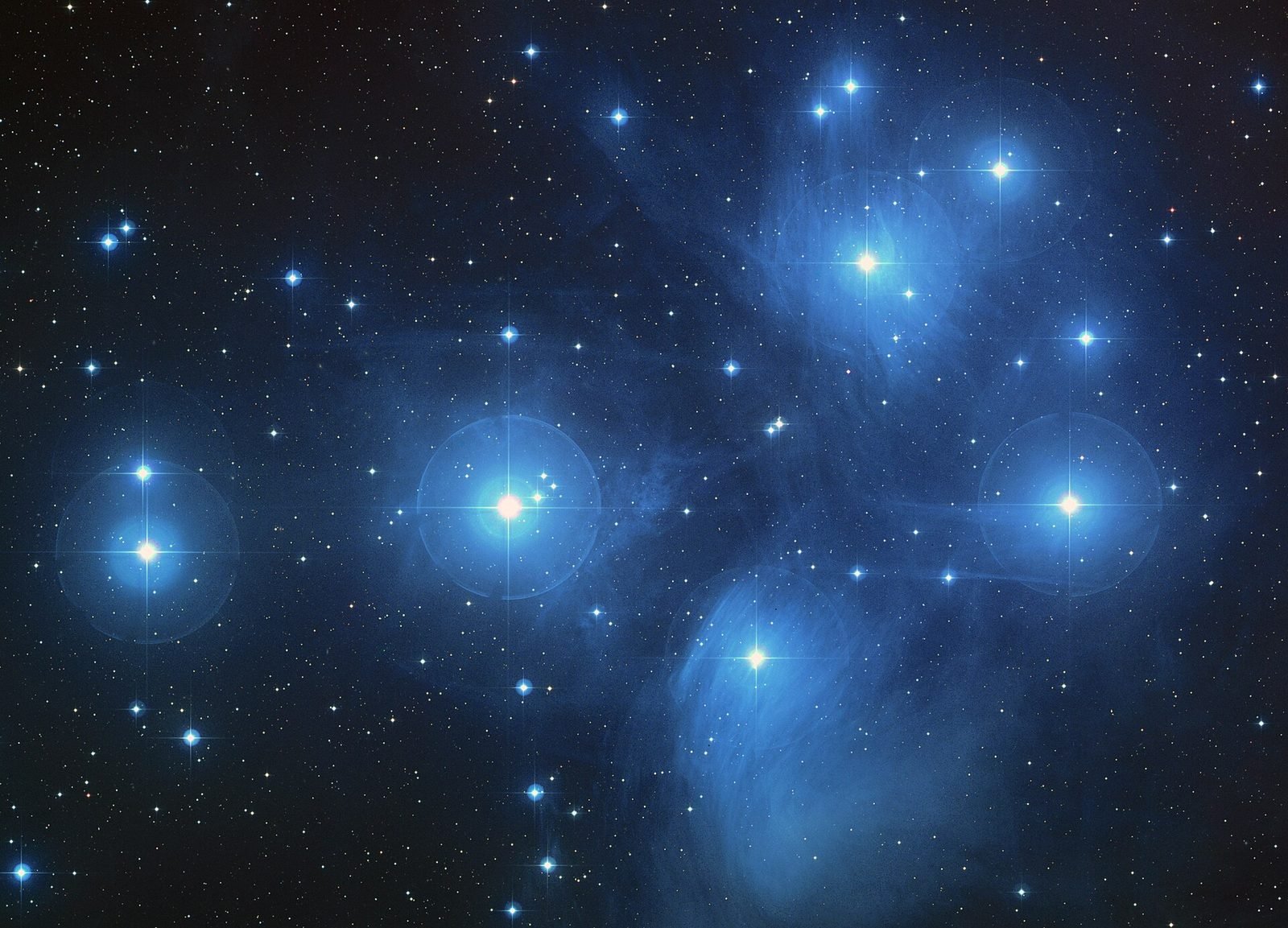

6. Lyra, Sirius and Arcturus in the galactic-family framework
Royal’s official book catalogue supplies a broader map. The Prism of Lyra organises themes through Lyra, Sirius, Orion, the Pleiades, Arcturus and Zeta Reticuli. The Golden Lake distinguishes Pleiadian and Sirian teaching threads and presents them as resources for human development. These are the catalogue’s proposed relationships, rather than a measured distribution of populations. [9]
This framework has an important teaching function: different named lineages express different problems of separation, development and integration. A reader can study that architecture while keeping the claimed cosmic history open to examination.
A source’s use of a star-name should not be expanded beyond its actual description. The catalogue does not provide enough evidence for a precise anatomy, planetary environment or verified timeline for each group. Nor does a mention of Arcturus establish every healing attribute assigned to “Arcturians” elsewhere online.
The source also matters when the same label reappears in Bashar’s catalogue. Shared vocabulary may reflect related traditions, a common proposed reality, direct influence or a mixture. Royal identifies Anka as an old friend and mentor, so their agreement cannot automatically be counted as two wholly independent discoveries. [10]
A useful directory therefore gives each group a source-specific account and links the claimed relationships. It can leave an entry brief where the evidence is brief. An honest gap communicates more than an invented encyclopaedia.
7. Anunnaki: ancient deities and modern proposed relatives
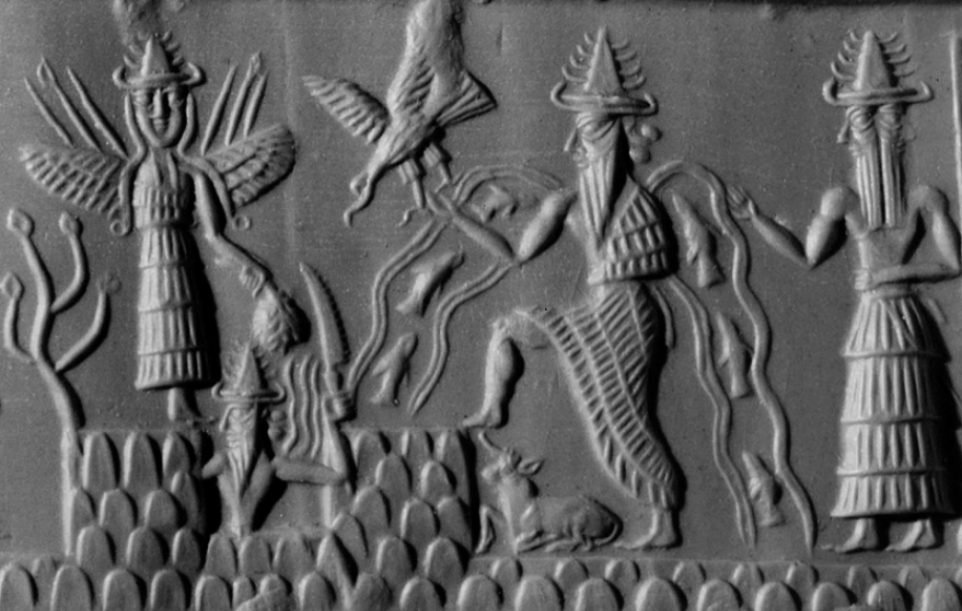
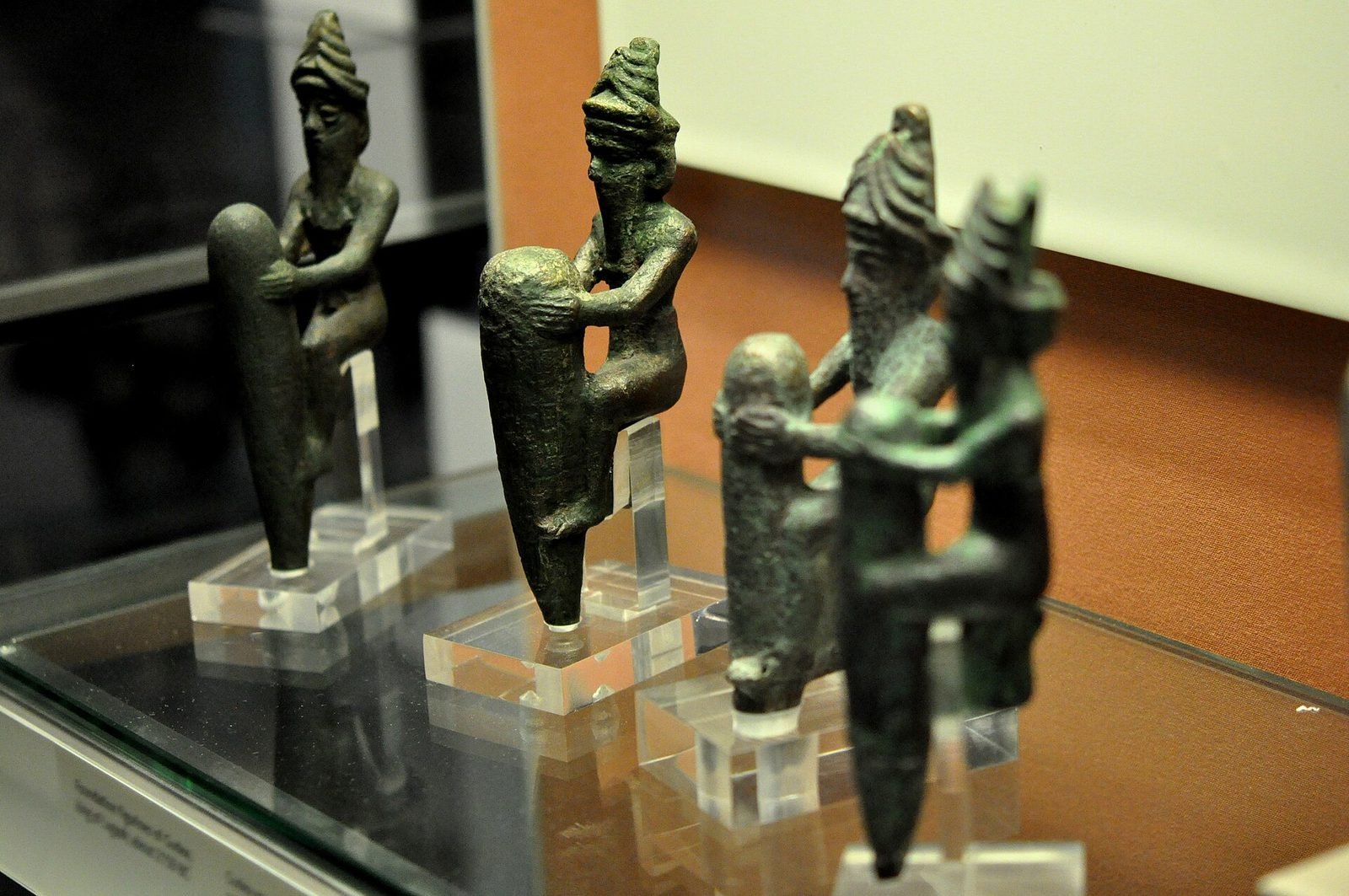
Ancient Anunna/Anunnaki terminology refers to groups of Mesopotamian deities whose functions and scope change with period and text. That historical use should remain an entry in its own right. [11]
The modern directory then needs separate entries for Sitchin’s extraterrestrial interpretation, discussed in Chapter 12, and the Bashar ancestry narrative. In the selected reproduced Bashar exchange, the attributed reply links later matings to demigod traditions and differing inherited attributes. It does not establish every element of another author’s account merely by using the same name. [12]
The crucial connection is a proposal about humanity’s relationship to powerful predecessors. The ancient text, the modern technical reinterpretation and the channelled ancestry claim are different sources, even where all three involve extraordinary beings.
A portrait cannot solve the identity question. Dressing a figure as a Mesopotamian ruler and giving it extraterrestrial features visually combines a historical culture with a modern claim. Such an image should be labelled as a source-based artistic interpretation, with the source specified.
Whether the proposed beings were benevolent also depends on the account. Teaching, labour, intervention and ancestry can imply different relationships. A label such as “friendly relatives” would conceal disputes that the sources themselves preserve.
The reader’s task is to identify the exact claim being evaluated: a divine category in a tablet, an alleged visitor in a modern book, or a proposed ancestor in a channelled session.
8. Ra, Confederation, Orion and Guardians
Ra identifies itself as a social memory complex associated with Venus and describes a past appearance and manifestation unlike ordinary contemporary human life. This is the teaching’s self-description, not a biological report about present-day Venus. Reducing Ra to a single portrait of a glowing humanoid would lose part of what the source claims to be. [13]
The Confederation is described through service and response to a calling; Orion is contrasted through service-to-self orientation. These are proposed affiliations and ethical directions, rather than two uniform anatomical species. [14]
Guardians name functions within the cosmology. Session 9 connects them with preparation for the claimed transfer from Mars, while the source elsewhere assigns guardianship to wider processes. The directory should specify which passage and function it is presenting, rather than treating every guardian reference as one physical population. [15]
The distinction between orientation and appearance matters. An allegedly benevolent affiliation does not identify the cause of a frightening experience, while a source’s negative classification does not independently establish the origin of an unfamiliar figure.
The teaching’s central moral distinction can nevertheless be examined: does an action support another being’s freedom or seek control? That question is more informative than deciding kindness from a face. It is also available before a reader accepts the surrounding cosmology.
If a later witness is assigned to Orion or Confederation, ask who made that assignment and how. A craft’s shape, an observer’s fear or a reassuring message is not enough to establish membership in either proposed group.


Don Elkins and Carla Rueckert interview — part one
9. Wanderers, volunteers and incarnating helpers
Ra’s wanderers are described as beings taking human incarnation in order to help, with forgetting and involvement in ordinary human difficulties. This is an incarnation category. It does not describe a visitor who can be identified by an unusual face or a craft’s recorded trajectory. [16]
Dolores Cannon’s The Three Waves of Volunteers and the New Earth presents another helping-incarnation narrative derived from hypnosis material. The publisher identifies volunteers responding to Earth’s difficulties. The overlap with wanderers is clear in purpose; it does not establish identical groups, dates or source histories. [17]
For a reader, these stories can offer meaning: service, belonging and responsibility for the world. Their personal significance should not be confused with an externally verified classification of the reader’s ancestry.
A feeling of alienation is not a reliable test of an extraterrestrial identity. Many people recognise themselves in broad descriptions of difference, sensitivity or a wish to help. A self-recognition may begin a spiritual reflection without establishing the history proposed to explain it.
There is also a practical ethical measure. Does the identity encourage ordinary care and responsibility, or create a hierarchy between supposedly special people and everyone else? A narrative of helping becomes less coherent if it is used to claim exemption from respect for other people.
The useful overlap here is a philosophy of participation: assistance occurs through a human life. Its metaphysical origin remains a separate question.
10. Humanlike, mantis-like and reptilian descriptions
Not every reported figure fits the small-Grey image. The course’s directory also needs space for humanlike and insect-like descriptions, and the Reptilian category that occurs in Bashar’s official event listing. A catalogue topic establishes that the category is discussed; it cannot supply a verified anatomy or moral character. [5]
These labels begin with resemblance. “Mantis-like” does not prove that a being is an insect, just as “humanlike” does not prove human ancestry. An account may describe only a silhouette, a face, a posture or a remembered impression. Those are different degrees of description.
Each future case entry should preserve the witness’s wording before adding a directory label. If an interviewer supplies “reptilian” and the witness merely agrees, that source history differs from an unsolicited detailed description preserved earlier.
Claims that a figure changes appearance need the same attention: was a transition observed, inferred between separate episodes or introduced by a teaching? The explanation of shape-changing should not be allowed to make every incompatible description fit automatically.
Appearance also cannot justify classifying a living human as secretly non-human. A directory of reported beings is not a licence to infer hidden identity from someone’s face, ethnicity, influence or political conduct.
The value of keeping these categories open is descriptive. It lets unfamiliar reports be recorded without forcing them into the nearest familiar portrait. A stronger identity claim should follow evidence rather than arrive with the illustration.
11. Are they friendly? Examine conduct and consent
The accounts do not support one global answer. Some sources describe teachers and assistance, others coercion and fear, and some combine disturbing encounters with later positive interpretations. Those differences belong in the chapter.
A practical assessment asks what the reported being does. Does it explain, allow questions, respect refusal, provide checkable information and acknowledge the witness’s limits? Or does it threaten, isolate, demand obedience or make its own identity immune to scrutiny? These are the chapter’s ethical questions, applicable to a claimed relationship regardless of origin.
The higher-level agreement proposed in the reproduced Bashar passage illustrates a difficult point. It is an explanation offered within the teaching. It does not independently establish that a frightened person knowingly consented to an event. A present objection should not be dismissed because someone else asserts a forgotten agreement. [2]
Likewise, a comforting experience does not authenticate a cosmic address. An apparently hostile episode does not establish that every being with a similar form is hostile. Behaviour, consequence and identity need separate records.
For every profile, replace a permanent “friendly” badge with a short attributed statement: what intentions are claimed, what conduct is reported, and where accounts conflict. The goal is to help readers understand relationships, not decide trust through a colour or a face.
12. The map that can responsibly be built
| Entry type | Examples in this chapter | Appropriate description |
|---|---|---|
| Reported appearance | Grey, humanlike, mantis-like | What a witness or source describes |
| Proposed civilisation or lineage | Sassani; source-specific Pleiadian, Sirian or Lyran accounts | Identity and relationships as claimed |
| Historical term reinterpreted | Anunnaki | Ancient usage beside named modern readings |
| Alliance or orientation | Confederation, Orion | Membership and purpose within the source |
| Named communicating identity | Bashar, Ra, Germane, Sasha | Self-presentation and communication process |
| Incarnation category | Wanderers, volunteers | Proposed purpose within a human life |
This map answers a large part of “what alien races are reported?” while correcting the assumption that every name must be a race. It also identifies the central unresolved task: connecting a reported identity to independently accessible evidence.
The strongest overlaps concern recurring forms, alleged biological relationships, teaching and assistance, and competing accounts of consent. Their importance lies in the specificity and independence of the underlying records. Similar portraits and repeated labels alone cannot establish a shared population.
A future public encounter could change the directory substantially. Until then, preserving source boundaries is what makes it useful: readers can encounter the full range of proposals without receiving a fabricated consensus.
Questions for study
- Which names describe an appearance, which a civilisation, and which a function?
- What would connect a witness’s description to a claimed channelled identity?
- When does shared vocabulary reveal a source relationship rather than independent corroboration?
- How should the directory record conflicting accounts of intentions and consent?
Next: Chapter 14 · Craft, technology and the Bob Lazar story.
References and source notes
The references distinguish a witness’s statement, an investigator’s assessment and the chapter’s own analysis. An official host authenticates a document’s provenance; it does not automatically establish every assertion within it. URLs were checked or their indexed source text consulted during this review.
John E. Mack (1993), “The UFO Abduction Phenomenon: What Might it Mean for the Human Future?”, April; institute-hosted reproduction.
Locator: Passages describing beings, presences and experiential/transformational aspects. Source type: Investigator’s own presentation of encounter accounts. Use and limits: Mack is reporting and interpreting other people’s experiences. His Harvard affiliation does not make those interpretations university findings or independently identify the beings.
Bashar / Darryl Anka, “Alien Abductions101Who Are The Greys”, transcript reproduction.
https://www.bashararchive.com/transcript/alien-abductions101who-are-the-greys
Locator: Part 1: parallel-Earth origin, hybrid descent, claimed higher-level agreement and acclimatisation. Source type: Undated third-party reproduction attributed to a channelled session. Use and limits: An original session date and complete audiovisual correspondence were not established. Used narrowly for the attributed narrative, not for dating its first appearance or proving its external history.
Darryl Anka / Awakened Magazine, “Channeling Bashar: The Key to Life is Acting On Your Passion”, interview.
Locator: Replies on Bashar’s self-presentation, telepathic translation and the explicit inability to prove the identity. Source type: Named source’s interview in a publisher-hosted transcript. Use and limits: Anka’s explanations are attributed, not verified by the interviewer’s promotional introduction. The interview is not independent inspection of an extraterrestrial speaker.
Bashar Communications, early-transmission catalogue; Bashar / Darryl Anka, An Interview with Bashar, attributed 15 May 2006, text reproduction.
https://tv.bashar.org/checkout/new?o=p3717804
https://www.superphysics.org/research/other/alien/essassani/transmissions/2006/2006-05-15/
Locator: Official description of Sassani civilisation and ancestry; reproduced interview naming the world Essassani. Source type: Official catalogue and third-party reproduction of attributed first-person material. Use and limits: Supports source-specific terminology. The original audio and complete correspondence of the interview reproduction were not audited.
Bashar Communications, Interstellar Enneagram weekend-event catalogue.
https://tv.bashar.org/checkout/new?o=p3073455
Locator: Official listing of Anunnaki, Grey, Orion, Reptilian, Pleiadian, Essassani, Sirius, Arcturus and Shalinaya topics. Source type: Official session catalogue. Use and limits: Establishes that the named categories occur in this teaching’s programme, not every claimed characteristic or an identification of recorded craft. The full event was not audited.
Kryon / Lee Carroll (2014), “The Fast-Track Systems”, Mt Shasta, 14 June.
https://kryon.com/CHAN2014/k_channel14_SHASTA-14.html
Locator: Final section: proposed Pleiadian DNA alteration beginning about 200,000 years ago and spiritual purpose. Source type: Officially published enhanced channelled transcript. Use and limits: The page explicitly says that the live message was revisited and may contain added information. It is not labelled a verbatim recording or a molecular finding.
Barbara Marciniak (1992), Bringers of the Dawn: Teachings from the Pleiadians; publisher description and reproduced text.
https://www.innertraditions.com/books/bringers-of-the-dawn
https://ivo-benda.org/english/svetelna_knihovna/htm/en/en_kniha_bringers_of_the_dawn.htm
Locator: Chapter “Who Your Gods Are”, intervention around 300,000 years ago; discussions of twelve-strand DNA. Source type: Channelled book, accessed through indexed text reproduction and publisher metadata. Use and limits: Full publisher-page access was restricted. Used narrowly for the narrative’s content, not as independently verified biological history. No unverified page number is assigned.
Lyssa Royal Holt (1994; posted edition copyright 2012), Preparing for Contact — Tokyo.
https://www.lyssaroyal.net/uploads/1/5/7/1/15716170/tran-pfc-tokyo94.pdf
Locator: Opening introduction, PDF pp. 1–2: semi-conscious channeling, Germane and Sasha. Source type: Source-hosted transcript of a channelled presentation. Use and limits: The transcript removes Japanese translation and says the original tape is not publicly available. Germane is distinguished from Saint Germain; Sasha’s identity is the source’s assertion.
Lyssa Royal Holt, official ebook catalogue, The Prism of Lyra and The Golden Lake.
https://www.lyssaroyal.net/ebooks.html
Locator: Book descriptions and chapter listings: Lyra, Sirius, Orion, Pleiades, Arcturus and Zeta Reticuli; Golden Lake teaching threads. Source type: Author-hosted catalogue describing channelled works. Use and limits: Used for the named framework and teaching roles. A contents list does not support a detailed census, anatomy, chronology or verified stellar origin.
Lyssa Royal Holt / Bashar through Darryl Anka (December 2020; published 2021), conversation and introduction.
https://www.lyssaroyal.net/uploads/1/5/7/1/15716170/bashar_lyssaqs-dec2020.pdf
https://sedonajournal.com/march-2021/conversation-lyssa-royal-holt-and-bashar-through-darryl-anka
Locator: Opening first-person identification of Anka as an old friend and mentor. Source type: Source-hosted introduction and published conversation. Use and limits: Documents a source relationship. It does not establish that every similarity results from borrowing, or that the shared claims are false.
Nicole Brisch, “Anunna (Anunnaku, Anunnaki) (a group of gods)”, Ancient Mesopotamian Gods and Goddesses, ORACC / University of Pennsylvania.
https://oracc.museum.upenn.edu/amgg/listofdeities/anunna/index.html
Locator: Functions, periods, city pantheons and underworld associations. Source type: Original specialist reference research grounded in Mesopotamian texts. Use and limits: Used for the term’s varied historical usage. The entry is not a general proof about all possible non-human intervention.
Bashar / Darryl Anka (2023), Becoming a Galactic Citizen, part 1, 28 January; third-party text reproduction and official series locator.
https://www.superphysics.org/research/other/alien/essassani/transmissions/2023/2023-01-28/
https://tv.bashar.org/checkout/new?o=p3073672
Locator: Reproduced Q&A, “Energetic Bodies and Anunnaki Genetics”; separate questioner’s assumptions from attributed Bashar replies. Source type: Channelled-session text in a third-party reproduction; official catalogue/highlight locators for the series. Use and limits: No complete audiovisual verification is claimed. The catalogue authenticates the series listing, not every word in the reproduction. No precise ancient date is assigned from this passage.
L/L Research, The Law of One, session 6, 24 January 1981, questions 6.4–6.8.
Locator: Ra’s social-memory-complex identity, Venus association and description of appearance/manifestation. Source type: Primary channelled transcript. Use and limits: A self-description within the teaching, not planetary exploration data or an authenticated photograph.
L/L Research, The Law of One, session 7, 25 January 1981, questions 7.1–7.2 and 7.12–7.17.
Locator: Confederation service/calling and Orion comparison. Source type: Primary channelled transcript. Use and limits: The affiliations and ethical orientations are claims of the source. A sky location or constellation name does not identify an earthly report’s occupants.
L/L Research, The Law of One, session 9, 27 January 1981, questions 9.6–9.16.
Locator: Mars, Guardians, claimed transfer approximately 75,000 years ago; terrestrial evolution and source-specific density terminology. Source type: Primary channelled transcript. Use and limits: The stated time is relative to the session; it is not a dated fossil horizon. The source combines claims about consciousness and bodily preparation rather than supplying a conventional population-genetics model.
L/L Research, The Law of One, session 12, 28 January 1981, questions 12.26–12.30.
https://www.lawofone.info/s/12
Locator: Wanderers, incarnation, forgetting and adjustment difficulties. Source type: Primary channelled transcript. Use and limits: An incarnation category in a cosmology, not a biological species or a diagnostic checklist. No numerical population estimate is adopted as a current fact.
Dolores Cannon (2011), The Three Waves of Volunteers and the New Earth, publisher description.
https://redwheelweiser.com/book/three-waves-of-volunteers-and-the-new-earth-9781886940154/
Locator: Book description of volunteers and the hypnosis-derived narrative. Source type: Publisher/imprint presentation of the author’s work. Use and limits: Identifies the category and its reported source process. It is not a verified list of people with off-world ancestry.