
Aliens · Chapter 3
What the instruments recorded
A recording gives an encounter something that memory alone cannot: a sequence other people can examine. They can pause it, measure angles, inspect changes and challenge an interpretation. That makes the Navy videos and other UAP recordings valuable even when they do not settle the object’s identity.
Illustration made for this site. Not a photograph of the claim.
Images, measurements and the search for exceptional performance
Reviewed 30 October 2026.
The central difficulty is that a camera records a view, not a complete three-dimensional event. A radar produces measurements and processed tracks under particular operating conditions. Turning either into a claim about extraordinary technology requires a reconstruction of what the instrument was doing and where the target could have been.
This chapter works through that process. It treats official assessments and independent analyses as arguments whose strength depends on their observations, assumptions and reproducibility. A surprising result should survive examination; an ordinary explanation should also account for the specific evidence.
1. Three questions behind every UAP recording
In April 2020 the U.S. Department of Defense formally released three Navy videos: one from 2004 and two from 2015. Its statement confirmed their Navy provenance and described the phenomena as unidentified. That announcement did not identify extraterrestrial craft or validate every performance claim subsequently attached to the films. [1]
Three questions follow.
Is the recording authentic? Establish the source, file history, date and edits. A genuine military video has a different provenance from an unattributed internet upload.
What behaviour does it establish? Determine whether the target’s distance, motion and physical characteristics can be measured. A dot crossing a display is an observation; a speed in kilometres per hour requires more information.
What produced that behaviour? Compare explanations. Even a securely established unconventional manoeuvre would not, by itself, identify a civilisation, a place of origin or an intention.
Each question can advance separately. A file may be genuine while its target remains unidentified. A target may remain unidentified after an extraordinary speed claim has been explained. Alternatively, improved data could establish a genuinely difficult performance anomaly even before its source becomes known.
The eight case files, including the shapes and water reports beside these three Navy clips, are kept together at What was recorded.
2. What infrared actually shows
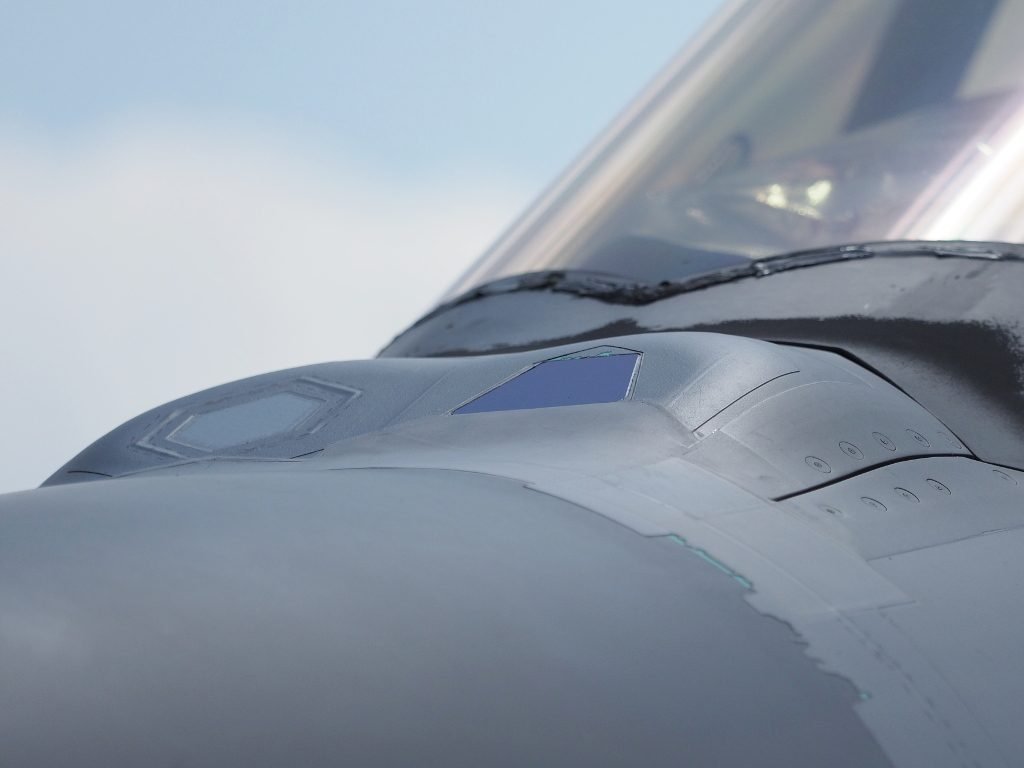
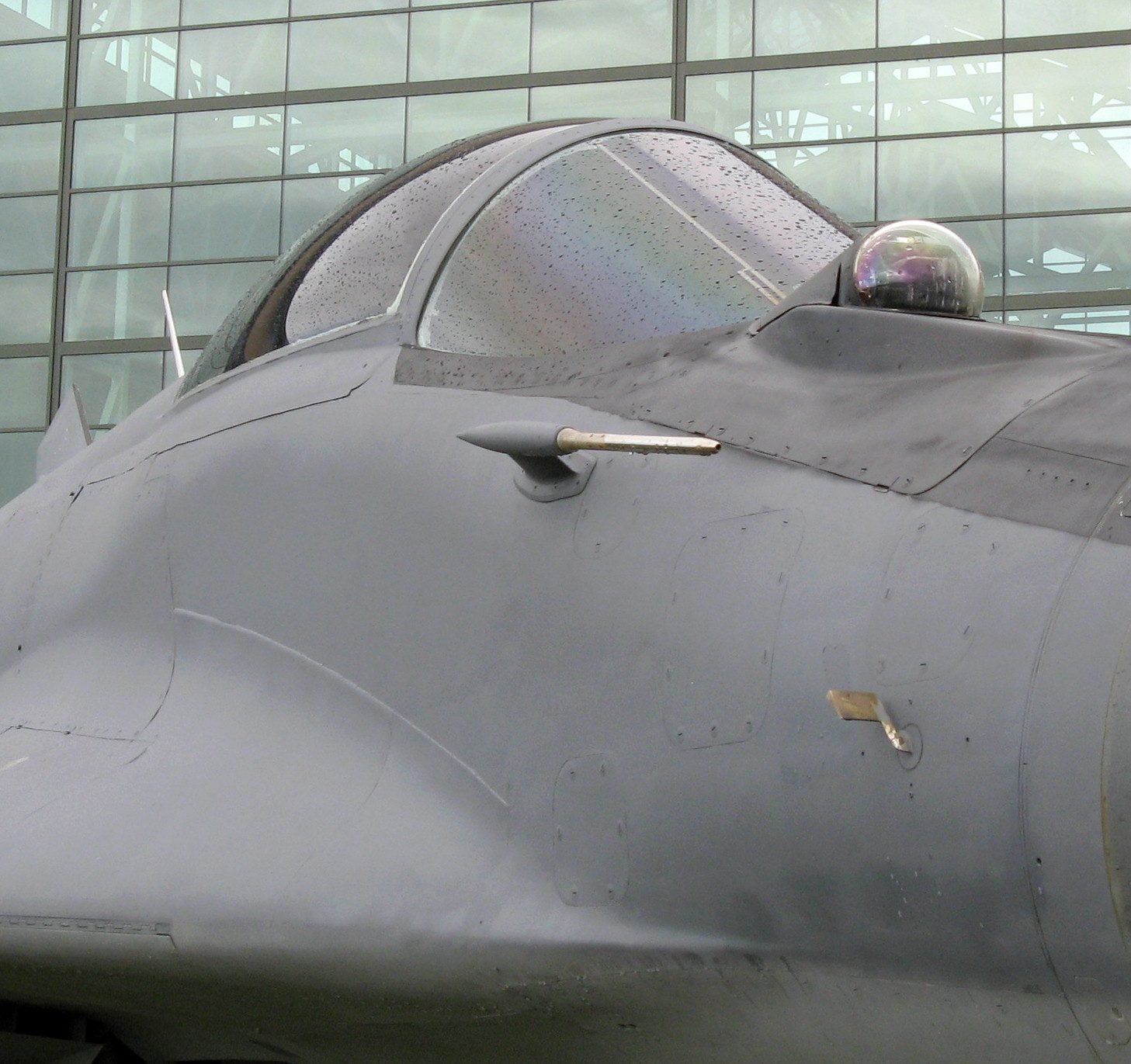
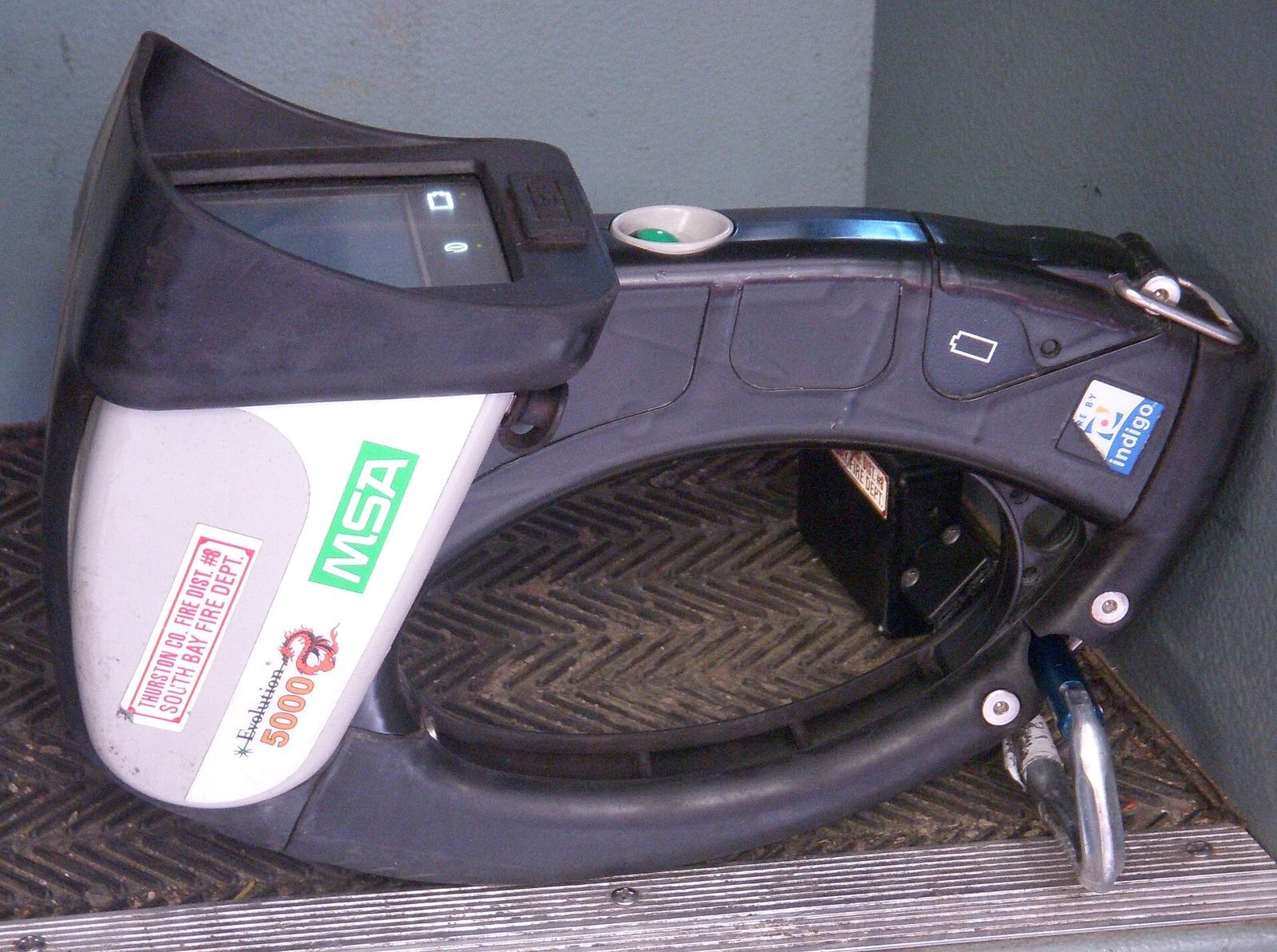
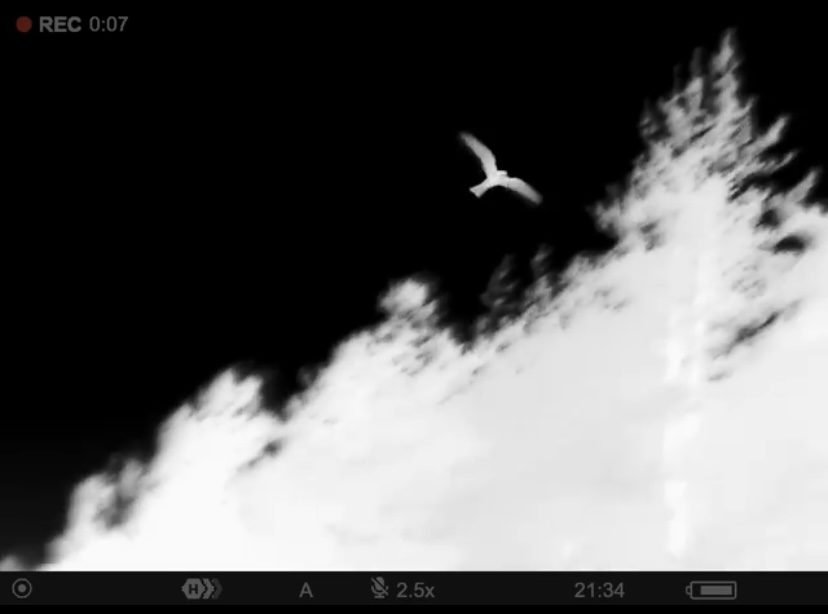
An infrared image represents radiation reaching a detector within a selected wavelength band. It is affected by the target’s emission, reflected radiation and the intervening atmosphere. Converting the signal into a reliable surface temperature requires additional information, including assumptions about emissivity and environmental conditions. General thermography documentation makes these dependencies explicit. [2]
A bright or dark patch in a UAP clip therefore needs to be understood through the imaging system. It is not automatically a visible-light colour, a material identification or a direct thermometer reading. A reflective surface and a strongly emitting surface can appear differently as viewing conditions change.
Display palettes add another layer. White-hot and black-hot presentations assign opposite brightness conventions to the signal. Image adjustments change how contrast is shown. Manufacturer documentation explains these display choices; it does not establish which settings were used in a particular Navy encounter. [3]
A target’s apparent outline also needs care. Before interpreting a resolved shape as a fuselage, ask whether the object occupies enough detector pixels to show structure. Blur, saturation, glare and processing may determine the visible boundary. An apparent absence of wings is much more informative when the instrument could actually resolve wings of the relevant size at that distance.
The same principle applies to exhaust. “No plume visible” is a report about this view, in this band, with this sensitivity. To make it a strong constraint on propulsion, establish what plume a proposed engine should have produced and whether this sensor, orientation and atmosphere should have revealed it.
These questions make infrared more useful. They turn a suggestive silhouette into a set of testable optical and physical expectations.
3. From an angle to a speed
Imagine watching a bird through a moving train window. A nearby bird can sweep rapidly across the view while a distant aircraft seems almost fixed. Both impressions depend on relative motion and distance.
A camera’s angular measurement has the same fundamental limitation. In a simplified instantaneous geometry,
v⊥,relative = Rω
Here, R is range and ω is the inertial line-of-sight angular rate in radians per second. The result is the component of relative velocity perpendicular to the line of sight. It is not the target’s total speed. A raw screen-motion measurement must first be corrected for camera pointing and platform motion.
Invented teaching example—not measurements from a UAP case: suppose the corrected angular rate is 0.5 degrees per second, approximately 0.00873 radians per second.
| Assumed range | Corresponding transverse relative speed |
|---|---|
| 1 kilometre | About 8.7 metres per second |
| 10 kilometres | About 87.3 metres per second |
The same angular rate permits a tenfold difference in inferred speed because range changed tenfold. Movement towards or away from the observer would require further information.
Altitude also needs geometry. For a simplified flat-Earth example, with observer altitude hₒ, slant range R and depression angle α below the local horizontal,
hₜ = hₒ - R sin α.
A second invented example: an observer at 8,000 metres, viewing a target 6,000 metres away at a 30-degree depression angle, places it at approximately 5,000 metres altitude under these assumptions. “It looks close to the sea” would not override that geometry.
Real reconstructions must use appropriate Earth geometry, a consistent altitude reference, calibrated pointing and uncertainty estimates. These examples teach dependencies; they do not reproduce any military sensor analysis.
4. The file around the film
Useful footage comes with a measurement context: timestamp, platform position and attitude, sensor pointing, field of view, zoom, tracking mode and a record of any displayed range’s origin. A displayed number should be decoded before being treated as a direct target measurement.
The preceding and following footage matters too. It can show whether a target was acquired after an unusual manoeuvre, whether the instrument changed modes and whether a dramatic movement coincided with loss of tracking.
NASA’s 2023 study team stressed the limitations of poorly characterised observations and the need for suitable calibration, metadata and coordinated collection. It also reported no conclusive evidence in the existing literature that UAP have an extraterrestrial origin. That is a statement about the evidence reviewed, not a prohibition on investigating future or unresolved cases. [4]
A public clip is often a small portion of the evidence claimed for an encounter. The clip should be assessed for what it contains. Witness accounts and other sensors may add important information, but their relationship to it needs to be demonstrated with time and location rather than assumed.
5. FLIR1: the target and the tracking system
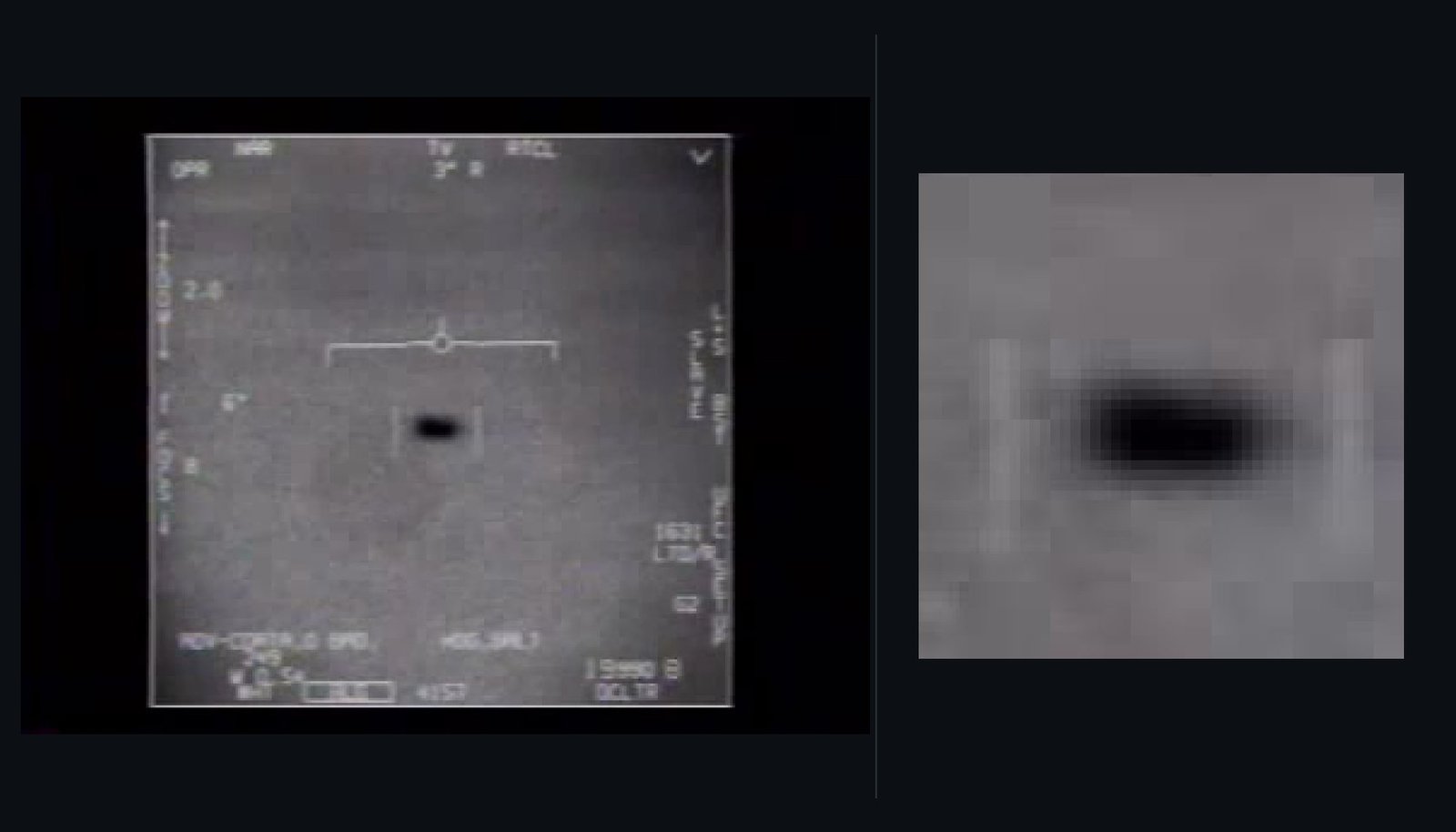
Chapter 2 distinguished the Nimitz visual encounter from Underwood’s later recording flight. The sensor question is narrower: which motions in the FLIR1 display belong to the target, and which reflect camera tracking or changes in the view?
An object leaving a tracking box can have several causes. It may have accelerated. The camera may have ceased following its motion. A change in field of view can also change apparent screen speed. Distinguishing these possibilities requires examination of the display state and a reconstruction of the line of sight before and after the transition.
A simple thought experiment helps. A camera tracks an aircraft, holding it near the centre. If the camera stops turning while the aircraft continues at constant velocity, the aircraft moves rapidly across the frame. The image has changed abruptly without an abrupt physical acceleration. This is a possible mechanism to test, not an identification of the FLIR1 target.
Conversely, correcting for tracking does not dispose of the broader Nimitz reports. An explanation for one display movement has to be kept at that scale. Other observations require their own analysis.
AARO’s public imagery catalogue, consulted for this review, lists FLIR and GIMBAL as unresolved. That label leaves a question open; it does not certify every extraordinary interpretation of the clips. [5]
6. GIMBAL: orientation and trajectory are separate questions
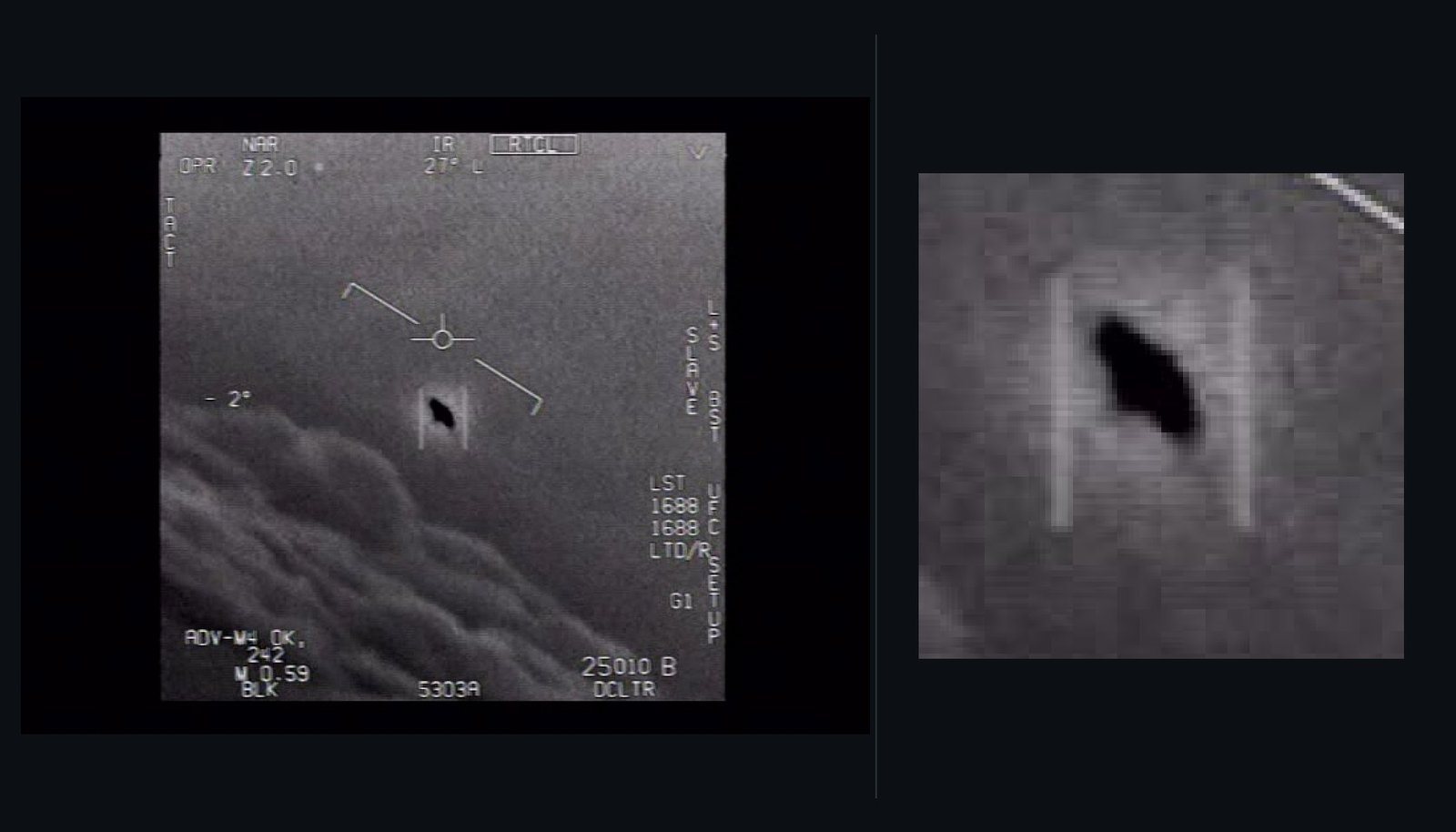
The GIMBAL debate illustrates how people can analyse different features of the same recording and seem to be answering the same question.
Mick West’s original analysis proposes that the conspicuous rotation can result from infrared glare interacting with the imaging system’s rotation and stabilisation. On this account, the image’s changing orientation need not represent a physical craft rolling. His published work includes simulation materials that can be examined rather than accepted solely on authority. [6]
A glare explanation concerns image formation. It does not, on its own, settle the target’s position, distance, ground track or identity. A proposed conventional aircraft still needs to fit the relevant observations.
Yannick Peings and Marik von Rennenkampff approached the trajectory question in a 2023 preprint. Their close-range scenario, informed by aviator accounts, produces an unusual potential path including deceleration and a vertical turn. They also consider a more distant scenario compatible with a different interpretation. The result depends critically on the assumed range; the public clip does not provide their close range as a direct measurement. [7]
The two approaches should therefore be compared through an explicit list of inputs. Which angles are read from the display? Which platform parameters are known? Which distances are assumed or supplied by testimony? Does a candidate explanation reproduce the target’s apparent orientation, position and timing together?
A useful next analysis would publish alternative trajectories across the plausible input ranges, alongside the image-formation model. If unusual motion is required throughout those ranges, that would strengthen the anomaly. If conventional motion remains compatible, the video alone cannot choose between the possibilities.
The classroom lesson is precise: identifying a visual artefact can explain one feature without explaining an encounter; reconstructing an unusual path from conditional inputs does not make that path a directly observed fact.
7. GoFast: apparent speed over the sea
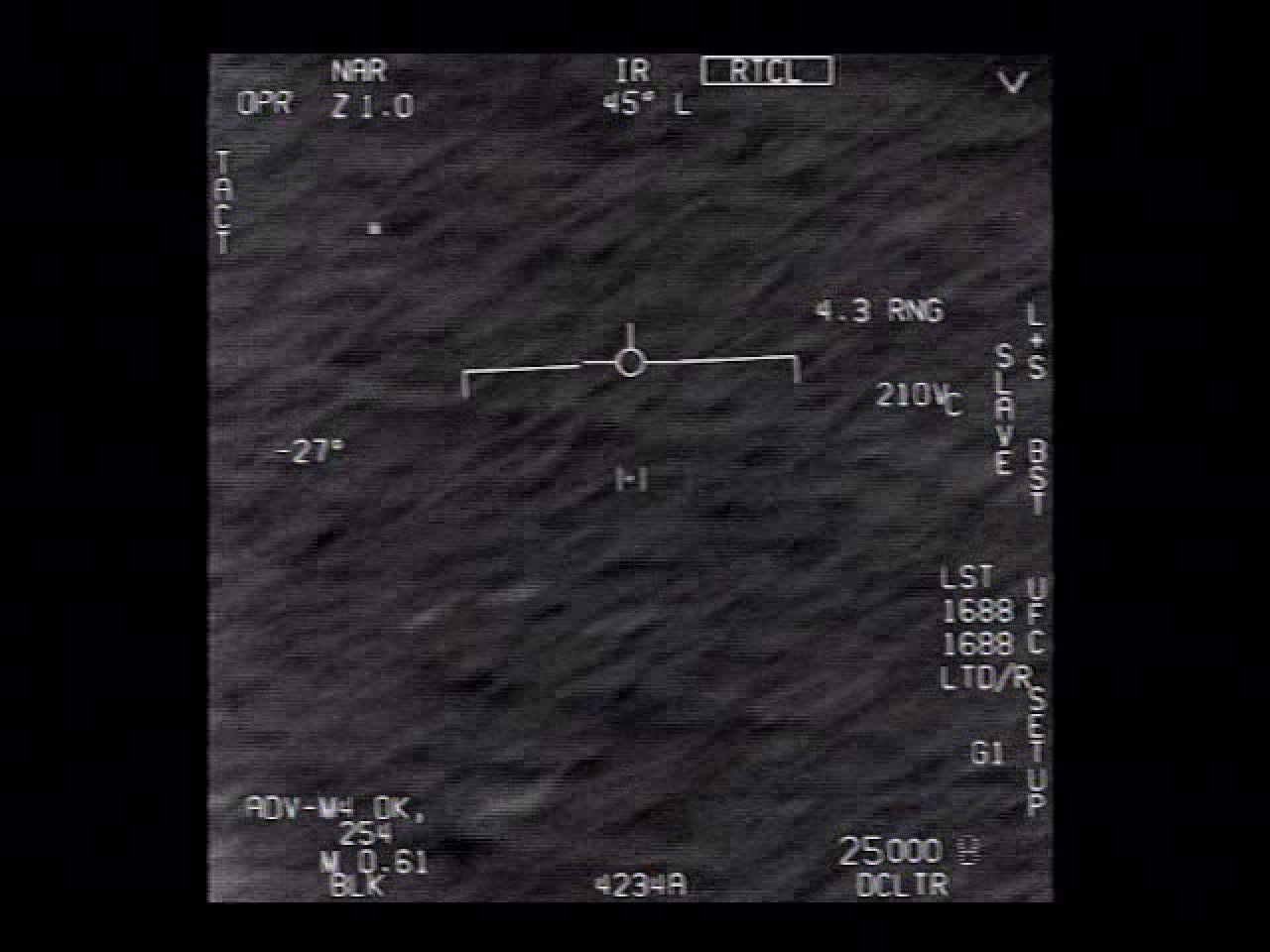
GoFast is a worked example of the importance of range and a moving observer. AARO’s 2025 reconstruction assessed the target as being around 13,000 feet above the sea, rather than skimming its surface. It concluded with high confidence that the recording did not show anomalous speed, while leaving the object’s identity undetermined. [8]
A distant background can make the target seem to race across the sea when much of that apparent movement comes from the observing aircraft. This is parallax: relative viewing geometry changes as the observer moves.
The report also states limitations. The original video file and metadata were no longer available; the analysis used the public clip and its displayed information. Aircraft heading was unknown, so the reconstruction explored possible headings. A later editorial note said aircrew accounts had not been obtained. Those limits belong beside the conclusion. [8]
A fair evaluation can ask whether the result remains robust despite those gaps. If a broad range of headings and measurement uncertainties still yields ordinary motion, the speed claim becomes weaker without the target needing a definite identity. If a specific missing datum permits an exceptional trajectory, that dependency should be shown quantitatively.
This chapter reports the published reconstruction rather than claiming to have independently reproduced it. “No demonstrated extraordinary speed” and “object identified” remain different conclusions.
GoFast also has an institutional history
Gallaudet's November 2024 testimony associates the video with a secure Navy safety communication and its subsequent disappearance from his account. That claim concerns the handling of operational information. AARO's later reconstruction concerns the target's inferred performance. These are separate propositions that can be investigated together. [17]
A geometrical explanation for apparent speed would not establish why an email disappeared. A suppressed safety message would not establish the target's speed or origin. Reading the sources together provides a more complete research question than choosing either the institutional narrative or the image analysis as the whole encounter.
Gillibrand's 2023 hearing statement also identifies access to sensor filters and stored surveillance data as an oversight issue. This is a concrete way an official's contribution can improve a scientific investigation: securing the records needed to test the claimed performance. [18]
8. Aguadilla: apparent water entry and a contested reconstruction
The 2013 Aguadilla infrared recording has generated competing reconstructions. SCU’s investigation interpreted the footage as showing unusual motion, apparent interaction with water and a separation into two objects. Those interpretations are central to why the case attracts attention. [9]
AARO’s March 2025 assessment reached a different result. It judged with high confidence that the objects did not show anomalous speed or transmedium behaviour, and with moderate confidence that they were a pair of sky lanterns. Its reconstruction treats perspective and obscuration as important to the apparent sequence. The confidence levels concern different claims and should remain distinct. [10]
SCU’s April 2025 response requested specific materials and explanations: a numerical three-dimensional trajectory, cloud information, uncertainty estimates and details of how visibility and occlusion were assessed. Those requests identify ways to test the reconstruction. Their existence does not establish that AARO’s conclusion is wrong. [11]
The central physical question is whether the target crosses a water boundary or becomes difficult to see for another reason. A convincing answer must account for location, timing, line of sight, background, image contrast and any apparent doubling throughout the sequence.
An adjudicating analysis should show more than a path drawn over a map. It should provide camera positions, target positions, predicted image locations and residual errors: how far the model’s predictions differ from observations. It should show which segments distinguish the hypotheses and whether reasonable adjustments change the result.
The disappearance itself cannot decide the cause. Water entry, occlusion and reduced contrast make different predictions, but all can produce a target that temporarily becomes invisible in a two-dimensional image. The task is to test the surrounding evidence.
9. The “jellyfish”: why the longer record matters
AARO’s September 2025 Al Taqaddum report assesses footage recorded in Iraq in October 2017. It describes a full sequence of about seventeen and a half minutes and concludes that the imagery is consistent with a cluster of fully and partly inflated balloons, with no anomalous behaviour. Its assessment uses the longer footage, metadata, viewing geometry and weather information. [12]
This is another specific finding, not a verdict on every unusual recording. It also illustrates why a memorable nickname can outrun the record. Once a shape has acquired a name, viewers may interpret every movement as the action of a creature or a machine matching that name.
Claims attached to a short excerpt must be checked against what the longer file actually records. A narrated assertion of later water entry is not established by a segment that does not show the crossing. A balloon explanation, in turn, should fit the object’s changing appearance and motion across the sequence rather than resemble a single still frame.
For teaching, keep the clip, the expanded account and the technical assessment in separate but linked panels. Readers can then see which part of the story each source addresses.
Radar, ADS-B and a claim that needs correction
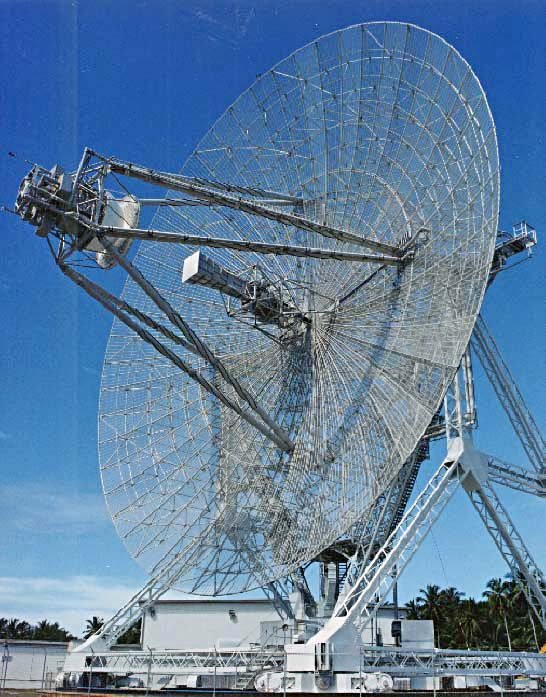
The unofficial film transcript includes a broad claim that the FAA stopped using radar. The FAA’s own surveillance guidance describes radar and ADS-B as complementary systems, including terrestrial radar retained for backup and targets without ADS-B. Its equipment FAQ also describes retention of radar and ADS-B surveillance information for at least six months. These statements do not guarantee that a particular encounter’s data remain available. [19] [20]
This distinction changes the investigation. Ask which sensors covered the location, what each recorded, who held those records and when preservation was requested. A missing public radar file may reflect retention, access restrictions or an absent recording; it cannot establish that radar surveillance ceased. This is a correction to a factual premise in the film, rather than a judgement about every participant’s other testimony.
10. What independent sensors can add
Two recordings can constrain a target more strongly than one, especially when they measure different properties. ODNI’s 2021 assessment noted reports involving multiple sensors while also identifying a need for further analysis. Multiple observations make an investigation richer; they do not automatically supply a complete reconstruction. [13]
Independence has to be established. An infrared image repeated on two monitors is one observation. Two interpretations of the same processed radar track do not become separate physical detections merely because different operators viewed them.
A stronger combination might include radar range, an infrared bearing and a second observer’s sight line, aligned in time. Two separated viewpoints may permit triangulation. Radar velocity information may constrain motion along a particular direction. Each contributes something the others may lack.
The observations must also be associated with the same object. In a busy airspace, a camera target and a nearby radar track can be mistakenly linked. Publish the association criteria, the timing accuracy and plausible competing contacts.
An especially useful record would preserve raw or minimally processed measurements, sensor status and the operator’s contemporaneous report. That allows reviewers to separate the physical signal from automated tracking decisions and later interpretations.
No single instrument is infallible. The strength comes from different instruments constraining a shared physical account despite their different limitations.
11. Extraordinary acceleration needs a measurement chain
Acceleration is a change in velocity over time. To establish it from a sequence, reconstruct positions or velocities at successive times, identify the same target throughout and estimate the errors. Differentiating noisy positions can amplify small errors into large apparent accelerations.
A track that jumps between two detections may create an apparent leap no vehicle made. Before invoking an extraordinary propulsion system, test whether the sensor lost one target and acquired another. Before dismissing a reported leap as a tracking error, examine the actual association data.
Knuth, Powell and Reali’s 2019 peer-reviewed paper estimates exceptional performance in selected UAP cases, including Nimitz, from reported observations and measurement claims. It is a serious attempt to make the performance implications quantitative. Its estimates remain conditional on those inputs; the paper is not a newly released raw radar archive. [14]
The useful question is which assumptions dominate the result. Does the inferred acceleration depend mainly on a short elapsed time, an estimated distance or the identification of two contacts as one object? Publishing those dependencies gives investigators a concrete target for corroboration.
NIST’s guidance on measurement uncertainty provides an appropriate general discipline: give the result, explain the uncertainty components and describe how they were evaluated. A dramatic central estimate without an error analysis is an incomplete measurement claim. [15]
12. Reading an assessment without borrowing its authority
An assessment should state its judgement, evidence, assumptions and limits. Intelligence analytical standards distinguish confidence in a judgement from the likelihood of a proposition. “High confidence” is not a universal numerical probability and should not be silently translated into “proved”. [16]
Apply the same scrutiny to every source. An official office may have better access to files while publishing too little for independent replication. An independent analyst may publish transparent code while relying on uncertain inputs. A witness may supply otherwise unavailable context while estimating a distance imperfectly.
| Public example | Contribution | Question still requiring its own evidence |
|---|---|---|
| FLIR1 | An authentic recorded sensor view | Relationship to the full encounter and any exceptional performance |
| GIMBAL | A testable dispute about image rotation and possible trajectories | Range, physical motion and target identity |
| GoFast | A published geometry-based challenge to apparent extreme speed | Identity and sensitivity to missing inputs |
| Aguadilla | Competing reconstructions of motion and apparent disappearance | Reproducible discrimination between water entry and alternatives |
| Al Taqaddum | An assessment using a longer sequence and contextual data | Independent scrutiny of the model and its identifying features |
The table does not add up to a count of alien craft or to a dismissal of the subject. It identifies the work each record can do.
NASA public UAP study meeting
13. What would make the next record decisive?
A strong future case would combine an unusual observation with enough measurement context to test its implications. It would preserve the original files, calibrated sensor behaviour, independent range information, platform motion and synchronised observations. Its analysis would show uncertainty and compare specific alternatives.
If exceptional motion remained after those checks, a technological explanation would deserve stronger consideration. Establishing non-human manufacture would require further evidence linking the phenomenon to that origin. Establishing a particular “race”, intention or spiritual teaching would require still more specific connections.
For discussion:
- Which unknown input most changes the conclusion in each case?
- Does a proposed explanation reproduce the whole sequence or only a striking frame?
- Are two sensors measuring the same target independently?
- What observation would distinguish the leading explanations?
- Can another team reproduce the result from the published material?
The recordings provide a foundation for a more precise investigation. The next chapter, The patterns that return, compares recurring features across encounters while keeping track of which features are measured, which are reported and which may have travelled through a shared story.
References and source notes
The references distinguish a witness’s statement, an investigator’s assessment and the chapter’s own analysis. An official host authenticates a document’s provenance; it does not automatically establish every assertion within it. URLs were checked or their indexed source text consulted during this review.
U.S. Department of Defense (2020), “Statement by the Department of Defense on the Release of Historical Navy Videos”, 27 April.
Locator: Release statement on one November 2004 video and two January 2015 videos. Source type: Official provenance/release statement. Use and limits: Confirms Navy provenance and the department’s description at release. It does not certify extraterrestrial origin, every performance interpretation or an entire encounter narrative. Indexed statement text was consulted; direct access can be restricted.
Teledyne FLIR, “Thermographic measurement techniques”, chapter 12 of the manufacturer’s online manual.
https://support.flir.com/docdownload/assets/web/2p5q/en-us/T505000.xml.html
Locator: Sections 12.1–12.2, radiation components and measurement parameters. Source type: Manufacturer’s technical documentation. Use and limits: Supports general infrared radiometry. This is not an ATFLIR calibration document and is not used to assign a temperature to a Navy-video target.
Teledyne FLIR, “Achieving a good image”, online camera manual.
https://docs.flir.com/T810587/en-US/latest/s11.html
Locator: Colour-palette and image-adjustment discussion. Source type: Manufacturer’s operating documentation. Use and limits: Explains display palettes and image presentation generally. It does not identify a target or establish the settings of a particular military recording.
NASA (2023), Unidentified Anomalous Phenomena Independent Study Team Report, September.
https://science.nasa.gov/wp-content/uploads/2023/09/uap-independent-study-team-final-report.pdf
Locator: Discussion of data quality, calibration and metadata; conclusions and recommendations, especially printed pp. 25 and 29–30. Source type: Independent study team’s public report commissioned by NASA. Use and limits: Supports the need for suitable observations and the report’s stated evidential limits. It is not a complete adjudication of every historical sighting or all classified material.
All-domain Anomaly Resolution Office, Official UAP Imagery catalogue, page 4.
https://www.aaro.mil/UAP-Cases/Official-UAP-Imagery/4/
Locator: FLIR and GIMBAL entries; catalogue status consulted in the 30 October 2026 review. Source type: Official public case catalogue. Use and limits: The consulted entries label the cases unresolved. This is an administrative/analytical status, not a finding that the targets were extraterrestrial or exhibited every claimed capability.
Mick West (2022), “Gimbal UFO — a new analysis”, 13 March, with simulation/source materials.
https://www.metabunk.org/threads/gimbal-ufo-a-new-analysis.12333/
Locator: Original analysis post, glare/rotation model and linked source-code/data archive. Source type: Independent analyst’s original technical argument. Use and limits: Presents a proposed image-formation explanation. This review did not run the supplied simulation or establish the target’s identity; forum publication is not peer review.
Yannick Peings and Marik von Rennenkampff (2023), “Reconstruction of Potential Flight Paths for the January 2015 Gimbal UAP”, arXiv:2306.08773, revised 15 November, v2.
https://arxiv.org/abs/2306.08773
https://arxiv.org/pdf/2306.08773
Locator: Abstract and conditional reconstruction: closer-range scenario and comparison with a more distant target. Source type: Original technical preprint; not treated here as peer-reviewed confirmation. Use and limits: The unusual reconstructed path depends on range and other assumptions, including information attributed to aviator accounts. It is not a new direct range measurement from the public clip.
All-domain Anomaly Resolution Office (2025), GoFast Case Resolution and methodology, 6 February; editorial note 20 February.
Locator: Resolution card; methodology, especially “Data Quality” and the 20 February editorial note. Source type: Official case reconstruction. Use and limits: Consulted through indexed report text. AARO notes missing original-file metadata and unsuccessful efforts to obtain aircrew accounts. Its published findings are attributed here; the reconstruction was not independently rerun for this chapter.
Scientific Coalition for UAP Studies (2015), detailed report on the 2013 Aguadilla incident; report page published 2018 and updated 2024.
https://www.explorescu.org/post/2013-aguadilla-puerto-rico-uap-incident-report-a-detailed-analysis
Locator: Report description, linked original analysis and discussion of alternative explanations. Source type: Original civilian investigation and analysts’ presentation. Use and limits: Supports SCU’s interpretation of unusual motion and apparent water interaction/splitting. These are its conclusions, not assumptions adopted as established in this chapter.
All-domain Anomaly Resolution Office (2025), Puerto Rico UAP Case Resolution, 20 March.
Locator: Case conclusion, line-of-sight reconstruction and assessed object behaviour. Source type: Official technical assessment. Use and limits: High confidence in no anomalous speed or transmedium behaviour; moderate confidence in a pair of sky lanterns. Different confidence levels must remain attached to their respective claims. This chapter does not claim independent replication.
Scientific Coalition for UAP Studies (2025), “SCU Announcement on the AARO Investigation of the Aguadilla Video”, 28 April.
https://www.explorescu.org/post/scu-announcement-on-the-aaro-investigation-of-the-aguadilla-video
Locator: List of requested reconstruction data and methodological questions. Source type: Primary response from the original investigating group. Use and limits: Documents specific requests at that date, including trajectory, cloud and uncertainty information. It does not establish that every criticism is correct, or that no subsequent answer has appeared.
All-domain Anomaly Resolution Office (2025), Al Taqaddum Case Resolution, dated 8 September.
Locator: Full-video description, metadata/geometry analysis and conclusions. Source type: Official case assessment. Use and limits: AARO assesses the imagery as consistent with a balloon cluster and reports no anomalous behaviour. The filename spells Taqaddam; the case is described as Al Taqaddum. The report is an assessment, not direct recovery of the target.
Office of the Director of National Intelligence (2021), Preliminary Assessment: Unidentified Aerial Phenomena, 25 June.
https://www.dni.gov/files/ODNI/documents/assessments/Prelimary-Assessment-UAP-20210625.pdf
Locator: Printed pp. 3–5, sensor reporting and further analysis. Source type: Official preliminary assessment. Use and limits: Supports the importance of multiple sensor observations while retaining collection and analytical limitations. Its reporting population is not a worldwide census.
Kevin H. Knuth, Robert M. Powell and Peter A. Reali (2019), “Estimating Flight Characteristics of Anomalous Unidentified Aerial Vehicles”, Entropy 21(10), 939.
https://doi.org/10.3390/e21100939
https://pmc.ncbi.nlm.nih.gov/articles/PMC7514271/
Locator: Nimitz case analysis and assumptions used to estimate performance. Source type: Original peer-reviewed modelling paper. Use and limits: Derives estimates from reported observations and measurements. It is not the release of a new raw radar archive; conclusions remain conditional on inputs and assumptions.
Barry N. Taylor and Chris E. Kuyatt (1994), NIST Technical Note 1297, Guidelines for Evaluating and Expressing the Uncertainty of NIST Measurement Results.
https://www.nist.gov/pml/nist-technical-note-1297
https://www.nist.gov/pml/nist-technical-note-1297/nist-tn-1297-7-reporting-uncertainty
Locator: Section 7, reporting uncertainty, and the guide’s treatment of uncertainty components. Source type: Metrological guidance. Use and limits: Supports transparent reporting of estimates, uncertainties and methods. It supplies no UAP-specific measurements or verdict.
Office of the Director of National Intelligence, Intelligence Community Directive 203: Analytic Standards.
https://www.dni.gov/files/documents/ICD/ICD-203.pdf
Locator: Analytic standards on uncertainty, confidence, likelihood and assumptions. Source type: Official analytical standards. Use and limits: Confidence describes the basis and quality of a judgement; likelihood concerns an event or proposition. No numerical UAP probability is inferred from a confidence label here.
Tim Gallaudet (2024), updated written testimony to the House UAP hearing, 13 November.
https://oversight.house.gov/wp-content/uploads/2024/11/Updated-Testimony-Gallaudet.pdf
Locator: Pp. 1–2, 2015 safety email, attached video and subsequent disappearance. Source type: Retired rear admiral’s firsthand account of receiving information. Use and limits: His receipt of the message is distinct from witnessing the recorded target. His conclusions about classification are identified as inferences.
Kirsten Gillibrand (2023), prepared opening statement at the Senate UAP hearing, 19 April.
Locator: Prepared remarks on advanced characteristics, unknown origin, sensor data and reporting. Source type: Senator’s official public statement. Use and limits: An independently attributable policy statement by a film participant. It demands investigation; it does not identify extraterrestrial occupants.
Federal Aviation Administration, ADS-B equipment FAQ
https://www.faa.gov/air_traffic/technology/equipadsb/resources/faq
Locator: Questions concerning backup surveillance and recording/retention. Use and limits: Agency technical guidance; not an encounter-specific records search.
Federal Aviation Administration, Terminal and Enroute Surveillance Technical Refresh portfolio
Locator: Role of ground-based radar alongside ADS-B. Use and limits: Describes the surveillance system, not the origin of any UAP.