
Aliens · Chapter 5
Where the accounts converge
Overlapping accounts can increase confidence that something real is being encountered. The strongest agreements concern specific details, preserved independently, that would be difficult to explain as coincidence, shared expectations or repetition. This is a promising way to investigate the alien question.
Illustration made for this site. Not a photograph of the claim.
What overlaps can reveal across witnesses, teachings and traditions
Reviewed 30 October 2026.
The material also contains another kind of convergence: witness narratives, channelled teachings and older traditions repeatedly connect unfamiliar intelligence with human development, destructive power, altered awareness and responsibility towards life. That convergence is worth understanding even where its cause remains unsettled.
The task is to discover what each agreement supports. Two accounts may corroborate an event without identifying its origin. Two teachings may share a coherent philosophy without independently confirming their proposed history. A later encounter may resemble an earlier teaching without fulfilling a precise prediction.
This chapter develops those comparisons directly. The possible presence of non-human intelligence remains a live hypothesis throughout; the argument becomes stronger when the connections are stated at the level the evidence can sustain.
1. Five ways accounts can converge
Different forms of agreement answer different questions.
| Kind of convergence | What it can contribute | Essential check |
|---|---|---|
| Separate observers of one event | Corroboration of shared external features | Independent accounts and compatible viewing positions |
| Testimony and instruments | Connection between an experience and a physical measurement | Same target, location and time |
| Distinct events | A recurring phenomenon or recurring interpretation | Specific similarities, differences and reporting opportunities |
| Earlier teaching and later event | A possible anticipatory connection | Prior wording, publication, access and match criteria |
| Different teachings or traditions | A shared idea, experience or historical relationship | Meaning in context and possible transmission |
None of these forms is worthless. Their contributions should remain distinct.
For example, Fravor's account and the later Nimitz recording offer different perspectives requiring a demonstrated connection. They cannot be treated as a single uninterrupted audiovisual record of the complete encounter. [1]
A sound comparison asks a further question: would this particular agreement be much less expected if the proposed explanation were false? “There were lights” is widely compatible with ordinary events. An independently recorded, unusual sequence with matching timing can constrain explanations much more strongly.
Specificity matters, but it must be specified before selecting the best examples. If many broad descriptions are searched against many later events, an impressive-looking match may be easier to find than it first appears.
2. Propulsion: a shared question, several proposed answers
Encounter accounts that lack visible conventional propulsion invite a technological explanation. Channelled teachings offer proposals about how such travel could occur.
Ra's session 51 distinguishes several methods of travel. Some involve craft and long journeys; others are described through unfamiliar energy systems or movement by thought, with craft functioning as a focus or enclosure. The teaching itself therefore does not offer one mechanism for every visitor. [2]
The overlap with a smooth, apparently unsupported UAP is suggestive at the level of the problem: familiar propulsion is not apparent. The encounter does not establish Ra's explanation merely by leaving the engine unidentified. Several different technologies, optical effects or incorrect assumptions about the object's movement could produce that starting point.
A useful bridge would turn the teaching into a discriminating proposal. What measurable feature should distinguish thought-related travel from an autonomous vehicle, an unfamiliar human platform or a mistaken reconstruction? Does the proposal predict a particular field, energy transfer, material property or repeatable response?
If a source supplies a technically specific, workable prediction before measurements are known, a later match could add substantial weight. A general assertion that consciousness underlies all motion is less able to choose between different observations.
This comparison gives the teachings a constructive role. They can generate hypotheses. The observations then test particular implications rather than being treated as illustrations of a cosmology already assumed true.
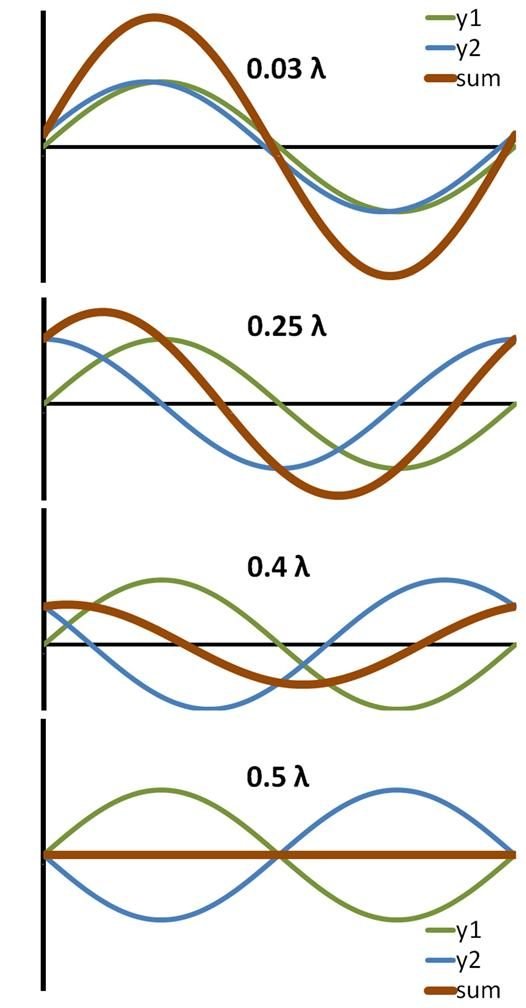
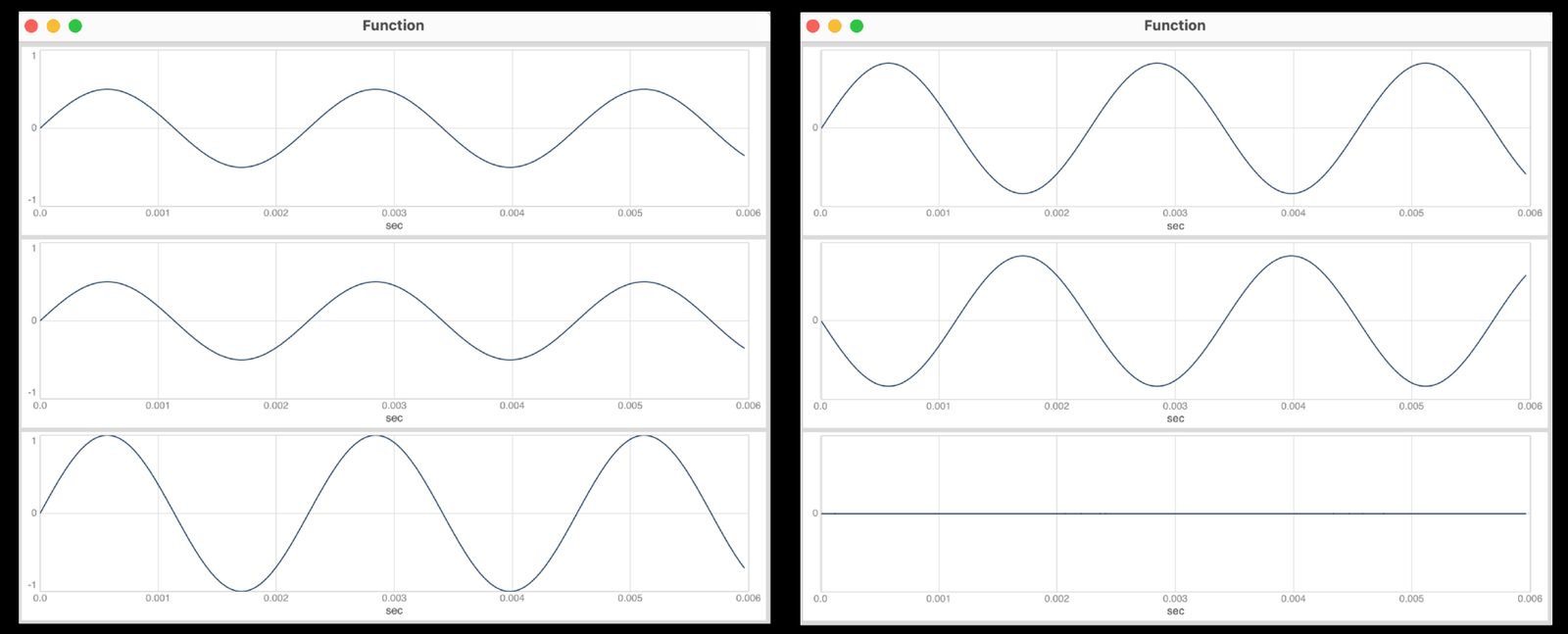

3. The box-like craft: an intriguing chronological comparison
Ra's transcript dated 28 January 1981 includes a box-like craft approximately forty feet to a side, alongside other forms. Nuccetelli's 2025 testimony recounts a much larger red-square object reportedly observed by contractors in 2003. The common geometry is unusual enough to notice. [3] [4]
The comparison contains both a match and a mismatch. A box is a three-dimensional form; a square can describe an outline or luminous appearance. The reported scales and contexts differ. A comparison that retains only “square UFO” removes information needed to judge it.
Chronology has several layers here. The session's stated date precedes the reported event. A strong anticipatory argument would also document the wording's early public availability, the earliest preserved contractor accounts and the witnesses' possible exposure to earlier stories. A modern webpage carrying an old session date is a useful starting reference, not the whole publication audit.
It also matters that the teaching lists several craft types. A list of shapes has more opportunities to resemble a later report than a single narrowly specified forecast. This does not erase the resemblance; it changes the question from “prediction fulfilled” to “how informative is this correspondence?”
The present finding is a chronological research lead. It becomes stronger if early independent records preserve more unusual matching details. It becomes weaker if the geometry emerged only after exposure to the teaching or differs substantially in the first account. Neither outcome should be decided in advance.
4. Nuclear concern: convergence with an important disagreement
The nuclear theme crosses military narratives and spiritual material. Salas associates reported objects with missile faults. The investigative questions concern the observations, engineering records and the sequence connecting them. [5]
Ra's February 1981 account connects increased involvement with destructive applications of technology and discusses assistance following nuclear deaths. Importantly, the source says permission was given to preserve the integrity of those affected, not to prevent the bombings. It does not present a simple promise that benevolent beings will stop every nuclear disaster. [6]
There is a meaningful thematic agreement: destructive power is treated as a concern extending beyond an isolated individual. There is not yet a demonstrated causal agreement about who caused a particular equipment fault or why.
This difference changes what can reasonably be inferred. A shutdown account might be interpreted as a warning, a test, interference or an unrelated failure beside a sighting. The teaching describes its own ethical and metaphysical purpose. Joining the two into “the Confederation disabled these missiles” requires a connection neither resemblance nor shared concern supplies.
A stronger convergence would include independently preserved information specific to an event: an unpublished timing, technical detail or sequence subsequently authenticated. General concern about nuclear destruction is important ethically, but also understandable within human history.
The practical message survives the uncertainty about origin. Nuclear responsibility does not depend on an assurance of outside rescue. Even within the cited teaching, human action remains consequential.
5. Telepathy, altered awareness and the form of contact
In his 1996 interview, John Mack describes reported mind-to-mind communication, ecological imagery and transformation among experiencers. These are features he identifies across his work, rather than independently measured communication channels in each case. [7]
Ra's session 53 also gives awareness a central role. It describes some encounters through thought-forms, subjective imagery and an awakening function; it distinguishes these from contacts interpreted within the teaching as coercive. The source does not require every meaningful encounter to be a conventional physical visit. [8]
Lyssa Royal's official description of Preparing for Contact similarly places contact alongside dreams, meditation and changes in consciousness. That framework treats the experiencer's mode of awareness as part of the encounter rather than background noise. [9]
This is a substantive convergence. Several approaches say that understanding contact may require studying the relation between awareness and what appears to be an autonomous other. It opens a field of inquiry broader than the camera image alone.
The shared account still permits different explanations. An externally initiated communication, an unusual state of consciousness and a culturally shaped interpretation could overlap in how they feel. Some experiences might involve more than one process. The comparison should not force a single cause onto every case.
A particularly informative contact would supply information inaccessible through ordinary means, recorded before verification. That would test information transfer. A further link would still be needed to identify the sender as extraterrestrial rather than another proposed source.
For a university interested in consciousness, this distinction is valuable. A realisation of unity, a transformative experience and the identification of a craft's occupants answer different questions. The depth of one need not be diminished to investigate the others carefully.
6. Hybrids, ancestry and the restoration of a lineage
Hybrid narratives join biology to a larger story about human participation in a wider family.
Mack describes accounts in which people say they encountered offspring presented as partly their own and were asked to nurture them. Royal's February 2021 teaching describes a Zeta lineage combining genetics with humans as part of healing its species. Bashar's official Five Hybrid Races synopsis places Sassani within a sequence of five and describes Earth becoming a sixth. [7] [10] [11]
Cannon's Keepers of the Garden uses another framework: extraterrestrials as gardeners and humanity as a garden, developed through a regression narrative. That is a wider account of involvement in human life; it should not automatically be collapsed into the same detailed reproductive programme. [12]
The recurring structure is striking: unfamiliar beings are related to humanity; an apparent deficiency or evolutionary challenge is addressed through relationship; contact belongs to a longer process. The versions differ in lineage, method, purpose and the experiencer's role.
These differences matter. A clinical-seeming reproductive encounter, a channeled family tree and a past-life narrative are different sources of information. Their agreement about kinship may reflect a common reality, a shared narrative environment, a psychological theme or some combination.
Biological claims offer potential tests. Authenticated samples, secure provenance and independent laboratory work could establish a specific relationship more directly than a resemblance between stories. An unusual sequence alone would still need to be distinguished from contamination, natural variation and terrestrial manipulation before being assigned an extraterrestrial origin.
Until such a bridge is available, the comparison establishes a shared family of claims and a useful research direction. It does not establish that a person is a hybrid on the basis of appearance, feelings of difference or identification with a teaching.
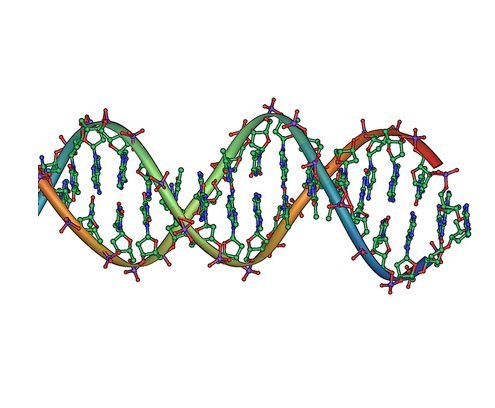

7. A documented connection: Anka and Royal
The relationship between sources is part of the evidence, not a reason to stop reading them.
In her December 2020 account, Royal calls Darryl Anka an old friend and mentor from her early channeling years. The same document presents their joint conversation and notes a resemblance between a Germane lineage diagram and Bashar's hybrid teaching. Royal says she was unaware of that particular information until later. Both the relationship and her claim of non-awareness should be preserved. [13]
The documented relationships can be shown simply:
```mermaid flowchart TD A["Darryl Anka"] -->|"channels"| B["Bashar material"] A -->|"friend and mentor, Royal's account"| C["Lyssa Royal Holt"] C -->|"channels"| D["Germane material"] A -->|"participates"| E["December 2020 conversation"] C -->|"participates"| E ```
The map establishes contact between people. It does not demonstrate that any particular statement was copied, nor establish that the teachings came from the identities they claim.
A careful investigation would locate the earliest dated versions of the matching material. It would compare exact details, record known contact and distinguish independent production from later recognition of similarity. A documented lack of access to a specific detail could strengthen a convergence argument despite the broader relationship.
Apply the same discipline to military and intelligence sources. Shared colleagues, briefings and informants can connect otherwise impressive public statements. Independence is a property of a claim's information path, not of a person's job title or spiritual identity.
Don Elkins and Carla Rueckert interview — part one
8. Consent, free will and elusive contact
Ra's early sessions explain limits on open contact through free will, collective readiness and a system of permission. Bashar's published basic principles likewise emphasise free choice, consciousness and interconnected experience. The latter is a philosophical overlap; it is not identical to Ra's institutional cosmology of councils and quarantine. [14] [15]
These ideas make a particular interpretation of elusive contact understandable: a more capable intelligence might avoid overwhelming a developing society. Under that hypothesis, ambiguity could serve a purpose rather than simply indicate absence.
The hypothesis needs boundaries. What circumstances would permit unambiguous evidence? What behaviour would contradict the proposed policy? A principle that explains both every appearance and every failure to appear can become difficult to evaluate against observations.
There is also a tension with accounts experienced as invasive. Cannon's 2010 interview strongly interprets her work through a positive custodian framework and treats deeper trance as a route to a different understanding. That is her interpretation and method, not an independently established rule that distress conceals benevolent intent. [16]
The experiencer's description should remain intact even when another source offers an explanation. A claim of a hidden soul agreement is not observable consent and cannot, by itself, settle what happened or how the person should interpret it.
The overlap around free will is a serious ethical theme. Whether visitors actually follow such a policy is an empirical and historical question beyond the agreement of teachings.
2027, The Contact Fulcrum
9. Ancient teachers: Hancock, Ra and an actual ancient text
Graham Hancock's Magicians of the Gods proposes survivors of a lost terrestrial civilisation who carried knowledge into later cultures. His account connects catastrophe, memory and travelling teachers. These are not automatically extraterrestrial teachers; changing that identity changes his argument. [17]
Ra's Egyptian narrative gives a different account: a non-human source says it attempted to teach and later withdrew as its presence or teaching produced confusion and distortion. That resembles the theme of knowledge arriving from beyond a community, while differing over the teachers' identity and history. [18]
An ancient text provides a third kind of source. Oxford's translation of the Sumerian Flood story includes divine authority, warning, catastrophe and the survival of Zi-ud-sura. It visibly marks missing passages. It does not describe an extraterrestrial engineering team or a modern spacecraft. [19]
The convergence can therefore be stated precisely: human traditions and later interpretations repeatedly connect dangerous change with warning, preserved knowledge and exceptional intermediaries. That is a real comparative observation. It leaves open whether particular traditions preserve shared events, borrowed stories, recurring human concerns or contact with something unfamiliar.
A historical link would need more than a modern paraphrase that makes different stories sound alike. Compare the original terms, dates, earliest surviving versions, transmission routes and material context. Do not replace a culturally specific deity with “alien” and then treat the replacement as evidence that the original author meant an alien.
Older traditions deserve to be heard in their own terms. Their value is not limited to how closely they resemble today's encounter literature. Later chapters will examine these histories and their archaeological claims in depth.
10. When the accounts disagree
Disagreement is informative because it shows whether a proposed common account has explanatory reach or only broad appeal.
Ra distinguishes benevolent and coercive contacts within a particular cosmology. Cannon's cited interview emphasises a consistently positive interpretation of her work. Hancock's surviving teachers are human, while Ra's Egyptian teachers are described as non-human. These differences should remain beside the overlaps. [8] [16] [17] [18]
One possibility is that different sources describe different beings or events. Another is that one or more accounts are inaccurate. A third is that a common experience has been interpreted through different frameworks. None should be chosen merely because it protects a preferred narrative.
Distinctions such as “density”, “dimension”, “parallel reality” and “species” also need source-specific definitions. Shared vocabulary may conceal different meanings. A person's spiritual origin and the biological ancestry of a body are different claims even within a cosmology that accepts both.
A productive comparison asks what would resolve a disagreement. If the sources make incompatible dates, document the conflict. If they describe different kinds of contact, identify the observations that distinguish those kinds. If a contradiction can always be reassigned to another timeline after the fact, its explanatory flexibility should be made explicit.
A convergence argument becomes more credible when it can retain unresolved disagreements without pretending they are hidden agreement.
11. The convergence matrix
The matrix below states the current editorial assessment of the comparisons developed here. It is a qualitative analysis, not a numerical probability or a census of the full archive.
| Comparison | Agreement preserved | Present finding | Stronger connection to seek |
|---|---|---|---|
| Unfamiliar propulsion and Ra's travel proposals | Familiar engines need not be apparent | A shared problem with proposed explanations | A distinctive, reproducible physical prediction |
| Ra's box and Vandenberg square | Geometric form | Chronological lead with important mismatches | Early wording, earliest witness records and access history |
| Nuclear narratives and Ra | Concern about destructive power | Thematic convergence; no identified agent | Specific independent information linking an event and mechanism |
| Experiencers and contact teachings | Awareness, communication, transformation | A substantial experiential and interpretive overlap | Verifiable new information recorded before feedback |
| Hybrid narratives | Kinship and involvement in a longer process | Related claims with differing biological accounts | Provenance-secured material or genetic evidence |
| Free will and elusive contact | Ethical limits and readiness | Coherent philosophical comparison | A bounded policy with distinguishing predictions |
| Ancient teacher narratives | Warning, knowledge and cultural change | A meaningful historical comparison | Textual, chronological and material links |
| Senior officials’ claims | Non-human presence, programmes and restricted information | Named statements with differing access paths | Independent records, witnesses and inspectable material |
The most promising overlaps are those that lead to a next observation capable of changing the assessment. Agreement is the beginning of that work.
12. A claim does not become independent by changing medium
The Age of Disclosure presents insider testimony within a larger account of concealed non-human technology. Some public accounts also appear in hearings, podcasts or other films. Their movement across media increases visibility, not necessarily independence. [20]
The available unofficial transcript is useful for locating themes and programme allegations. Its uncertain speaker boundaries mean it cannot reliably identify every montage speaker or establish their exact basis of knowledge. For a publication-grade claim map, return to the film and positively identify each speaker and supporting record. [21]
The same rule applies to a channelled passage reproduced on several websites, a book quoted in a documentary or an ancient story repeated in modern compilations. Preserve one source lineage and record what each new publication actually adds.
A useful test is to imagine removing the best-known narrator. Does the underlying evidence remain available through other independent paths? If so, the case may possess substantial corroboration. If every path returns to one unavailable source, the apparent consensus rests on a narrower foundation.
Convergence among senior people: compare access as well as conviction
A gathering of experienced officials can be an important source of leads. It may bring together observations, programme access and information unavailable to one investigator. But agreement among people who worked together can contain both independent evidence and shared information.
Mellon makes this distinction explicit in his own May 2025 announcement for the UAP Disclosure Fund: the board would distinguish firsthand knowledge from opinion or belief and identify sources where possible. Applying that stated standard gives disclosure advocates' strongest claims a clearer evidential footing. [22]
Map the claims individually. Stratton's attributed personal-observation claim, Elizondo's programme allegations, Gallaudet's communication history and senators' received disclosures are different possible paths. If they reach the same conclusion through genuinely separate evidence, the convergence becomes more powerful. If several paths lead to one briefing or informant, the remaining common source should be identified.
This is also why statements by senior people should not be used to validate a specific channelled identity. An official's claim of non-human presence does not independently establish Essassani, Ra's Confederation or a particular hybrid genealogy. Those more specific propositions require further connections.
13. What the overlaps allow us to understand
The selected material supports several findings. Unusual encounters have generated recurring questions about motion, control and the relation between observers and objects. Contact teachings form recognisable families of ideas about kinship, awareness and responsibility. Some chronological comparisons deserve closer investigation. Documented relationships between sources limit how readily apparent agreement can be counted as independent.
These findings justify sustained study without requiring every strand to be one phenomenon. A physical encounter and a transformative inner experience may be connected; they may also require different explanations. The connection should earn its place through evidence.
The strongest route towards establishing non-human presence would join independently preserved observations to specific information or material that discriminates between origins. General agreement about mystery is less decisive than a small number of precise, well-supported connections.
For discussion:
- Which comparison most increases your confidence, and in exactly what proposition?
- Which details were recorded before the matching event or publication?
- What is known about contact between the sources?
- Which disagreement most challenges a unified explanation?
- What future finding would cause you to revise your view?
The next chapter, Who—or what—might be here?, develops the competing explanations: extraterrestrial visitors, other forms of intelligence, unfamiliar human activity and the possibility of several different causes. The patterns and comparisons established here provide the questions those explanations must answer.
References and source notes
The references distinguish a witness’s statement, an investigator’s assessment and the chapter’s own analysis. An official host authenticates a document’s provenance; it does not automatically establish every assertion within it. URLs were checked or their indexed source text consulted during this review.
David Fravor (2023), written statement to the House UAP hearing, 26 July.
https://docs.house.gov/meetings/GO/GO06/20230726/116282/HHRG-118-GO06-Wstate-FravorD-20230726.pdf
Locator: Visual encounter and subsequent sensor-flight discussion. Source type: First-person retrospective testimony. Use and limits: The visual event and later recording require their own evidential connection; the statement is not a public raw radar dataset.
L/L Research, Ra contact, session 51, 13 May 1981.
https://www.lawofone.info/s/51#2
Locator: Questions 51.2–51.4. Source type: Channelled teaching, indexed transcript. Use and limits: Describes different travel methods, including thought-related travel. A source for the teaching, not demonstrated engineering or corroboration of a modern encounter.
L/L Research, Ra contact, session 12, 28 January 1981.
https://www.lawofone.info/s/12#2
Locator: Question 12.2, craft forms. Source type: Channelled teaching, indexed transcript. Use and limits: Includes a box-like craft approximately forty feet to a side. The transcript’s session date is not by itself a complete audit of first publication or later witness exposure.
Jeffrey Nuccetelli (2025), written testimony to the House UAP hearing, 9 September.
https://oversight.house.gov/wp-content/uploads/2025/09/Nuccetelli-Written-Testimony.pdf
Locator: 2003 contractor red-square report. Source type: Responder’s retrospective testimony. Use and limits: Nuccetelli relays the square account; he does not claim it as his personal visual encounter. Size, colour and context differ from Ra’s description.
Robert Salas (2010), “My Evidence”, posted 21 August.
https://www.theufochronicles.com/2010/08/my-evidence-account-of-minute-man.html
Locator: Oscar/Echo distinction and received sighting reports. Source type: Participant’s retrospective account. Use and limits: Nuclear-site association is a claim to investigate. See Chapter 4 for source tension and the official Echo history.
L/L Research, Ra contact, session 26, 17 February 1981.
https://www.lawofone.info/s/26#20
Locator: Questions 26.20–26.28, destructive technology and nuclear trauma. Source type: Channelled teaching, indexed transcript. Use and limits: Gives a metaphysical account of intervention and nuclear harm. It does not document a missile shutdown or establish the historical/scientific accuracy of the wider claims.
David Jay Brown (1996), “Alien Enlightenment: An Interview with John Mack”, preserved by the John Mack Institute.
https://johnemackinstitute.org/1996/08/alien-enlightenment-an-interview-with-john-mack/
Locator: Mack’s descriptions of hybrid-offspring accounts, mind-to-mind communication, ecological imagery and transformation. Source type: Original investigator interview. Use and limits: Mack reports participants’ experiences and his interpretation. The host distinguishes this original interview from a later expanded 2005 version.
L/L Research, Ra contact, session 53, 25 May 1981.
https://www.lawofone.info/s/53
Locator: Questions 53.3 and 53.7–53.17. Source type: Channelled teaching, indexed transcript. Use and limits: Distinguishes subjective thought-form contacts, awakening and coercive examinations within its own cosmology. These categories do not independently identify actual witnesses or beings.
Lyssa Royal Holt / Royal Priest Research, official book descriptions, including Preparing for Contact: A Metamorphosis of Consciousness, revised 2011 edition.
https://www.lyssaroyal.net/ebooks.html
Locator: Preparing for Contact description, Part 1/Part 2 and awareness-related themes. Source type: Original author/publisher presentation. Use and limits: Supports the teaching’s stated framework and publication history. The full book and its participant records were not audited for this chapter.
Lyssa Royal Holt, Card of the Month archive, February 2021, Card 83, “Hybrid (Parallel) — Common Ground”.
https://www.lyssaroyal.net/card-of-the-month.html
Locator: February 2021 entry, opening discussion of Zeta/human genetics. Source type: Officially published channelled teaching. Use and limits: Describes hybridisation as healing a lineage and integrates it with a spiritual message. Not a genetic study; the live archive also contains later entries.
Bashar Communications, The Five Hybrid Races, official session listing.
https://tv.bashar.org/checkout/new?o=p3073551
Locator: Session synopsis and chapter list. Source type: Original publisher’s session description. Use and limits: Supports the five-race framework, Sassani as third and Earth as sixth in the teaching. The paid recording was not reviewed in full; do not invent dialogue, detailed dates or additional names.
Dolores Cannon, Keepers of the Garden, Ozark Mountain Publishing.
https://ozarkmt.com/product/keepers-of-the-garden-by-dolores-cannon/
Locator: Publisher’s description of the regression narrative and gardener framework. Source type: Original publisher’s account of the book. Use and limits: Used for its stated framework, not a complete book audit or biological proof of human origins.
Lyssa Royal Holt / Darryl Anka (2020), A Conversation with Bashar, 12 December.
https://www.lyssaroyal.net/uploads/1/5/7/1/15716170/bashar_lyssaqs-dec2020.pdf
Locator: P. 1, relationship statement; pp. 4–5, hybrid discussion and note on matching information. Source type: Authorised event excerpt published on Royal’s official site. Use and limits: Royal names Anka as friend and mentor, and says she was unaware of a particular matching teaching until later. Neither statement proves dependence or independence of every claim.
L/L Research, Ra contact, session 7, 25 January 1981.
Locator: Questions 7.1–7.2 and 7.8, limits on open contact. Source type: Channelled teaching, indexed transcript. Use and limits: Describes constraints related to free will and collective readiness. It is an explanatory teaching, not independent evidence that hidden visitors impose such a policy.
Bashar Communications, Bashar’s Basic Principles.
https://www.bashar.org/principles/
Locator: Free will, consciousness, experience and interconnectedness statements. Source type: Official teaching summary. Use and limits: Supports the philosophical comparison. Does not measure consciousness-driven propulsion, establish literal cosmology or locate a craft’s occupants.
Kerry Cassidy / Project Camelot (2010), interview with Dolores Cannon, April.
https://projectcamelot.org/lang/en/dolores_cannon_interview_transcript_en.html
Locator: Passages on custodians, deeper trance and dimensional travel; later discussion of assembling information across clients. Source type: Original interview transcript. Use and limits: Documents Cannon’s method and claims, including positive interpretation. Neither depth of trance nor agreement across clients independently authenticates a narrative.
Graham Hancock (2015), Magicians of the Gods, official book description.
https://grahamhancock.com/magicians/
Locator: Synopsis, survivors and travelling teachers. Source type: Author’s own presentation of his hypothesis. Use and limits: Hancock proposes survivors of a lost terrestrial civilisation. This source does not identify them as extraterrestrials; its broader historical claims require separate archaeological assessment.
L/L Research, Ra contact, session 23, 11 February 1981.
https://www.lawofone.info/s/23#6
Locator: Question 23.6, teaching in Egypt and subsequent distortion. Source type: Channelled historical narrative. Use and limits: Supports what the Ra source says about its own involvement. It is not an ancient Egyptian text or independent archaeological verification.
University of Oxford, Electronic Text Corpus of Sumerian Literature, “The Flood story”, composition 1.7.4.
https://etcsl.orinst.ox.ac.uk/section1/tr174.htm
Locator: Segments B–E: kingship, warning, flood and Zi-ud-sura. Source type: Scholarly translation of a primary ancient literary text. Use and limits: The text is fragmentary and marks missing lines. It supplies an actual narrative for comparison, not a spacecraft report or proof of one global catastrophe.
Dan Farah (director, 2025), The Age of Disclosure, official film description.
https://www.theageofdisclosure.com/about-the-film
Locator: Description of insider testimony and concealed non-human technology. Source type: Primary production description. Use and limits: Used for the film’s framing, not a count of independent confirmations or a full audiovisual audit.
The Age of Disclosure, public user-transcribed text, UFOpedia.
https://ufopedia.fyi/raw/transcripts/age-of-disclosure-documentary-full-transcript.txt
Locator: Opening and programme-allegation passages. Source type: Unofficial film transcript. Use and limits: Montage speakers are not reliably labelled. A full public text was located, but this comparison does not claim certified transcription or shot-by-shot checking of the licensed film.
Christopher Mellon (2025), “UAP Disclosure Fund”, 13 May.
https://christopherkmellon.substack.com/p/uap-disclosure-fund
Locator: Board policy on firsthand knowledge, opinion/belief and source disclosure. Source type: Author’s own public statement. Use and limits: Provides an explicit standard from a disclosure advocate. It is used to assess claims, not to dismiss them.