
Aliens · Chapter 4
The patterns that return
The most interesting feature of the UAP subject is not simply that people report strange objects. It is that certain descriptions keep returning: a smooth object without an obvious engine, a departure that seems too abrupt, a manoeuvre apparently responsive to an observer, an encounter near water, an unsettling sense of communication.
Illustration made for this site. Not a photograph of the claim.
Recurring features across encounters, instruments and experience
Reviewed 30 October 2026.
A recurring feature can be a clue. If it survives comparison across independent events, it may point towards a shared physical cause, a shared kind of experience or a recognisable family of technologies. Understanding the pattern also means discovering which cases belong together and which merely sound similar in a short summary.
This chapter develops a pattern atlas from selected cases. The categories are research questions, rather than characteristics already demonstrated for a single population of alien vehicles. No frequency estimates are derived from the user's video-note collection: repeated discussion of an event would otherwise make it appear more common than it is.
1. What is repeating?
There are at least three things that can recur: an observation, an interpretation and a way of telling a story.
“No wings were visible” describes an observation. “It used antigravity” proposes a mechanism. “It broke the laws of physics” is a conclusion requiring much more than the first statement. A pattern atlas should preserve those steps separately.
It should also distinguish an event from its retellings. A podcast, documentary, hearing and book may all discuss one encounter. Four publications can improve access to that encounter, but they do not create four independent occurrences.
The most useful pattern is therefore more detailed than a familiar label. Record the viewing conditions, sequence, duration, instruments and uncertainty. A sphere observed in daylight at close range and an unresolved circular infrared patch at night may belong to different physical categories despite receiving the same name.
The atlas remains open to several causes. One genuinely unusual object would not establish that every light or sphere belongs to its class. Conversely, identifying many ordinary objects would not explain the remaining cases automatically.
2. Smooth bodies and no visible propulsion
Fravor’s Nimitz account describes a white, elongated object without visible conventional flight surfaces. Graves’s statement includes a very different description from colleagues: a dark cube enclosed by a transparent-looking sphere. Nuccetelli’s testimony adds contractor reports of a large red square and a separate personal account of an orb. These are recurring departures from familiar aircraft appearance, but they are not one recurring shape. [1] [2] [3]
The attractive possibility is that observers are seeing vehicles whose means of support and propulsion differ from familiar aircraft. A smooth body sustaining controlled flight could justify that investigation if the observations establish its distance, structure and movement well enough.
The immediate question is what should have been visible. Wings can disappear through viewing angle or inadequate resolution. A luminous source may obscure its supporting structure. A lack of visible exhaust matters only when an appropriate sensor and geometry should reveal the exhaust a proposed engine would produce. Infrared measurement itself depends on radiation, reflection and atmospheric conditions; it is not a simple picture of an object's entire energy budget. [4]
A particularly valuable comparison would combine a resolved outline, measured motion and a demonstrable absence of expected propulsion signatures. Each strengthens the others. A clear shape without a measured manoeuvre leaves more possibilities; an apparent manoeuvre without a resolved target leaves different possibilities.
The pattern to retain is the reported appearance. The engineering explanation remains a further question.

3. Abrupt departure and unusual changes of direction
Sudden motion is one of the features most likely to turn a sighting into a memorable encounter. Fravor describes an abrupt departure during the Nimitz encounter. His perception is part of why the case merits investigation; a precise acceleration still requires distance and timing information beyond a verbal impression. [1]
Three visually similar events need to be separated: a body accelerating, a body becoming obscured, and a camera ceasing to track a moving body. Each can make an object seem to vanish. They make different predictions about the surrounding imagery and other sensor records.
Chapter 3 used GoFast to show why apparent speed can change under reconstruction. AARO's 2025 assessment found no anomalous speed in that recording while leaving the target's identity undetermined. The lesson is specific: an unidentified object need not possess every exceptional capability initially attributed to it. [5]
A robust motion pattern would emerge if multiple cases retained exceptional performance after independent range information, platform motion and tracking behaviour were accounted for. This would provide a more substantial common feature than several witnesses using words such as “instantaneous”.
It would also sharpen the technology question. Sustained acceleration, a discontinuous track and sudden loss of visibility place different demands on an explanation. Combining them too early makes the proposed technology less precise rather than more impressive.
4. Apparent responsiveness: being observed by the observed
Some encounters feel qualitatively different because the object appears to notice the observer. A movement becomes an exchange: an approach is met, an interception fails, or an object seems to anticipate the next manoeuvre.
In the Nimitz narrative, the interest lies partly in the perceived relationship between Fravor's manoeuvring and the object's behaviour. Establishing such a relationship would support an inference of control more directly than an unusual shape alone. It would not identify whether the controller was human, non-human, autonomous or elsewhere. [1]
The 1976 Tehran report supplies another version of this pattern. The reproduced wire message describes interceptions, a radar contact and reported losses of communications or instruments, with recovery as aircraft disengaged. It also describes the apparent release and return of another luminous object. These are reported sequences, not publicly demonstrated measurements of an external interference mechanism. [6]
Responsiveness is worth testing through sequence. Which movement came first? Could the aircraft's own change of direction alter the apparent target motion? Did an equipment failure coincide with a change in mode, power demand or radio environment? Was the response sufficiently specific to distinguish control from coincidence?
A future encounter could be especially informative if a benign, pre-specified observational sequence produced repeatable responses across independent sensors. Such work would need to follow ordinary airspace and operational rules. The useful scientific feature would be a response predicted before the event, rather than a meaning assigned afterwards.
Apparent intelligence is an important hypothesis. It becomes stronger as alternative relationships between observer and object are excluded.
5. Water: a setting, a boundary and a proposed habitat
Water enters the literature in several distinct ways: an object is seen above it, an object disappears near its surface, a crossing is claimed, or an underwater base is proposed. Each successive statement requires additional evidence.
Wiggins's USS Jackson account describes objects and an apparently coordinated departure near the sea. In the hearing, he qualified his impression of emergence: the horizon and waterline were not sufficiently distinguishable for him to establish an underwater origin visually. His account remains relevant to the encounter pattern without establishing a measured sea-to-air transition. [7] [8]
Aguadilla shows why the distinction matters. AARO's reconstruction disputes the interpretation of water entry and unusual speed; the earlier SCU analysis interprets the sequence differently. As discussed in Chapter 3, competing models must account for disappearance, visibility and viewing geometry across the recording. The published dispute cannot be converted into an agreed demonstration of transmedium travel. [9]
A confirmed crossing would be highly informative. Water and air impose different constraints on motion and visibility. Recording the object on both sides of a known surface, with continuous timing and independent geometry, would narrow possible explanations considerably.
The ocean also offers an intuitively appealing location for a concealed intelligence. That is a hypothesis about habitat, not a direct consequence of sightings over water. Naval operations already place many observers and sensors offshore. An actual geographical preference requires comparison with the opportunities to observe objects over land.
Keep the observed setting, the claimed crossing and the proposed home distinct. Doing so leaves a clearer route to discovering whether they are connected.

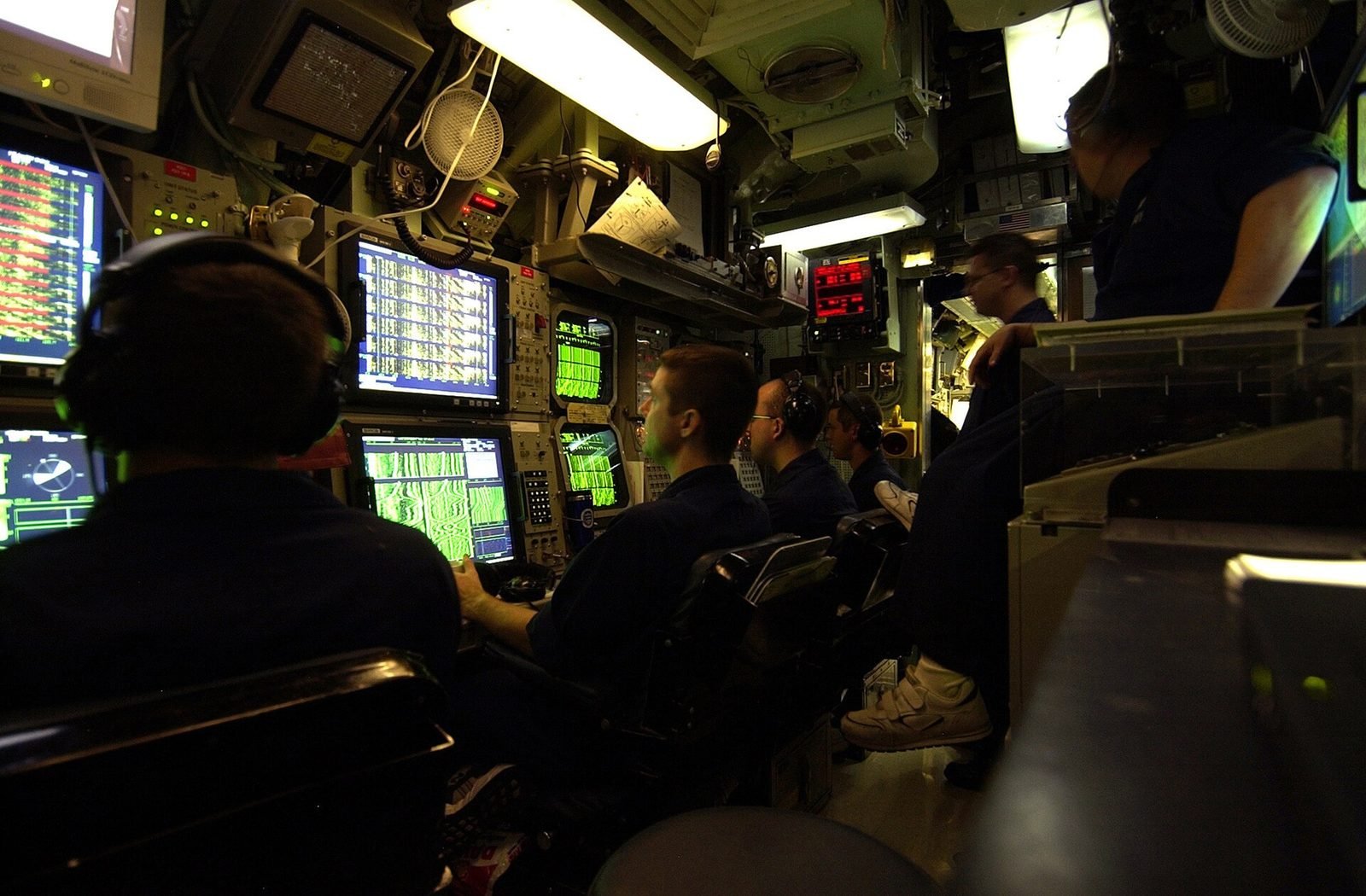


6. Nuclear and military sites: association before intention
Reports involving nuclear weapons deserve particular attention because an unexplained system failure is consequential even before its cause is known.
Robert Salas describes receiving reports of an unusual object while underground at a missile-control facility, followed by missile faults. His 2010 account also corrects an earlier association of his experience with Echo Flight: he identifies his own event as Oscar Flight and distinguishes the dates. Those corrections are part of the source history and should remain visible. [10]
The military history excerpt for Echo independently records the near-simultaneous loss of strategic alert in March 1967. The same text says UFO rumours around that event were disproven. That is a significant tension between sources. A documented outage and a later UFO-linked account cannot simply be merged into one fully corroborated event. [11]
The central questions are concrete. Were unusual objects reported at the relevant time? Which observers saw them? What failed? Did an identified signal or process cause the failure? Can the sighting and engineering records be aligned without borrowing timing from later recollection?
A further question concerns frequency. Do nuclear sites receive more unusual visits, or generate more reports because they are watched more closely? ODNI's 2021 assessment explicitly identified possible collection bias around military training and testing grounds. Monitoring intensity, instructions to report and sensor availability can all affect an apparent concentration. [12]
To test a nuclear association, compare sites over a defined period with suitable non-nuclear facilities. Account for observation hours, traffic, sensor coverage and reporting practice. Include uneventful periods and failures without UAP reports.
Even a demonstrated association would leave intention open. Warning, surveillance, interference, curiosity and human security activity imply different motives. Disabling a weapon is not automatically an act of benevolence; proximity is not automatically hostility.
An official's interpretation is another pattern to examine
Elizondo's congressional statement goes beyond proximity to military sites: it alleges surveillance by technology made by no government, possession of UAP technologies and an arms race. That proposed interpretation should appear alongside the underlying encounter patterns. [21]
It changes the research target. The question becomes whether particular observations, retrieved objects and programme records can be linked to the same technology. A resemblance between sightings would be one connection; documented custody or matching technical characteristics could be another. The programme allegation supplies potentially investigable places and processes, rather than a substitute for those links.
The correct response to a substantive insider allegation is to seek the most discriminating supporting evidence. Neither admiration for the speaker nor disagreement with an institution can perform that investigation on its own.
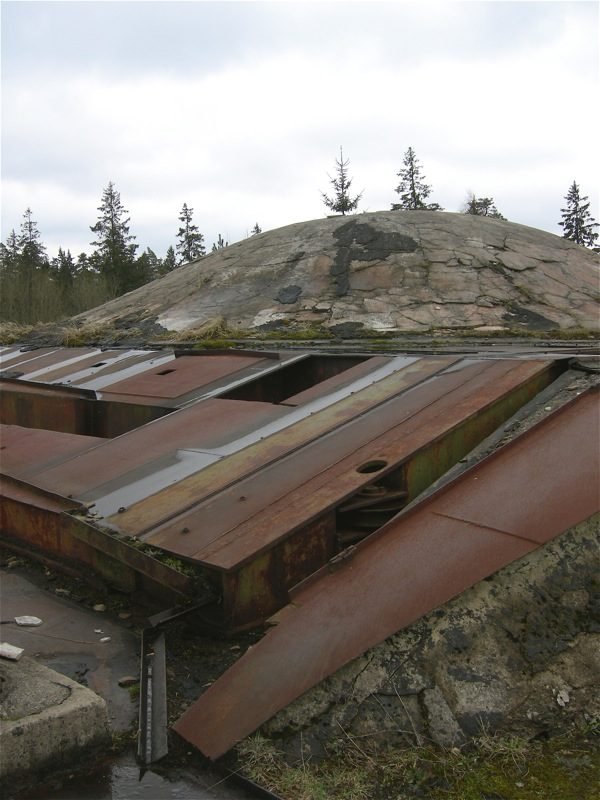
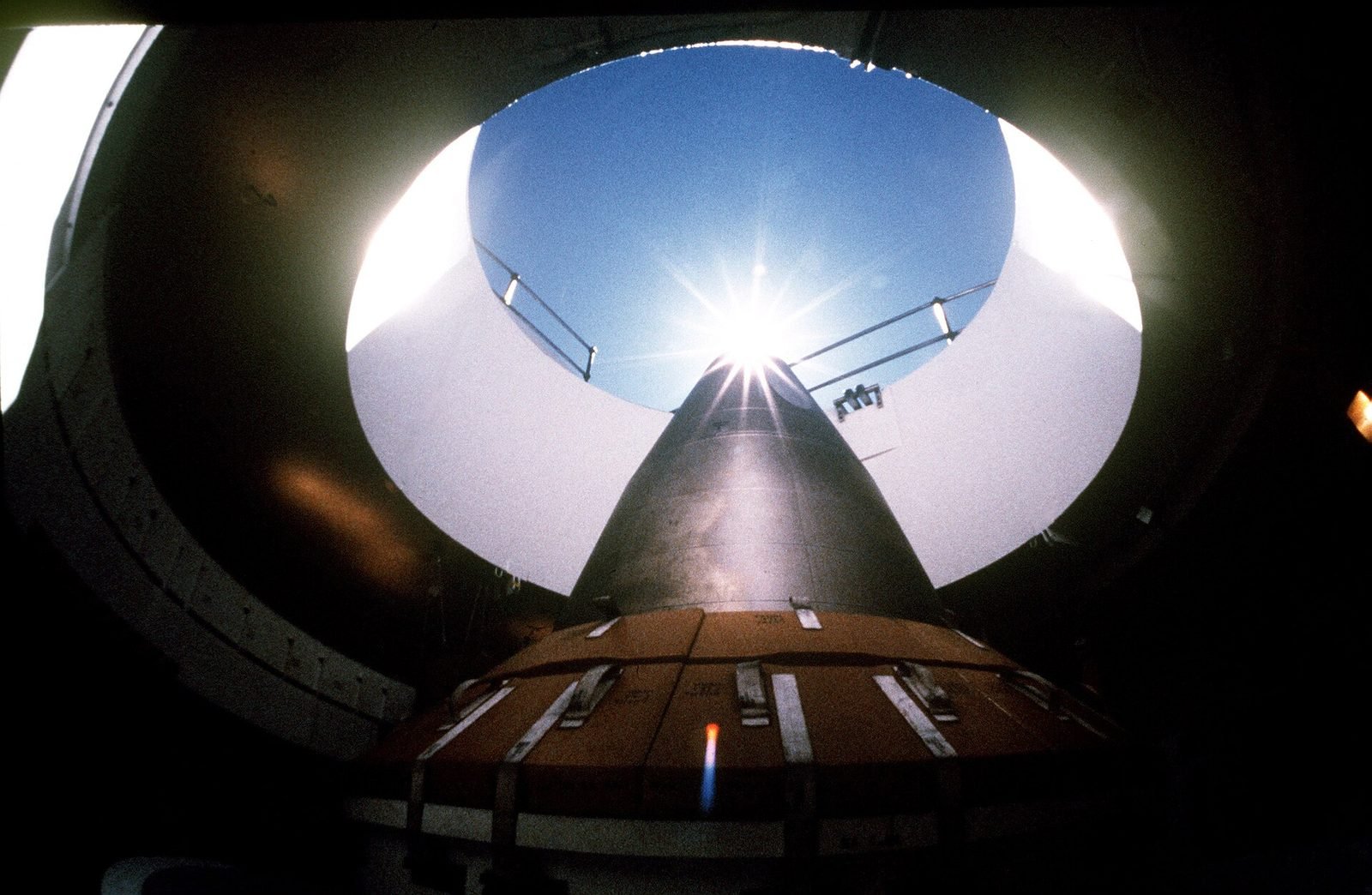
2024 House UAP hearing
7. Forms that return—and forms that differ
Spheres, discs, cylinders, triangles and geometric objects offer a vocabulary for comparison. They should not become a taxonomy of species before the physical objects are established.
A disc seen edge-on can resemble a narrow cylinder. A distant unresolved source can appear circular regardless of its actual outline. Conversely, a close observation with stable structural details may preserve information that cannot be reduced to a distant light.
The atlas should record the original description before assigning a category. Note whether “triangle” means one solid object with edges, three lights moving together, or three independent lights whose positions form a triangle. These alternatives differ physically while sharing an everyday word.
Socorro in Chapter 2 and Valensole in France offer a different recurring combination: an unusual object, apparent nearby figures and subsequently reported ground traces. GEIPAN's Valensole summary records a farmer's July 1965 account, later police interviews and site documentation. It classifies the case as unresolved and acknowledges that its own organisation did not publish an in-depth investigation. [13]
That combination is more specific than “a strange light”. It could justify comparing sight lines, trace patterns, departure descriptions and figure behaviour. Similarity of structure still does not identify the figures or show that both events had one cause.
The best pattern atlas preserves both recurrence and diversity. If one explanation needs every reported shape to be an optical disguise, that proposal should specify when and why the disguise occurs. If several technologies are proposed, the evidence should help distinguish them.


8. Bodily effects, awareness and apparent communication
The encounter literature extends beyond things in the sky. Investigator John Mack described reports involving intrusive experiences, communication and significant emotional or spiritual effects. His interviews preserve an interpretation developed through work with experiencers; they are not his own eyewitness account of every underlying event. [14]
These reports deserve careful description because a profound experience is a human event even when its external cause remains uncertain. Fear, a sensed presence, immobility, unusual bodily sensations and a change in one's understanding of life can each be studied without forcing them into one explanation.
Context matters. Research by Cheyne and colleagues documents a recurring combination of sensed presence, fear and unusual bodily experiences in sleep paralysis. It offers a specific comparison for experiences at sleep–wake boundaries. It does not explain a daytime group sighting or a radar track merely because someone also reported fear. [15]
For bodily effects, ask what was noticed before an interpretation was proposed and whether any contemporaneous examination or environmental measurement exists. An injury can be real while its cause remains uncertain. A later association is a lead, rather than the measurement of an exposure.
Communication also contains several possibilities: heard speech, an internally experienced voice, imagery, an emotional impression or a message remembered later. Preserve the form and timing. A general feeling of warning and an exact, previously unknown piece of information provide different opportunities for verification.
The most useful additional evidence would be content specific enough to check independently, recorded before feedback. A meaningful ethical message can remain meaningful without identifying the being or mechanism said to have delivered it.
9. Missing time and the sequence of recall
A report of missing time can mean an unexplained interval on a clock, a discrepancy in a journey, incomplete recollection or an experience that felt much longer than the elapsed time. These are related questions about sequence and memory, but they are not interchangeable measurements.
Cannon's The Custodians explicitly collects hypnosis-related cases involving missing or distorted time and proposed dimensional explanations. Those themes belong in the atlas with their method of elicitation attached. The publisher's description establishes the book's scope; it does not establish a physical alteration of time. [16]
A strong file would preserve the initial spontaneous account, independent timestamps and any later regression session separately. Record the questions used to elicit details and the material the person had encountered beforehand. Later elaboration should not silently become part of the original report.
Clancy and colleagues found differences in laboratory false-memory performance among selected groups reporting alien-abduction beliefs or memories. That study supports attention to memory processes. It does not determine what happened in every person's life, nor demonstrate that all encounter accounts arise through one mechanism. [17]
A physical time effect would require evidence beyond a feeling of duration. Independent clocks, authenticated records and a defined comparison could distinguish that claim from an incomplete narrative. Such evidence would be a major development precisely because it would connect an unusual experience to an externally testable effect.
10. The pattern combinations worth following
Single features are often broad. Combinations can be more discriminating—provided their components are not all different descriptions of the same uncertain observation.
| Candidate combination | Why it is interesting | What would strengthen it |
|---|---|---|
| Resolved body, controlled movement, no expected propulsion signature | Constrains both appearance and flight mechanism | Independent range, adequate sensor sensitivity and a continuous track |
| Apparent response plus matching radar/optical sequence | Tests control and the association of observations | Synchronised records and alternative track analysis |
| Object/figure report plus site traces | Connects testimony with a physical location | Early documentation, controls and a demonstrated causal link |
| Nuclear-site report plus timed system fault | Tests more than geographical proximity | Independent sighting and engineering records on a common timeline |
| Specific message plus independently verified new information | Tests the informational content of contact | A preserved prior record and exclusion of ordinary access |
| Similar features across distinct settings and source histories | May reveal a common phenomenon | A complete sample, including mismatches and explained cases |
A combination becomes less impressive if several entries derive from one inference. If the distance is assumed, the inferred speed and inferred acceleration are not two fully independent confirmations. If a second narrator learned the story from the first, their agreement adds a different kind of support from a separately preserved observation.
The aim is a connected account in which different observations constrain the same event.
11. Keep the contrary cases in view
A research archive should include explanations that work. They reveal which apparent patterns can be produced by ordinary causes and help identify what would make the remaining cases different. GEIPAN's published method includes investigation, classification and revisiting older cases when the evidence or analytical tools change. [18]
Do not remove an encounter simply because its best-known interpretation weakened. Preserve the original claim, the analysis and the reason for the change. A transparent correction is part of the subject's accumulated knowledge.
The same applies to a favoured theory. A benign-contact model must address accounts experienced as coercive. A hostile-surveillance model must address encounters with no clear threat. A single-technology proposal must explain markedly different signatures or specify which cases it covers.
Absence of a feature also needs observation conditions. “No sound” is informative when sound could reasonably have reached the witness. “No occupants” may mean only that none were visible. Unknown and absent should have different entries in the atlas.
This approach protects unusual cases from being buried in a mass of weak similarities. A smaller, well-described cluster can offer a stronger research target than an enormous undifferentiated catalogue.
12. From recurring features to a larger account
The Age of Disclosure brings several of these themes together within a claim of concealed non-human activity. Its official description advertises testimony from 34 insiders. The public unofficial transcript includes assertions about nuclear-site surveillance and weapons interference. This is a source of claims to trace, rather than 34 automatically independent confirmations of every theme. [19] [20]
A film can reveal connections and bring relevant people forward. It also edits different levels of access into a shared narrative. The pattern atlas should follow each claim back through the participant, earlier account and underlying record. Public transcript speaker changes are too uncertain to assign every montage statement confidently without checking the film.
What can be understood from the selected material? Several features recur as reports across different settings. Some cases combine eyewitness accounts with instruments or physical sites. Other patterns concern awareness and meaning. These are substantial reasons for sustained inquiry. The present comparison does not establish that all the features belong to one population of beings or machines.
For discussion:
- Which recurring feature would be most informative if measured securely?
- Which two cases share a specific sequence, rather than a general label?
- What contrary case would most challenge your preferred explanation?
- What denominator is needed before calling a geographical association unusual?
- Which apparent similarities may have travelled through a common publication or community?
The next chapter, Where the accounts converge, brings these patterns into direct comparison with channelled teachings and older narratives. Its central question is how agreement can become a reasoned increase in understanding.
References and source notes
The references distinguish a witness’s statement, an investigator’s assessment and the chapter’s own analysis. An official host authenticates a document’s provenance; it does not automatically establish every assertion within it. URLs were checked or their indexed source text consulted during this review.
David Fravor (2023), written statement to the House UAP hearing, 26 July.
https://docs.house.gov/meetings/GO/GO06/20230726/116282/HHRG-118-GO06-Wstate-FravorD-20230726.pdf
Locator: Three-page statement; visual encounter, departure and controller information. Source type: Retrospective first-person testimony. Use and limits: Supports his reported observations. It is not the underlying radar record, and controller information is distinct from his continuous visual perception.
Ryan Graves (2023), written statement to the House UAP hearing, 26 July.
https://docs.house.gov/meetings/GO/GO06/20230726/116282/HHRG-118-GO06-Wstate-GravesR-20230726.pdf
Locator: “My Experience” and the account of colleagues’ near miss. Source type: Operational witness statement including relayed reports. Use and limits: The cube-in-sphere sighting is attributed to colleagues. The statement does not establish a common identity for every sensor contact.
Jeffrey Nuccetelli (2025), written testimony to the House UAP hearing, 9 September.
https://oversight.house.gov/wp-content/uploads/2025/09/Nuccetelli-Written-Testimony.pdf
Locator: Compare the 2003 contractor report and his 2005 personal encounter. Source type: Responder and witness testimony. Use and limits: The red square is a received report. The personal orb encounter is separate. No alien identity is established by either description.
Teledyne FLIR, “Thermographic measurement techniques”, online manual, chapter 12.
https://support.flir.com/docdownload/assets/web/2p5q/en-us/T505000.xml.html
Locator: Sections 12.1–12.2, radiation and measurement parameters. Source type: Manufacturer’s technical documentation. Use and limits: Supports general infrared measurement dependencies. Not an ATFLIR calibration document or a target identification.
All-domain Anomaly Resolution Office (2025), GoFast Case Resolution and methodology, 6 February; editorial update 20 February.
Locator: Conclusion and “Data Quality and Methodology”. Source type: Official case assessment. Use and limits: Assesses no anomalous speed while leaving identity undetermined. Indexed report text was consulted; this chapter does not independently reproduce the analysis.
1976 Tehran encounter report, “Verbatim Wire Message”, reproduced in material released by NSA.
Locator: Wire-message sections B–D, interception, reported equipment losses and recovery. Source type: Historical report reproduced in a periodical preserved in the NSA release collection. Use and limits: The PDF includes civilian editorial framing; it is not wholly authored by NSA. Supports what the reproduced report says, not a measured external interference mechanism or NSA endorsement.
Alexandro Wiggins (2025), written statement to the House UAP hearing, 9 September.
https://oversight.house.gov/wp-content/uploads/2025/09/Wiggins-Written-Statement.pdf
Locator: USS Jackson narrative, pp. 2–3. Source type: Retrospective first-person statement. Use and limits: Supports the encounter and coordination claims as reported. Interpretations require the qualifications recorded in the hearing.
U.S. House of Representatives (2025), Restoring Public Trust Through UAP Transparency and Whistleblower Protection, 9 September.
https://www.govinfo.gov/content/pkg/CHRG-119hhrg61718/html/CHRG-119hhrg61718.htm
Locator: Wiggins’s exchanges with Eric Burlison about apparent emergence and the horizon. Source type: Official hearing transcript. Use and limits: Records his qualification that he did not visually establish an underwater origin. The hearing does not itself resolve the object’s nature.
All-domain Anomaly Resolution Office (2025), Puerto Rico UAP Case Resolution, 20 March.
Locator: Case conclusion and reconstruction of apparent motion/disappearance. Source type: Official technical assessment. Use and limits: AARO disputes transmedium behaviour with high confidence and assesses sky lanterns with moderate confidence. The analysis remains attributable and testable; see Chapter 3 for the competing SCU interpretation.
Robert Salas (2010), “My Evidence: The Account of Minute-Man Missiles Being Disabled, While UFOs Hovered Over The Launch Facilities”, posted 21 August; author copyright 19 August.
https://www.theufochronicles.com/2010/08/my-evidence-account-of-minute-man.html
Locator: Opening corrections and “The Oscar Flight Incident”. Source type: Participant’s retrospective account. Use and limits: Salas corrects his earlier flight/date association. His account of reports received underground is not personal visual observation of the alleged craft.
341st Strategic Missile Wing (1967), history excerpt on the Echo Flight incident, reproduced/transcribed by RR0.
https://rr0.org/time/1/9/7/8/08/23/Malmstrom/index.html
Locator: History pages labelled 32–38; the host identifies the volume as April–June 1967. Source type: Original military-history text accessed through an archival transcription. Use and limits: Documents the shutdown and the history’s rejection of UFO rumours. Does not demonstrate an extraterrestrial cause. The transcription and linked scan provenance should remain visible.
Office of the Director of National Intelligence (2021), Preliminary Assessment: Unidentified Aerial Phenomena, 25 June.
https://www.dni.gov/files/ODNI/documents/assessments/Prelimary-Assessment-UAP-20210625.pdf
Locator: Printed pp. 4–5, collection challenges and clustering around training/testing grounds. Source type: Official preliminary assessment. Use and limits: Identifies possible collection bias. The report does not establish a population-wide rate of UAP activity at nuclear facilities.
CNES / GEIPAN, VALENSOLE (04), 01.07.1965, case 1965-07-00050.
https://www.geipan.fr/fr/cas/1965-07-00050
Locator: Case description, police-interview chronology and classification. Source type: Official case archive and retrospective summary. Use and limits: Summarises the object/figure report and traces. GEIPAN says it did not publish an in-depth investigation; class D is an unresolved classification, not extraterrestrial identification.
PBS NOVA, interview with John Mack, associated with Kidnapped by UFOs? (broadcast 1996).
https://www.pbs.org/wgbh/nova/aliens/johnmack.html
Locator: Mack’s discussion of encounter reports, trauma, cultural explanations and his interpretation. Source type: Original investigator interview. Use and limits: Documents Mack’s position and clinical impressions. He is reporting on experiencers; his interview is not independent verification of each encounter.
J. Allan Cheyne, Steve D. Rueffer and Ian R. Newby-Clark (1999), “Hypnagogic and hypnopompic hallucinations during sleep paralysis: neurological and cultural construction of the night-mare”, Consciousness and Cognition 8(3), 319–337.
https://doi.org/10.1006/ccog.1999.0404
https://pubmed.ncbi.nlm.nih.gov/10487786/
Locator: Abstract and three-factor model of reported sleep-paralysis experiences. Source type: Original empirical research. Use and limits: Supports a specific comparison for sleep-related experiences. It cannot explain a daytime encounter or sensor record simply by analogy.
Dolores Cannon (1998), The Custodians: Beyond Abduction, Ozark Mountain Publishing.
https://ozarkmt.com/product/the-custodians-by-dolores-cannon/
Locator: Publisher’s description: hypnosis cases, missing/altered time and dimensional claims. Source type: Original publisher’s account of the book’s scope. Use and limits: Used for scope and method, not a full case-by-case book audit. Claims about altered time remain reported experiences, not measured spacetime effects.
Susan A. Clancy, Richard J. McNally, Daniel L. Schacter, Mark F. Lenzenweger and Roger K. Pitman (2002), “Memory distortion in people reporting abduction by aliens”, Journal of Abnormal Psychology 111(3), 455–461.
https://pubmed.ncbi.nlm.nih.gov/12150421/
https://doi.org/10.1037/0021-843X.111.3.455
Locator: Abstract; laboratory false-recall/recognition comparison. Source type: Original experimental study. Use and limits: Results concern selected groups and a laboratory memory task. They do not adjudicate every participant’s history or every contact report.
CNES / GEIPAN, Missions, méthodes et résultats.
https://www.geipan.fr/fr/missions-methodes-et-resultats
Locator: Investigation, case publication and revisiting earlier unresolved cases. Source type: Official methodology statement. Use and limits: Supports retaining identified, unresolved and insufficient-information cases in a research archive. An unresolved category has no automatic origin implication.
Dan Farah (director, 2025), The Age of Disclosure; official film description.
https://www.theageofdisclosure.com/about-the-film
Locator: Filmmaker’s description and participant framing. Source type: Primary production description. Use and limits: The filmmaker advertises testimony from 34 insiders. This is not a count of independently verified firsthand observations.
The Age of Disclosure, public user-transcribed text hosted by UFOpedia.
https://ufopedia.fyi/raw/transcripts/age-of-disclosure-documentary-full-transcript.txt
Locator: Opening passages on nuclear sites, weapons interference and claimed non-human intelligence. Source type: Unofficial transcript of a primary audiovisual source. Use and limits: Speaker changes and transcription are not certified. Used for a limited thematic comparison without inferred speakers or timecodes; not checked against the complete licensed film in this review.
Luis Elizondo (2024), written testimony, “Unidentified Anomalous Phenomena: Exposing the Truth”, 13 November.
https://oversight.house.gov/wp-content/uploads/2024/11/Written-Testimony-Elizondo.pdf
Locator: Pp. 1–2, technology, possession, programme and intimidation claims. Source type: Named witness’s statement to Congress. Use and limits: A distinct, attributable public statement by a central film participant. Its allegations are not presented as findings adopted by Congress.