
Aliens · Chapter 15
Consciousness and contact
Many encounter reports concern more than an object moving through space. People describe communication without audible speech, a sensed presence, altered time, dreams, apparent responses to intention or a change in their understanding of themselves. A chapter limited to flight characteristics would miss a substantial part of what is being reported.
Illustration made for this site. Not a photograph of the claim.
Telepathy, channelling, memory, remote viewing and the study of experience.
Reviewed 30 October 2026.
1. The part an aviation account cannot contain
Many encounter reports concern more than an object moving through space. People describe communication without audible speech, a sensed presence, altered time, dreams, apparent responses to intention or a change in their understanding of themselves. A chapter limited to flight characteristics would miss a substantial part of what is being reported.
Taking that material seriously does not require deciding its source at the outset. It requires distinguishing the experience, the interpretation and the external claim. A person can unmistakably experience a message without knowing how it arose. A message can feel transformative without establishing the identity it claims.
The question is therefore broader than “did a spacecraft arrive?” It includes whether human awareness can participate in a relationship that ordinary observation does not fully describe. Several sources in this course answer yes. Their proposals deserve both accurate presentation and tests appropriate to their specific claims.
This chapter follows apparent telepathy, channelled speech, dreams and regression, remote-viewing research and contact practice. It then asks how an investigation could respect experience while generating evidence that others can examine.
The aim is to avoid two premature endings: that a powerful experience must identify an external being, or that uncertainty about its source makes the experience unworthy of study.
2. Telepathy: what exactly was communicated?
Mack’s accounts include communication experienced as coming through a presence or a being’s eyes, alongside changes in awareness and meaning. His interpretation treats those accounts as a challenge to familiar boundaries between physical events and inner experience. He is reporting people’s experiences, not demonstrating a measured transmission channel. [1]
“Telepathy” can refer to several different things: a sentence heard internally, an image, an emotion, an immediate sense of understanding, or knowledge attributed to another mind after the event. Those should not be reduced to one process.
A careful record asks what was perceived before the person interpreted it. Did the message have words? In which language? Was a question asked first? Did different witnesses independently report the same content? Was any new information sufficiently specific to check?
Suppose a message gives an unfamiliar name that later appears meaningful. The inquiry should preserve the original spelling, time of recording, search process and unsuccessful matches. Otherwise, flexible interpretation can make many names fit.
A stronger case would involve precisely recorded information unavailable to the receiver, with ordinary access ruled out through an independently checkable procedure. That would support an information anomaly. It would not yet determine whether the sender was extraterrestrial, another human, an unknown process or something else.
The route from experience to identity contains more than one question. It should remain possible to make progress on the first without claiming the final answer.
3. Channelling: the practice and the proposed source
Anka describes Bashar’s communication as a telepathic translation and states that he cannot prove the proposed speaker’s identity. Royal’s Tokyo introduction describes semi-conscious channeling as dreamlike, with session memory fading unless attended to afterwards. These are different practitioners’ descriptions of their own processes. [2] [3]
Several hypotheses can be examined: communication with an external intelligence, access to an unrecognised level of one’s own mind, learned performance, or processes combining features of more than one account. A person’s sincerity does not by itself select among them.
Fluency and complexity matter as features to study. They do not automatically establish an independent speaker. Conversely, familiarity with a topic does not prove that every reported communication is consciously fabricated.
A useful investigation asks questions with different purposes. What happens to attention, memory and physiology? Does the speaker convey independently verifiable information? Can a proposed identity be distinguished from another identity under conditions that prevent ordinary cueing?
The teaching’s practical value is another question. Advice may help a reader live more clearly. That outcome can be recorded without converting it into proof of a cosmic biography. It would be equally mistaken to discard every useful idea because the proposed origin has not been established.
Good source work preserves these layers: practitioner testimony, the content attributed to the voice, observable changes during the session and evidence concerning the alleged source.
Anthony William: identifying the claimed source of knowledge
Anthony William’s contribution belongs here as well as in the technology comparison. The supplied livestream extracts attribute his portal information to the Spirit of Compassion. “Claimed spiritual communication” describes that source without assuming that his practice is identical to Darryl Anka’s channelling or Carla Rueckert’s Ra sessions. [15]
The woods passage needs particular care. William says the Spirit could warn him if a creature approached. In the supplied extract he does not describe a specific, directly witnessed extraterrestrial creature. Turning an asserted warning capacity into an eyewitness encounter would strengthen the story beyond its source.
Ask the same fair questions of every revelatory account: what information was received, when was it recorded, what prior sources were accessible and what independently checkable result followed? Personal meaning and the identity of a claimed communicator are different subjects. A message can be important to a listener while its asserted extraterrestrial information remains unverified. The detailed Bermuda Triangle comparison appears in Chapter 14.
4. What a physiological study can establish
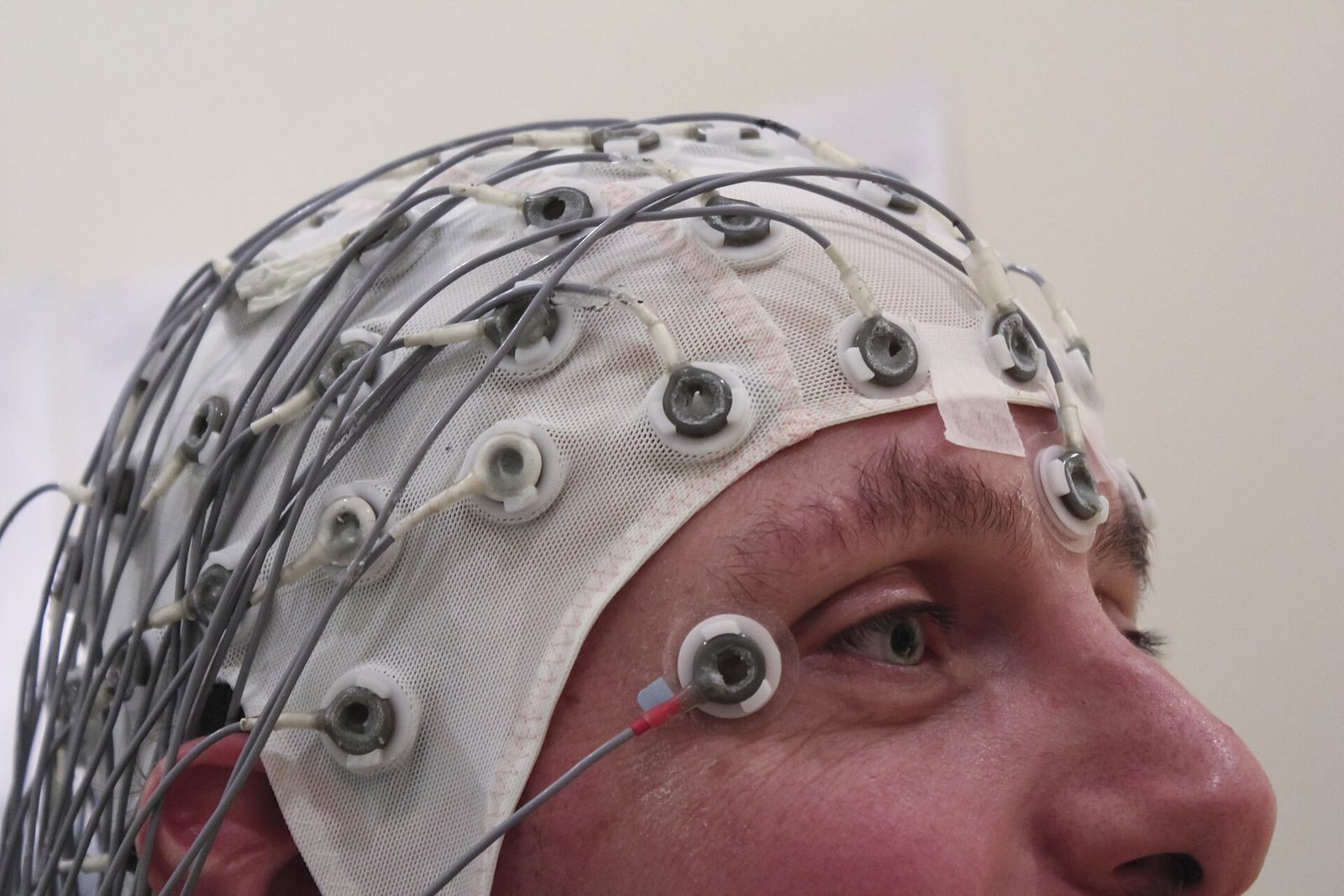
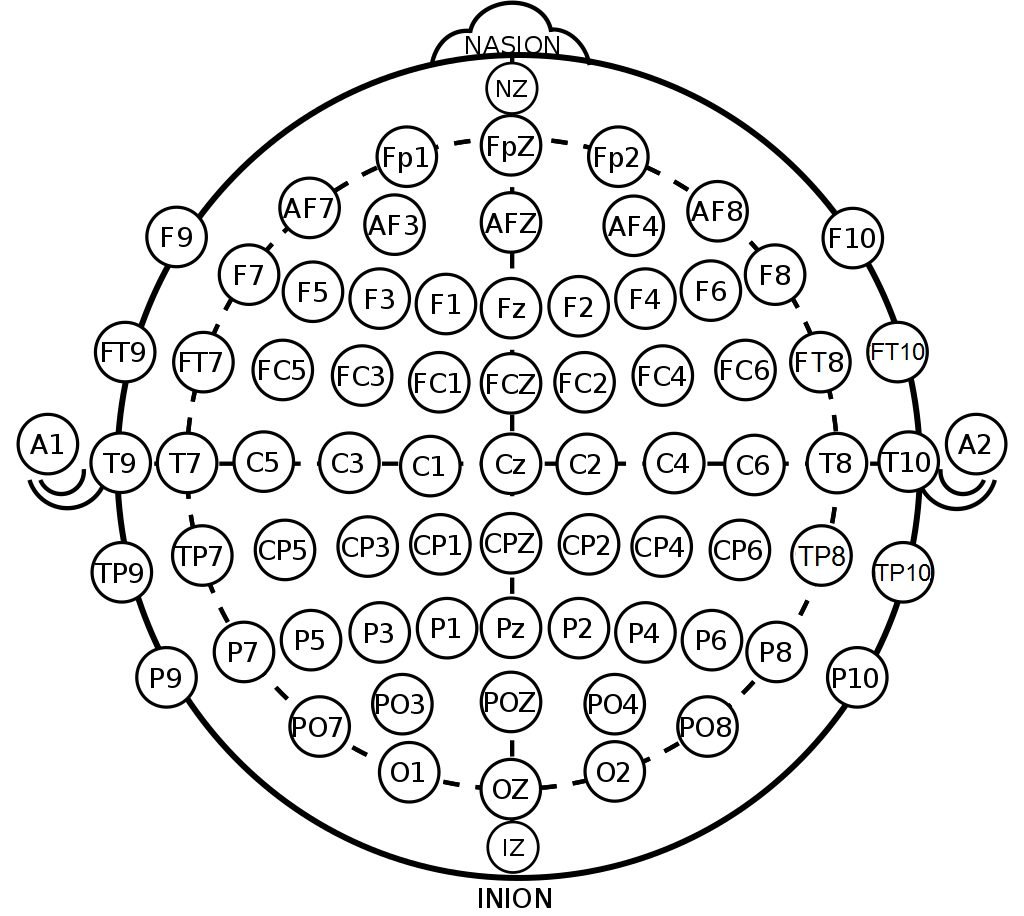
Wahbeh and colleagues’ 2019 study followed 13 trance channels through repeated channeling and non-channeling periods on two days. It examined EEG, cardiac measures, skin response, respiration and voice. The reported results included voice differences but no substantive differences in the other listed physiological measures. Both parts belong in the account. [4]
This is valuable because it makes a proposed state available to systematic observation. It also demonstrates the limits of the question asked. A voice change does not identify the source of the speech, while a null result on selected physiological measures does not establish that the reported experience is fraudulent.
The study’s small sample and particular protocol limit generalisation. A different form of channeling, task or measurement might produce different results. That possibility is a reason to specify another study, not to announce its outcome in advance.
The same reasoning applies if a future experiment finds a clear brain-state difference. Meditation, concentration and many ordinary activities also involve measurable changes. To identify an external intelligence, the research would need evidence concerning information or interaction beyond the existence of a distinct state.
A stronger research programme would combine well-defined state measurements with blinded information tasks. It would report unsuccessful trials and distinguish a planned analysis from an exploratory pattern noticed after the data were collected.
This allows a sympathetic investigation without asking physiology to answer a question it was not designed to test.


5. Dreams, presences and the transition into waking
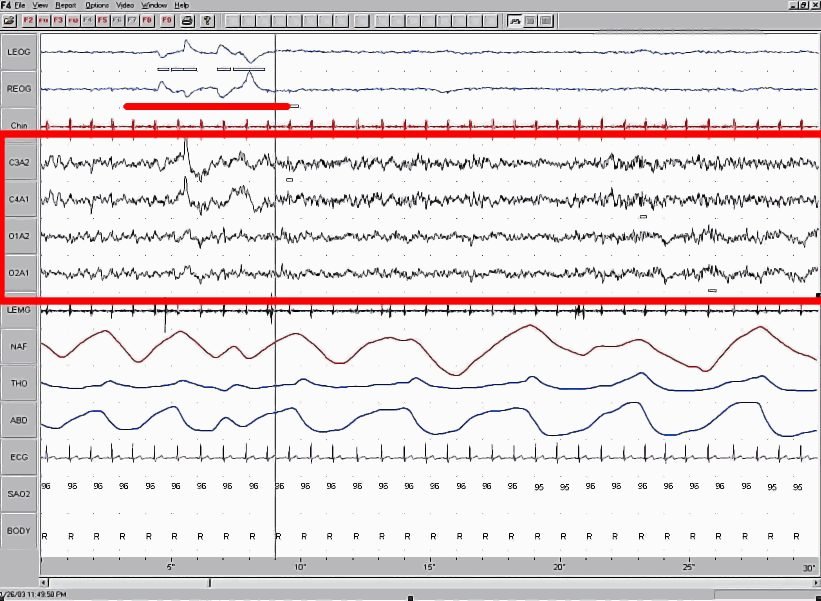
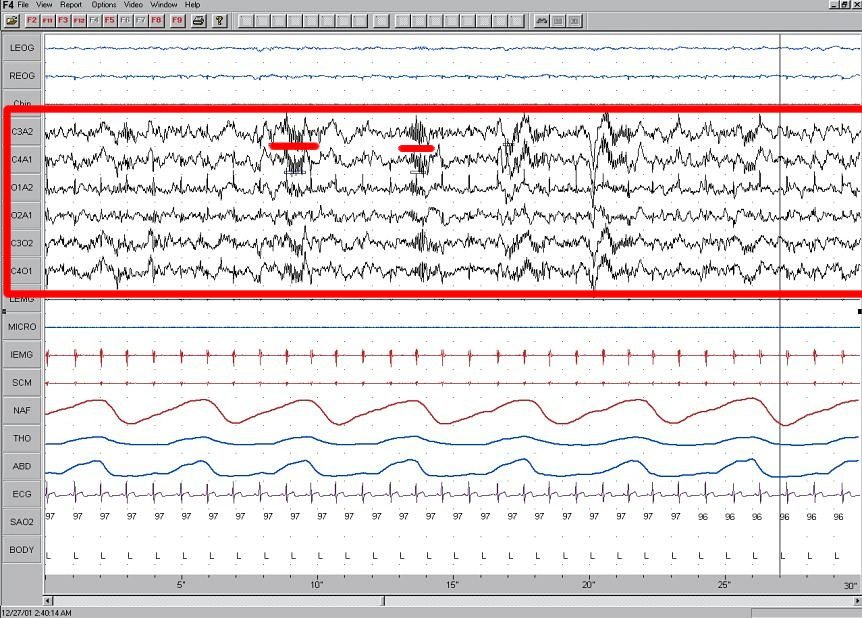
Dream encounters can feel autonomous, coherent and more consequential than ordinary dreams. The proper starting record is still the dream as recalled, its timing and the person’s interpretation. A later resemblance to a teaching may be interesting without identifying the dream’s source.
One relevant line of research concerns sleep paralysis. The study indexed as “Sleep paralysis, sexual abuse, and space alien abduction” examined, in its first study, 10 people whose abduction accounts were linked to apparent episodes of paralysis and waking hallucinations interpreted as beings. This is a specific studied association, not a conclusion about every encounter. [5]
It gives an investigator concrete questions: was the person falling asleep or waking, unable to move, in a familiar room, and aware of a presence? Those circumstances differ from a daytime group observation recorded independently by instruments.
The possibility of a sleep-related mechanism should be tested where it fits. It should not be imposed on a case with different features merely because both involve fear or a humanoid figure.
Likewise, an experience beyond the sleep-related model does not automatically establish an extraterrestrial cause. The remaining possibilities need their own examination.
Personal meaning can be explored alongside this work. A dream may affect grief, responsibility or self-understanding even if its external origin is uncertain. The historical and scientific record becomes clearer when meaningfulness is documented without being made to carry an identity claim it cannot yet establish.
6. Hypnosis, memory and the questions an interviewer asks
Cannon’s books make hypnosis-based narratives central to the course’s material. Their content can be compared with other accounts, but the process producing a detailed narrative also needs examination. What was remembered before hypnosis? What did the interviewer introduce? What emerged only after repeated questions?
Laurence and Perry’s 1983 experiment suggested a memory of a night-time disturbance to 27 highly hypnotisable participants. Some participants subsequently accepted the suggested event as a memory. The experiment demonstrates a possibility under those conditions; it does not show that every hypnotic recollection is false. [6]
The implication is that vividness and confidence cannot serve as a sole authenticity test. A remembered account may be accurate, constructed or mixed. The task is to find corroboration external to the session.
An interviewer can help by asking open questions, preserving the complete recording and separating an initial statement from later elaboration. “What happened next?” differs from “what did the Grey do with the instrument?” The latter introduces a being and an object before the person has supplied them.
Agreement across sessions also needs a source history. Participants may share books, therapists, groups or expectations. Those connections do not prove the account false. They change how much independence the agreement can provide.
The most valuable new detail would be recorded before anyone can check it, specific enough to fail and subsequently verified through an independent route. That would improve the evidence without requiring a global verdict on hypnosis or the witness.
7. Remote viewing: a positive claim and a methodological challenge
Targ and Puthoff’s 1974 Nature paper reported experiments they interpreted as suggesting information access beyond known sensory channels. It is a real research contribution and an important reason the subject cannot be reduced to stories about government interest alone. [7]
Marks and Kammann’s later critique raised a different issue: whether cues available in the materials used for judging could account for apparent matching. That objection concerns experimental design and analysis, not whether the subject sounds acceptable. [8]
Puthoff, Targ and Tart replied in a 1979 submitted manuscript, reporting that rejudging edited transcripts preserved a strong match. That response belongs beside the objection. It is a reported reanalysis of existing material, not a fresh experiment, and the consulted record’s submitted status must remain visible. The exchange makes access to the actual transcripts and scoring especially important. [9]
The key questions are practical. How was a target selected? Who knew it? What contact occurred before the report was fixed? Did a judge encounter a transcript containing clues? Were target and comparison materials balanced? Was the scoring procedure defined before results were inspected?
A result becomes more persuasive when ordinary information routes are excluded and independent teams obtain comparable outcomes. A striking match selected from many attempts tells us less without the full set of attempts and a clear scoring rule.
There is also an identity limit. Even a reliable anomalous-information effect would not, by itself, establish extraterrestrial involvement. It could support a revision of our understanding of cognition without confirming a particular channelled cosmology.
For this course, remote viewing is therefore a relevant research history and a potential method to investigate specific claims. It is not a shortcut by which an uncheckable story becomes confirmed because someone reports seeing it remotely.
8. STARGATE: what a government programme does and does not prove
The 1995 AIR evaluation contains separate assessments of research and operational usefulness. Jessica Utts read the statistical evidence as supporting psychic functioning; Ray Hyman did not regard the case as establishing that conclusion. The evaluation’s treatment of operational intelligence was also distinct from the dispute about laboratory effects. [10]
Utts’s affirmative position deserves to be stated clearly. UC Davis’s contemporary presentation reports her strong conclusion and records Hyman’s disagreement, rather than presenting a unanimous dismissal. [11]
CIA’s institutional retrospective describes its involvement, the later review and the decision not to restore the programme. It points readers towards released records. That history establishes that agencies took the question seriously enough to investigate and evaluate it. It does not make every operational story or later interpretation an official scientific finding. [12]
Three propositions often become confused: experiments produced interesting results; a method reliably supplied useful intelligence; and a technique identified non-human beings. Evidence for one does not settle the others.
The existence of a classified programme is thus significant, but its significance must be specified. To assess a particular success claim, inspect the original task, the report delivered before the target was known, the complete scoring and the unsuccessful assignments. A later recollection of a dramatic hit is a lead to that evidence.
This approach gives both affirmative researchers and critics a concrete place in the teaching: their methods, results and objections can be compared without relying on institutional prestige alone.
9. Contact practice: Royal, CSETI and intentional observation
Royal describes contact work broadly, including extraterrestrial, interdimensional and nonphysical intelligence alongside other species. Her account identifies CSETI training in the early 1990s, later channelled contributions to the method and a Phoenix group active from 1994 to 1997. It emphasises exploration of consciousness and profound field experiences. [13]
That is an accurate account of the practice’s stated purpose and history. It is not yet an independently controlled demonstration that an intention summoned a particular external being.
The claim of responsiveness can nevertheless be made investigable. Before a session, define what response would count, when it should occur and how ordinary objects will be checked. If the criterion is simply “something meaningful will happen”, almost any experience may qualify afterwards.
Separate observers can record impressions before discussion. Cameras can preserve continuous footage rather than a selected light. Timing, direction, weather and the possibility of ordinary aircraft or satellites can be logged. An observer assessing the recording need not know what the group hoped to see.
A no-event session belongs in the record too. Without it, the frequency of apparent success cannot be understood. Nor should a lack of response automatically be interpreted as evidence that the participants were unready; that explanation needs its own support.
These procedures do not require the group to surrender the contemplative meaning of its practice. They allow an additional question to be answered: did a specific external pattern occur more reliably than comparable observation would predict?
Observation programmes and contact practices ask different questions
Prospective observation offers a bridge from argument to new evidence. The Galileo Project describes collecting new data with instruments designed for studying physical objects and analysing them within known physics. Project Hessdalen describes sustained observation of unusual lights, including automated monitoring and citizen participation. These are examples of organised observation, not confirmations of extraterrestrials. [16] [17]
Their methodological relevance to contact claims is straightforward. Record the sky before, during and after a session; include comparison nights; preserve raw data; identify satellites, aircraft and weather; and ask analysts who do not know which sessions involved a contact attempt to classify the recordings. An unexpected light and a response to a particular human intention are separate hypotheses.
Such a design does not require participants to abandon the meaning of their experience. It helps determine whether something occurred beyond expectation, whether an object was identified and whether any repeatable relationship exists with the practice. Publicly accessible measurements would give both sympathetic and doubtful readers something new to examine.


10. Does consciousness receive, create or interpret?
Hancock’s Supernatural interview proposes that altered awareness could disclose aspects of a wider reality, using a receiver-like account of the brain. It is an explicit philosophical possibility in his work, rather than a demonstrated explanation of all encounters. [14]
Several models remain available. Consciousness might generate an experience internally, interpret an external event, receive information through an unfamiliar process or participate in a relationship more complex than any of those descriptions. Merely naming the model does not decide between them.
A correlation between brain activity and experience is compatible with more than one philosophical account. But the existence of alternatives does not make their explanatory power equal. Each needs consequences that could distinguish it from the others.
For example, a proposed receiver model gains investigable content when it specifies information access that an internal-generation account does not predict. A claim that consciousness affects an instrument gains content when it specifies an effect that persists under controlled conditions.
For Open Sky University, spiritual inquiry also includes the awareness in which experiences occur. Recognising that awareness can be meaningful independently of the identity assigned to an unusual presence. An experience of unity does not determine whether a particular voice comes from another planet.
That distinction leaves both inquiries alive: what an experience reveals about living and awareness, and what independent evidence can establish about its apparent source. Neither needs to pretend that it has already answered the other.
11. A study that could change understanding
Consider an invented study of apparent telepathic information. An independent system selects one target from a defined set after the receiver is isolated. The target remains unknown to the receiver, session facilitator and person collecting the report. The report is fixed before the answer is disclosed.
Independent judges then compare it with balanced alternatives using a rule chosen in advance. The full trial set is analysed, including misses, ambiguous reports and sessions stopped early. A replication uses a different team and a fresh target set.
This would still require close examination for ordinary information leakage, procedural errors and flexible scoring. Its advantage is that those questions can be investigated rather than left inside a persuasive anecdote.
A reliable positive result would establish information access under the tested conditions. Identifying a particular being would require a further discriminating test. A null result would limit the tested procedure, not establish that no form of unusual experience is possible.
For an intention-responsive sky observation, adapt the design to a predeclared interval and response, use independent observers and compare with control periods. For a channelled historical claim, fix the precise statement before examining an independently held archive.
These are proposed study designs, not experiments conducted for this chapter. Their purpose is to show how the inquiry could move from a recurring theme to a result capable of changing another person’s understanding.
12. What the consciousness material adds
The overlap across these accounts is real at the level of reported experience: apparent autonomy, communication, altered awareness and a sense of relationship beyond ordinary identity. It makes a purely mechanical summary of the subject inadequate.
The external source remains an additional question. A changed voice, a compelling dream, a remembered encounter and a statistically unusual match contribute different evidence. They should not be combined as if they all measured the same ability or identified the same intelligence.
The most promising direction is a combination of careful first-person description and independently checkable work. Preserve the experience in its own language; then identify what, if anything, it predicts beyond the experience itself.
This does not reduce the person to a test result. It creates a shared inquiry in which meaningful experiences can be respected, mistaken interpretations corrected and an unexpected discovery allowed to become public knowledge.
Questions for study
- Which part of an account concerns the experience, and which identifies its source?
- What would a brain-state difference establish, and what would it leave unanswered?
- How can interviewing improve or weaken the independence of a remembered detail?
- What would distinguish anomalous information access from an ordinary cue?
- Can a practice retain personal meaning while its external claims remain testable?
Next: Chapter 16 · Open contact and the emerging picture.
References and source notes
The references distinguish a witness’s statement, an investigator’s assessment and the chapter’s own analysis. An official host authenticates a document’s provenance; it does not automatically establish every assertion within it. URLs were checked or their indexed source text consulted during this review.
John E. Mack (1993), “The UFO Abduction Phenomenon: What Might it Mean for the Human Future?”, April; institute-hosted reproduction.
Locator: Passages describing beings, presences and experiential/transformational aspects. Source type: Investigator’s own presentation of encounter accounts. Use and limits: Mack is reporting and interpreting other people’s experiences. His Harvard affiliation does not make those interpretations university findings or independently identify the beings.
Darryl Anka / Awakened Magazine, “Channeling Bashar: The Key to Life is Acting On Your Passion”, interview.
Locator: Replies on Bashar’s self-presentation, telepathic translation and the explicit inability to prove the identity. Source type: Named source’s interview in a publisher-hosted transcript. Use and limits: Anka’s explanations are attributed, not verified by the interviewer’s promotional introduction. The interview is not independent inspection of an extraterrestrial speaker.
Lyssa Royal Holt (1994; posted edition copyright 2012), Preparing for Contact — Tokyo.
https://www.lyssaroyal.net/uploads/1/5/7/1/15716170/tran-pfc-tokyo94.pdf
Locator: Opening introduction, PDF pp. 1–2: semi-conscious channeling, Germane and Sasha. Source type: Source-hosted transcript of a channelled presentation. Use and limits: The transcript removes Japanese translation and says the original tape is not publicly available. Germane is distinguished from Saint Germain; Sasha’s identity is the source’s assertion.
Helané Wahbeh, Cedric Cannard, Jennifer Okonsky and Arnaud Delorme (2019), “A physiological examination of perceived incorporation during trance”, F1000Research 8:67, version 2.
https://pmc.ncbi.nlm.nih.gov/articles/PMC6384530/
https://pubmed.ncbi.nlm.nih.gov/30815253/
Locator: Abstract, methods and results: 13 participants, repeated channeling/control blocks and voice/physiology comparisons. Source type: Original prospective within-participant research. Use and limits: Small study of correlates, not a test identifying the alleged communicating source. Voice changes and lack of substantive differences in the other measured variables must both be preserved.
Richard J. McNally and Susan A. Clancy (2005), “Sleep paralysis, sexual abuse, and space alien abduction”, Transcultural Psychiatry 42(1), 113–122, doi:10.1177/1363461505050715.
https://pubmed.ncbi.nlm.nih.gov/15881271/
Locator: Abstract’s first study: 10 people with abduction accounts linked to apparent sleep-paralysis episodes. Source type: Original participant research; abstract consulted. Use and limits: Used narrowly for the studied association, not a diagnosis of individual witnesses or an explanation of every abduction account. The wider encounter literature was not adjudicated by this study.
Jean-Roch Laurence and Campbell Perry (1983), “Hypnotically created memory among highly hypnotizable subjects”, Science 222(4623), 523–524.
https://pubmed.ncbi.nlm.nih.gov/6623094/
Locator: Abstract: suggested night-time awakening memory in 27 highly hypnotisable participants. Source type: Original experimental research. Use and limits: Demonstrates a possibility under specified experimental conditions. It does not show that every hypnotic report is false or adjudicate a particular encounter.
Russell Targ and Harold Puthoff (1974), “Information transmission under conditions of sensory shielding”, Nature 251, 602–607.
https://www.nature.com/articles/251602a0
https://pubmed.ncbi.nlm.nih.gov/4423858/
Locator: Abstract and stated interpretation of experiments concerning information beyond known sensory access. Source type: Original experimental report. Use and limits: A positive historical research claim. It is not treated as a universally accepted result or evidence that any apparent information source is extraterrestrial.
David Marks and Richard Kammann (1978), “Information transmission in remote viewing experiments”, Nature 274, 680–681.
https://www.nature.com/articles/274680a0
Locator: Original critique/reanalysis concerning cues in judging remote-viewing materials. Source type: Original methodological criticism. Use and limits: Indexed text and bibliographic record were consulted; full publisher retrieval was blocked. Used for the existence and nature of the cueing objection, not a new reproduction of the analysis.
Harold E. Puthoff, Russell Targ and Charles T. Tart (1979), Information Transmission in Remote Viewing Experiments: II / Reanalysis of SRI Remote Viewing Experiments, January, submitted manuscript; CIA release identifier CIA-RDP96-00787R000200090017-5.
https://www.projectinterloper.com/doc/CIA-RDP96-00787R000200090017-5
Locator: Released manuscript, printed opening sections on the cue objection, edited transcripts and rejudging. Source type: Original researchers’ reply and reanalysis in a machine-transcribed reproduction of a released record. Use and limits: Submitted-manuscript status is retained; it is not labelled an accepted Nature publication. Machine transcription was read, not every scan checked. Claimed rejudging is not a new independent experiment conducted for this chapter.
Michael D. Mumford, Andrew M. Rose and David A. Goslin / American Institutes for Research (1995), An Evaluation of Remote Viewing: Research and Applications, 29 September; CIA release identifier CIA-RDP96-00791R000200180006-4.
https://documents3.theblackvault.com/documents/stargate/pdfs/CIA-RDP96-00791R000200180006-4.pdf
Locator: Executive summary, separate reviews by Jessica Utts and Ray Hyman, operational-utility evaluation. Source type: Original commissioned evaluation in a reproduction of a released government record. Use and limits: Distinguish reviewers’ disagreement about anomalous functioning from operational usefulness. The full archival collection and every experiment were not independently reanalysed.
University of California, Davis (1995), “Psychic Spying Research Produces Credible Evidence”, 28 November.
https://www.ucdavis.edu/news/psychic-spying-research-produces-credible-evidence
Locator: Utts’s interpretation of statistical evidence and explicit disagreement with Hyman. Source type: Institutional presentation of its researcher’s evaluation. Use and limits: Used to give the affirmative interpretation in its own terms. A university news release is not independent replication.
CIA (2021), “Ask Molly: Did CIA Really Study Psychic Powers?”
https://www.cia.gov/stories/story/ask-molly-did-cia-really-study-psychic-powers
Locator: Programme history, independent review, decision not to restore the programme and archival release. Source type: Official institutional retrospective. Use and limits: Documents government involvement and its stated operational decision. A programme’s existence is not scientific confirmation of every technique used or story later attached to it.
Lyssa Royal Holt, What is Contact Work?
https://www.lyssaroyal.net/what-is-contact-work.html
Locator: Introduction, CSETI influence, Phoenix group and summary of research/practice. Source type: Practitioner’s own account. Use and limits: Accurately identifies the practice and its claims. No independently controlled demonstration is inferred from the account of meaningful field experiences.
Greg Taylor / Graham Hancock (2005), “The Supernatural World of Graham Hancock”, article and interview first published in Sub Rosa, October; reproduced on Hancock’s website.
https://grahamhancock.com/the-supernatural-world-of-graham-hancock/
Locator: Interview exchanges on spirits, fairies and aliens; altered awareness; the receiver hypothesis. Source type: Named author’s firsthand explanation of his argument, alongside the interviewer’s article. Use and limits: The text distinguishes Hancock’s replies from Taylor’s summaries. Similarity and the receiver model remain arguments, not demonstrated external identification. Unrelated scientific and historical claims in the interview are not adopted.
Anthony William / Medical Medium, livestream identified as Baked Hummus and Q&A
https://www.youtube.com/live/mWmyPXuqeO8
Locator: User-supplied extracts: Spirit of Compassion, portal attribution and warnings in the woods. Use and limits: Supplied untimestamped text only; original audiovisual correspondence and title not audited. Classify as claimed spiritual communication, not a documented alien encounter.
Harvard Galileo Project, Scope
https://galileo.hsites.harvard.edu/scope
Locator: New instrument-based data and physical-object research scope. Use and limits: Research aims and methods are not findings of extraterrestrial visitation.
Project Hessdalen, official project website
Locator: Project history and automated/citizen observation programme. Use and limits: Project self-description; reported anomalous lights are not classified here as alien craft.