
Aliens · Chapter 16
Open contact and the emerging picture
Open contact would be more than another unusual light or a statement that hidden evidence exists. For this course, it means an acknowledged interaction with another intelligence whose occurrence and basic identity can be examined independently. The relationship might begin with a signal, an artifact, a remotely operated system or a direct meeting. It need not resemble a film’s landing scene.
Illustration made for this site. Not a photograph of the claim.
A dated synthesis of the evidence, the forecasts and the questions that remain.
Reviewed 30 October 2026.
1. What would count as open contact?
Open contact would be more than another unusual light or a statement that hidden evidence exists. For this course, it means an acknowledged interaction with another intelligence whose occurrence and basic identity can be examined independently. The relationship might begin with a signal, an artifact, a remotely operated system or a direct meeting. It need not resemble a film’s landing scene.
The definition matters because many different events are called contact. A private dream, a channelled dialogue, a pilot’s observation and a globally examinable communication can all be significant to their participants. They do not provide the same public access.
A convincing public event would allow other people to ask what happened, preserve the original information and test the proposed identity. Agreement would not require every philosophical question to be settled. It would require a shared basis for distinguishing an interaction from a story about one.
This final chapter brings the course to a considered position. It takes the affirmative testimony seriously, identifies the strongest recurring questions and states where the reviewed material still does not establish the conclusion proposed for it.
The result is a revisable account of what can be understood now, together with the discoveries that would most improve it.
2. Three questions that remain different
The course began with three questions: does other life or intelligence exist, has another intelligence interacted with Earth, and can a particular encounter be assigned an origin or intention? The evidence needed becomes more specific at each step.
A reason to search for life elsewhere is not yet evidence of visitation. A reliably unexplained encounter is not yet an identified visitor. An identified visitor would not automatically validate every previous account, every alleged civilisation or every message claiming its name.
NASA’s public UAP materials maintain that the evidence it discusses does not establish extraterrestrial origin and emphasise better data and scientific investigation. This is an important defined public assessment. It does not substitute for inspecting a particular disputed record, including one alleged to be outside the review’s access. [1]
The same boundary applies in the other direction. Saying that information may be hidden does not establish what the information contains. A possibility can be important while remaining a possibility.
Our provisional position is therefore specific: the reviewed material provides strong reasons to investigate unusual encounters, institutional behaviour and reported communication. It does not yet establish a publicly verified non-human presence on Earth, its origin or its complete relationship with humanity.
This leaves the central hypothesis open to evidence. It avoids turning an absence of decisive confirmation into an assumption that nothing consequential remains to be discovered.
3. What the public record genuinely establishes
The Navy videos released by the Department of Defense are authentic releases of historical recordings as described by the Department. Their release does not identify the targets as extraterrestrial. Fravor’s written statement supplies a named participant’s account of the wider 2004 encounter, with observations and information received from others distinguishable within it. [2] [3]
International investigation is also real. GEIPAN’s methodology shows a public system that distinguishes cases with insufficient information from cases left unexplained after investigation. Neither category automatically identifies a non-human cause. [4]
Government record-keeping and release can be inspected. The National Archives’ UAP collection receives agency records and links to catalogue series. The 2026 PURSUE initiative supplies a named framework for coordinated releases, with a government-attributed announcement of a seventh release dated 23 October. [5] [6] [7]
These findings are substantial. The subject includes recorded events, identifiable witnesses, institutional investigations and information policies. It cannot accurately be described as consisting only of invented images and anonymous rumours.
But the type of reality established must remain clear. A real report can contain an uncertain interpretation. A genuine document can record a mistaken assertion. An official archive can preserve a witness’s claim without adopting it.
The most useful next step is therefore to connect those records: an independently preserved observation, a matching instrument record, a reliable timeline and access to the decisive underlying data. That is how a compelling case can become more than a collection of references to itself.
4. The strongest affirmative statements deserve exact attribution
Elizondo’s 2024 written testimony alleges technology made by no government, U.S. and adversary possession of UAP technology, and a concealed competition surrounding it. These are clear affirmative allegations, not merely a suggestion that more investigation would be interesting. [8]
Nell’s 2024 SALT conversation expresses strong conviction about non-human intelligence and interaction. Its public explanation should be read with attention to the information and people on which he relies, rather than treating conviction as an independently displayed physical dataset. [9]
Rubio’s later interview qualifies what he knows firsthand while retaining serious concern about incursions. Gallaudet’s testimony concerns a communication he received and its disappearance, followed by an interpretation of its institutional meaning. Those distinctions do not make the accounts trivial; they show which parts could be checked. [10] [11]
The Age of Disclosure brought such arguments to a wider audience. The presence of several officials in one documentary does not make all their statements identical or turn the filmmaker’s synthesis into a government finding. [12]
The inquiry should now ask which underlying evidence could connect the claims. Are sources independent? Which participants inspected what? Can a body with adequate access question witnesses and examine records without simply repeating either side’s conclusion?
AARO’s 2024 historical assessment reports no empirical confirmation of the alleged extraterrestrial technology programmes. The disagreement is consequential and unresolved by placing two confident statements beside one another. It must be investigated at the level of the evidence they disagree about. [13]
5. When overlaps indicate a higher level of truth
The user’s central proposal has guided the course: overlaps can strengthen the case that something real is being described. The important word is “can”. Their strength depends on how independently and specifically the agreement arises.
Separate reports of one event become stronger when preserved before discussion and supported by an independent recording. Distinct events become more interesting when they share an unusual sequence, rather than only a common shape. A prediction becomes more informative when its wording, conditions and deadline were fixed before a matching event.
A story repeated across interviews is a different kind of overlap. So is a shared name inherited from an older book. Those may establish influence or cultural importance without supplying another observation of the asserted event.
The source relationships matter. Royal explicitly identifies Anka as a friend and mentor. Their material can still contain truths, but agreement between them cannot automatically be counted as two wholly independent origins. [14]
The same principle applies to officials, journalists and confidential informants. A network of respectable people can converge on one source. Its size does not replace examination of that source.
This gives the chapter a constructive standard. The best overlap would join different routes: a witness detail, an independently recorded measurement and a material or informational consequence unavailable through ordinary transmission. A claim becomes more persuasive when those routes converge without being adjusted to make them fit.
Broad ethical similarities—care for Earth, restraint in power, respect for freedom—are meaningful comparisons. They can support a philosophical synthesis while leaving the asserted extraterrestrial history unverified.
6. What the historical and spiritual comparisons add
Older sky reports and otherworld traditions show that remarkable experiences did not begin with modern aerospace culture. Chapter 11 identified specific surviving sources rather than treating every ancient image as a spacecraft.
Chapter 12 also exposed a crucial difference among origin narratives: teachers may be proposed humans, physical visitors or spiritual agencies; intervention may concern genes, knowledge or incarnation. Hancock’s own statement favours lost human predecessors for his historical argument without dismissing the wider encounter mystery. [15]
These differences prevent a false consensus. A flood story does not independently establish an extraterrestrial engineer. An unexplained construction detail does not identify its maker. A channelled genetic narrative does not become a molecular finding because another source also discusses DNA.
At the same time, the material raises a larger philosophical question: how should humans understand relationships with forms of intelligence that do not fit familiar categories? Royal’s account of contact work deliberately includes consciousness-related and nonphysical possibilities. That broad scope accurately represents an important part of the field, while its external claims still need their own evidence. [16]
A future discovery could therefore reshape the categories as well as fill them. The first verified interaction might involve a probe rather than a biological traveller, or an information process unlike the beings pictured in a directory.
The course should remain open to that possibility. An illustrated map of reported peoples must not become a constraint on what a real discovery is allowed to look like.
7. Why might contact remain limited?
The material offers several explanations for uneven visibility. Some concern human institutions: secrecy, fragmented information, stigma and incomplete observation. Others concern an alleged intelligence: noninterference, concealment, different objectives or constraints we do not understand. Still others propose that many reports have different causes.
Ra’s quarantine account presents limits on contact through free will and proposed openings. That is a coherent element of its cosmology. It is not independent evidence of a planetary enforcement system or a human government’s policy. [17]
The investigative question is what the explanation predicts. If another intelligence avoids interference, what conduct would be inconsistent with that principle? If it is preparing gradual contact, what identifiable sequence should appear? If an event can be hidden or displayed whenever necessary to preserve the theory, what observation could change our judgement?
An explanation of absence can be reasonable without confirming the thing absent. We routinely lack information for understandable reasons. But the reason still needs support in the particular case.
A mixed explanation remains possible. Some observations may concern ordinary objects, some secret human activity and some something less understood. There is no need to solve every case with one story to justify investigating the difficult ones.
The provisional preference of this course is for case-specific explanations and an open comparison of wider hypotheses. It does not require a universal external cause or a universal dismissal.
8. Contact forecasts: preserve the dates and the proposed event
Bashar’s official catalogue identifies a 2023 opening of a contact window, distinguishes information disclosure from later contact in its 2026 presentation, and places particular emphasis on 2027 introductions in a session released in May 2025. The latter is qualified by the probabilities described at that time. These are attributable forecasts and framings. [18] [19] [20]
They require different tests. A window beginning is not a completed public encounter. The release of records is not the independently identified arrival of a being. A forecast about a calendar year can be evaluated only when its meaning and relevant interval are preserved.
Ra’s January 1981 session also describes an approximate thirty-year interval concerning planetary transition. Its fourth-density vocabulary does not state a public-landing criterion. Calendar arithmetic points towards approximately 2011, but that does not license relabelling the passage as a failed spacecraft-arrival prediction or declaring it verified by an unrelated event. [21]
| Source record | Proposed development | Status at 30 October 2026 | What must remain fixed |
|---|---|---|---|
| Bashar catalogue, 2023 | Beginning of a contact window | The start year has passed; the listing does not specify a complete bounded test | Meaning of “window” and any independently stated end/conditions |
| Bashar catalogue, 2026 | Information disclosure, then contact under suitable conditions | Record releases exist; the year is still underway | Difference between public information and identified visitors |
| Bashar catalogue, released May 2025 | Introductions/arrival in 2027, probability-qualified | Future claim; outcome unknown | Original qualification and an advance definition of the proposed event |
| Ra session 6, January 1981 | Approximately thirty-year transition in source-specific terms | Calendar interval elapsed; passage supplies no shared public measurement | Original meaning, rather than a later substituted success criterion |
The register should include revisions and unsuccessful predictions as well as apparent successes. Changing probabilities can explain why a source revises a forecast within its worldview. It cannot itself count as independent confirmation of the earlier forecast.
The forecast register, the first-introduction claims and the two sentences about nuclear war are set out at Open contact. The 2025–2033 interval, the 2050 claim and the precise first-contact sequence stay labelled as teachings. Where an original passage has not been audited, the page says so.
9. How a public discovery could be verified and communicated
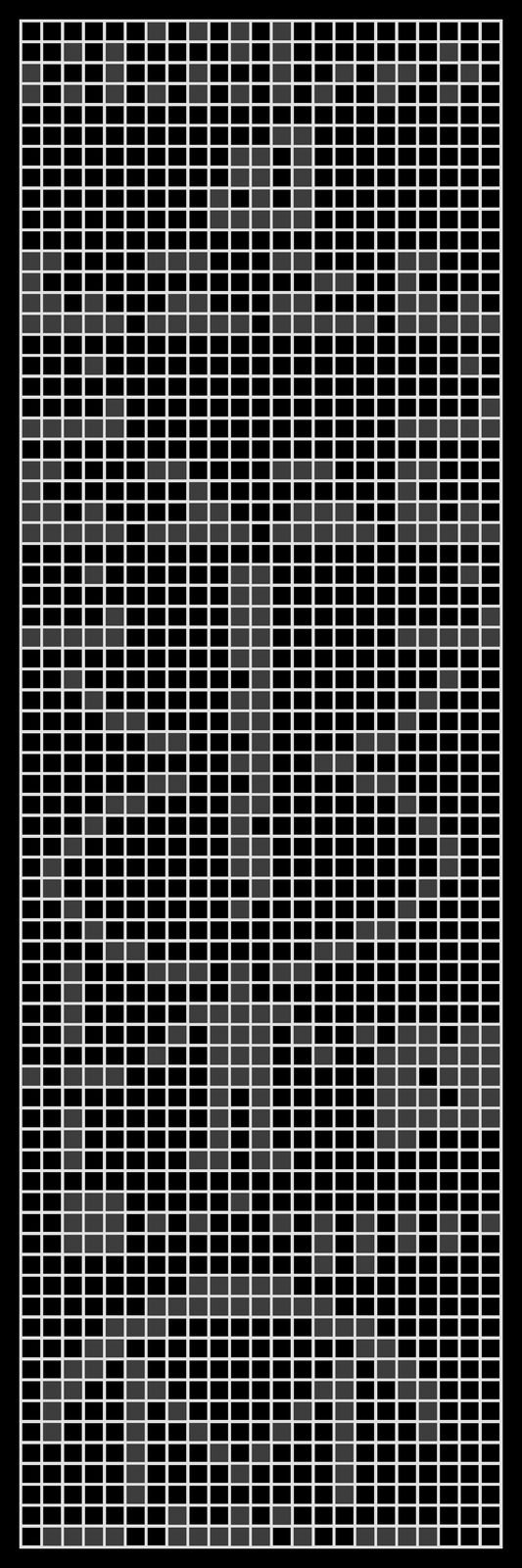
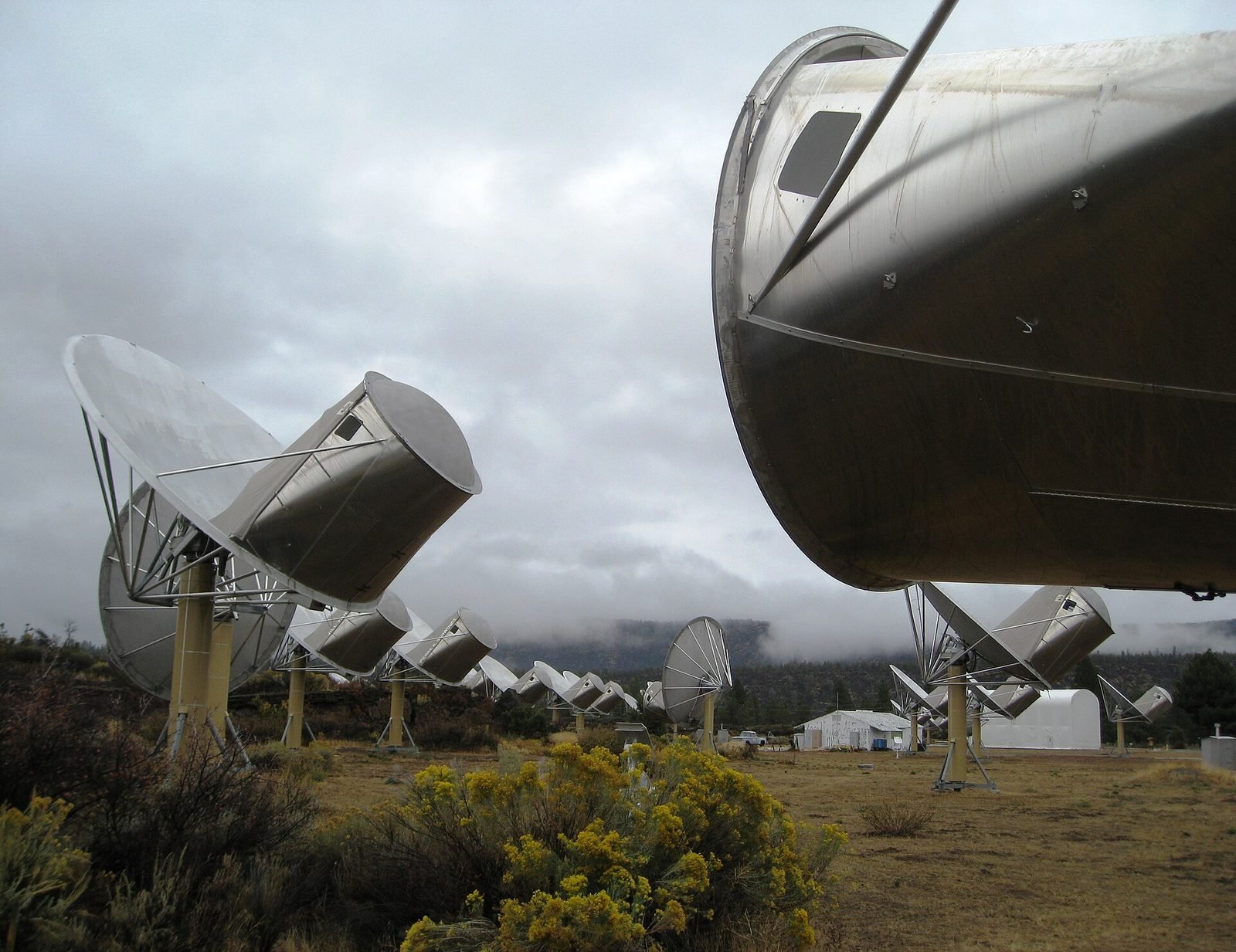
Astronomy-based SETI already has a relevant model. The IAA’s 2026 guidance addresses verification, uncertainty, public announcement and preservation of the underlying data. The guidance concerns a defined scientific search; it is not evidence that detection has occurred or a universal law governing every possible meeting. [22]
The principle transfers usefully: preserve the evidence, involve independent expertise and state what has actually been established. A candidate observation can be announced as a candidate without being described as a confirmed intelligence.
For a signal, independent observations and analysis would help separate an artificial source from interference or error. For an artifact, secure custody and reproducible examination would matter. For an apparent being, several kinds of independent access and an accountable process would be needed. These are the chapter’s proposed extensions, rather than rules asserted by the astronomy protocol.
Communication should distinguish occurrence, intelligence, identity, origin and intention. One could be established before the others. An event’s emotional impact would be easier to navigate if those differences were explained clearly.
It should also make corrections possible. If a widely reported candidate receives an ordinary identification, the update belongs beside the original claim. If a stronger result survives challenge, the evidence should be available enough for informed people to understand why.
Open contact becomes public knowledge through this shared process, rather than through a demand that everyone trust one authorised interpreter.

NASA UAP report media briefing. 14 September 2023. A scientific assessment and a discussion of future data collection, rather than a visitation announcement.
10. Representation, consent and the possibility of unequal power
Who could speak for humanity? A witness, government, scientific body, channel or religious community might contribute, but none automatically represents everyone. The problem would be practical even if a visitor asked for only one spokesperson.
A useful beginning would distinguish reporting from authorising. Someone could describe an encounter without having permission to make commitments for others. An organisation could verify a signal without possessing universal authority to reply on humanity’s behalf.
Consent would need similar precision. Agreement to observe is not agreement to surrender biological material, private information or political independence. A claim of remembered or higher-level consent should not erase a present refusal.
Greater capability also would not establish benevolence. A technically advanced being might misunderstand human values, conceal intentions or include internal disagreements. The opposite assumption—that unfamiliarity must mean hostility—would be equally premature.
The earliest relationship should therefore allow questions, correction, refusal and more than one route to information. A monopoly on interpretation would make both misunderstanding and manipulation harder to detect.
These are ethical proposals for a hypothetical situation, not assertions that a secret treaty already exists. An alleged treaty would require its own evidence: parties, terms, date, authorisation and independently verifiable records.
The aim is to prepare for a relationship with difference while retaining the human capacity to think, question and choose.


11. What would most change the assessment?
Different discoveries would answer different questions. A demonstrably artificial signal from beyond Earth could establish another technological intelligence without proving a local visitation. A securely recovered device exhibiting independently reproducible unfamiliar behaviour could transform the technology question while leaving its maker uncertain.
A biological sample could test ancestry if custody, contamination controls and interpretation were adequate. An authenticated record connecting a particular agency to a recovered object could substantiate part of a programme allegation. A channelled statement revealing precise inaccessible information could establish an information anomaly without authenticating every surrounding historical claim.
Equally important would be findings that weaken a proposed explanation: a shared source behind apparently independent testimony, a reproduced sensor effect, an ordinary manufacturing history or an unfulfilled well-defined forecast.
| Present question | Most useful next evidence | Conclusion that would still need care |
|---|---|---|
| Did a reported manoeuvre occur? | Calibrated, synchronised measurements with range and provenance | Identity of what performed it |
| Is a recovery programme concealed? | Authenticated records, custodians and examinable holdings | Whether every public retrieval story describes it |
| Is an unusual material engineered? | Reproduced structural and functional analysis | Who made it and where |
| Is communication externally informed? | Blinded, pre-recorded information tests and replication | The sender’s claimed biography |
| Do traditions preserve one event? | Independent early sources plus dated physical evidence | Whether all associated cosmologies are confirmed |
| Has open contact occurred? | Publicly inspectable interaction and independent identity checks | Universal benevolence or complete understanding of origin |
This is how an open position can remain disciplined. It welcomes a result that changes the picture and specifies in advance what that result would establish.
12. The emerging picture
Several conclusions survive the course. People report experiences that are important to them and sometimes difficult to reconstruct. Some observations are preserved in authentic records. Governments have investigated, restricted and released information. Serious affirmative allegations are now attached to identifiable people and public venues.
The encounter literature also overlaps with older traditions and spiritual teachings in recurring questions about intelligence, knowledge, biological relationship, awareness and power. Those overlaps justify more exact comparison. They do not yet establish a single common origin.
The most defensible provisional synthesis is a layered one. The record is shaped by observations, human interpretation, culture, institutional decisions and, possibly, phenomena not yet adequately understood. More than one cause may be involved. An external non-human intelligence remains a consequential hypothesis, rather than a conclusion established for the whole collection.
The reported beings and cosmic histories can be understood accurately as proposals. Their philosophical and ethical content can be considered without converting every external assertion into a fact. Technical claims can advance through measurement; historical claims through provenance and independent records; experiential claims through careful description and appropriate tests.
What remains missing is a decisive public bridge connecting particular observations, alleged programmes and named non-human identities. The strongest future discovery would make that bridge examinable by people who did not already share the interpretation.
This course therefore ends with a clear answer to its original ambition: there is substantial material worth understanding and investigating, but the reviewed record does not justify presenting humanity’s continuing interaction with extraterrestrials as an established fact. That assessment is a statement about the evidence available here. It can change when the evidence changes.
The inquiry remains worthwhile because its stakes are large and its questions can be improved. Curiosity and accuracy belong together when the possible discovery would alter humanity’s understanding of itself.
Final questions for study
- Which conclusion changed most for you during the course, and which evidence produced the change?
- Which overlap remains strongest after source dependence and differing details are considered?
- What would establish another intelligence while leaving visitation unresolved?
- Which one investigation would you undertake next, and what outcome would change your view?
- How can a university remain receptive to an unexpected discovery while correcting claims that do not survive examination?
End of the sixteen-lesson course. Continue through the encounter archive, source-specific perspectives and the directory of reported beings.
References and source notes
The references distinguish a witness’s statement, an investigator’s assessment and the chapter’s own analysis. An official host authenticates a document’s provenance; it does not automatically establish every assertion within it. URLs were checked or their indexed source text consulted during this review.
NASA (2023), UAP Independent Study Team Final Report; NASA UAP FAQs, consulted 30 October 2026.
https://science.nasa.gov/wp-content/uploads/2023/09/uap-independent-study-team-final-report.pdf
https://science.nasa.gov/uap/faqs/
Locator: Report’s data-quality and investigation recommendations; FAQ’s public position on extraterrestrial evidence. Source type: Official scientific advisory report and institutional FAQ. Use and limits: A defined public assessment and research programme. It is not presented as inspection of every alleged classified holding or a proof that extraterrestrial life cannot exist.
Department of Defense (2020), Statement on the Release of Historical Navy Videos, 27 April.
Locator: Release statement concerning three videos, their dates and authorised publication. Source type: Official release announcement. Use and limits: Authenticates the released Navy videos as described by the Department; it does not identify their subjects as extraterrestrial.
David Fravor (2023), written statement to the House UAP hearing, 26 July.
https://docs.house.gov/meetings/GO/GO06/20230726/116282/HHRG-118-GO06-Wstate-FravorD-20230726.pdf
Locator: Account of the November 2004 encounter; visual observations and controller-provided information. Source type: Named witness’s submitted statement. Use and limits: A retrospective statement, not the complete underlying radar record or a physical identification of the object.
CNES / GEIPAN, Missions, méthodes et résultats.
https://www.geipan.fr/fr/missions-methodes-et-resultats
Locator: Case-investigation process and distinction between insufficient information and unexplained cases. Source type: Official investigation methodology. Use and limits: An unresolved classification is not a national finding of extraterrestrial origin. No changing case percentage is treated as a timeless statistic.
National Archives, Record Group 615: Unidentified Anomalous Phenomena Records Collection; page reviewed 27 October 2026.
https://www.archives.gov/research/topics/uaps/rg-615
Locator: Background; agency series and catalogue links. Source type: Official archival collection and access description. Use and limits: Documents an operating collection and rolling transfers. A catalogue entry or agency submission does not establish the truth of every report it contains.
U.S. Department of War (2026), Presidential Unsealing and Reporting System for UAP Encounters (PURSUE); initial release announcement, 8 May.
https://www.war.gov/ufo/?type=.vid
Locator: Directive and initial announcement: interagency search, review, declassification, rolling releases and unresolved cases. Source type: Official government programme description, consulted through indexed source text. Use and limits: Establishes a coordinated record-release initiative. Direct page access returned restrictions during this review. No claim is made to have examined every released file, to know withheld contents, or to have independently validated the administration’s promotional comparisons with earlier administrations.
U.S. Department of War / Sean Parnell (2026), Department of War Publishes Seventh Release of Unidentified Anomalous Phenomena Files on WAR.GOV/UFO, 23 October; distributed reproduction.
https://www.publicnow.com/view/056DCDDCD56EDE86C99D32BC5A795A8BB9817B4F
https://www.miragenews.com/war-department-releases-seventh-batch-of-ufo-1765699/
Locator: Statement announcing the seventh release and continuing work on further records. Source type: Government-attributed press statement reproduced by distribution sites; indexed text consulted. Use and limits: A dated release milestone, not a content-level audit or a guarantee that no subsequent announcement exists. Direct retrieval of the PublicNow page was restricted.
Luis Elizondo (2024), written testimony, “Unidentified Anomalous Phenomena: Exposing the Truth”, 13 November.
https://oversight.house.gov/wp-content/uploads/2024/11/Written-Testimony-Elizondo.pdf
Locator: Pp. 1–2, technology, possession, programme and intimidation claims. Source type: Named witness’s statement to Congress. Use and limits: A distinct, attributable public statement by a central film participant. Its allegations are not presented as findings adopted by Congress.
Karl Nell / Alex Klokus (2024), SALT iConnections New York conversation, recorded 21 May, uploaded 22 May.
https://www.youtube.com/watch?v=Rpl0FrdJWfs
https://wherearethey.info/video/zero-doubt-non-human-intelligence-on-earth-col-karl-nell-alex
Locator: Approximately 3:15–5:15: existence claim, confidence and public reasoning. Source type: Original conference video; third-party automatic-caption access copy. Use and limits: The claim is attributed and paraphrased. Captions were inspected; no complete audiovisual verification is claimed. These are locators for the SALT video, not film timecodes.
Marco Rubio / U.S. Department of State (2025), interview with Sean Hannity, 2 December; transcript reproduced by Mirage News on 3 December.
https://www.miragenews.com/sec-rubio-joins-hannity-on-fox-news-1582394/
https://www.foxnews.com/video/6385881667112
Locator: Opening exchange about The Age of Disclosure, before the interview moves to other policy topics. Source type: Department of State-attributed transcript reproduction; broadcaster’s original video link. Use and limits: Rubio distinguishes received programme allegations from firsthand knowledge and maintains his concern about unidentified incursions. The Fox page is a video locator, not the text relied on for his wording.
Tim Gallaudet (2024), updated written testimony to the House UAP hearing, 13 November.
https://oversight.house.gov/wp-content/uploads/2024/11/Updated-Testimony-Gallaudet.pdf
Locator: Pp. 1–2, 2015 safety email, attached video and subsequent disappearance. Source type: Retired rear admiral’s firsthand account of receiving information. Use and limits: His receipt of the message is distinct from witnessing the recorded target. His conclusions about classification are identified as inferences.
Dan Farah (director, 2025), The Age of Disclosure, official description.
https://www.theageofdisclosure.com/about-the-film
Locator: Production description and stated participant count. Source type: Primary filmmaker description. Use and limits: Identifies the documentary’s framing; individual contributors do not automatically endorse every assertion.
AARO (2024), Report on the Historical Record of U.S. Government Involvement with UAP, vol. I, February; released March.
https://www.aaro.mil/Portals/136/PDFs/AARO_Historical_Record_Report_Vol_1_2024.pdf
Locator: Executive summary. Source type: Official historical assessment. Use and limits: States its lack of evidence for confirmed extraterrestrial technology or reverse-engineering claims. This is a dated institutional assessment, not an exhaustive proof about every possible concealed record.
Lyssa Royal Holt / Bashar through Darryl Anka (December 2020; published 2021), conversation and introduction.
https://www.lyssaroyal.net/uploads/1/5/7/1/15716170/bashar_lyssaqs-dec2020.pdf
https://sedonajournal.com/march-2021/conversation-lyssa-royal-holt-and-bashar-through-darryl-anka
Locator: Opening first-person identification of Anka as an old friend and mentor. Source type: Source-hosted introduction and published conversation. Use and limits: Documents a source relationship. It does not establish that every similarity results from borrowing, or that the shared claims are false.
Graham Hancock (2016), “Ancient Aliens or a Lost Civilization?”, 11 May.
https://grahamhancock.com/49103-2/
Locator: Opening paragraphs distinguishing his lost-human-civilisation explanation from ancient-astronaut interpretations. Source type: Author’s own public position. Use and limits: Supports the distinction between Hancock’s two lines of inquiry. It is not archaeological confirmation of the proposed lost civilisation.
Lyssa Royal Holt, What is Contact Work?
https://www.lyssaroyal.net/what-is-contact-work.html
Locator: Introduction, CSETI influence, Phoenix group and summary of research/practice. Source type: Practitioner’s own account. Use and limits: Accurately identifies the practice and its claims. No independently controlled demonstration is inferred from the account of meaningful field experiences.
L/L Research, The Law of One, session 16, 31 January 1981, questions 16.1–16.7.
https://www.lawofone.info/s/16
Locator: Quarantine, free will and limited openings. Source type: Primary channelled transcript. Use and limits: An internal explanation of contact’s limits. It does not authenticate a human government policy or supply an independent test of every absence.
Bashar Communications (2023), Becoming a Galactic Citizen, part 1, official catalogue.
https://tv.bashar.org/checkout/new?o=p3073672
Locator: Indexed description identifying 2023 as the beginning of an open-contact window and presenting preparatory exercises. Source type: Official session catalogue. Use and limits: A broad window without a complete independently specified outcome criterion is weaker as a test than a bounded event forecast. No end date is invented from this listing.
Bashar Communications (2026), 2026 The Year of Disclosure, official catalogue.
https://tv.bashar.org/checkout/new?o=p3989100
Locator: Indexed description of the first 2026 transmission: information release and subsequent open contact under suitable conditions. Source type: Official session catalogue. Use and limits: The catalogue distinguishes disclosure from contact. It does not supply independent confirmation of non-human identity; the calendar year was not complete at this review.
Bashar Communications (2025), 2027 The Year Everything Changes, official catalogue, released May 2025.
https://tv.bashar.org/programs/2027-the-year-everything-changes
Locator: Indexed official description: introductions/arrivals in 2027 qualified by the probabilities described at that time. Source type: Official session catalogue and forecast description. Use and limits: Indexed description consulted; direct page retrieval returned only the interface shell. No full session audit or unverified exact quotation/timecode is claimed. As of 30 October 2026, the proposed year is future.
L/L Research, The Law of One, session 6, 24 January 1981, questions 6.16–6.20.
Locator: Approximate thirty-year period and the questioner’s fourth-density-transition question. Source type: Primary channelled transcript. Use and limits: This is a source-specific planetary transition claim, not an explicit forecast of a public extraterrestrial landing. Approximately 2011 is calendar arithmetic from the session, not a separate exact date supplied by the source.
International Academy of Astronautics SETI Committee (2026), Declaration of Principles Concerning the Conduct of the Astronomy-Based Search for Extraterrestrial Intelligence; SETI Institute presentation.
https://www.seti.org/research/seti-101/protocols-for-an-eti-signal-detection/
https://iaaseti.org/en/protocols/
Locator: Principles on verification, public communication, monitoring and archives; current 2026 update. Source type: Scientific community’s adopted guidance for astronomy-based SETI. Use and limits: An instructive existing model, not a universally binding law for in-person contact or proof that a detection has occurred. This chapter’s wider governance suggestions are editorial proposals.