
Aliens · Chapter 10
Disclosure: why withhold, and why speak now?
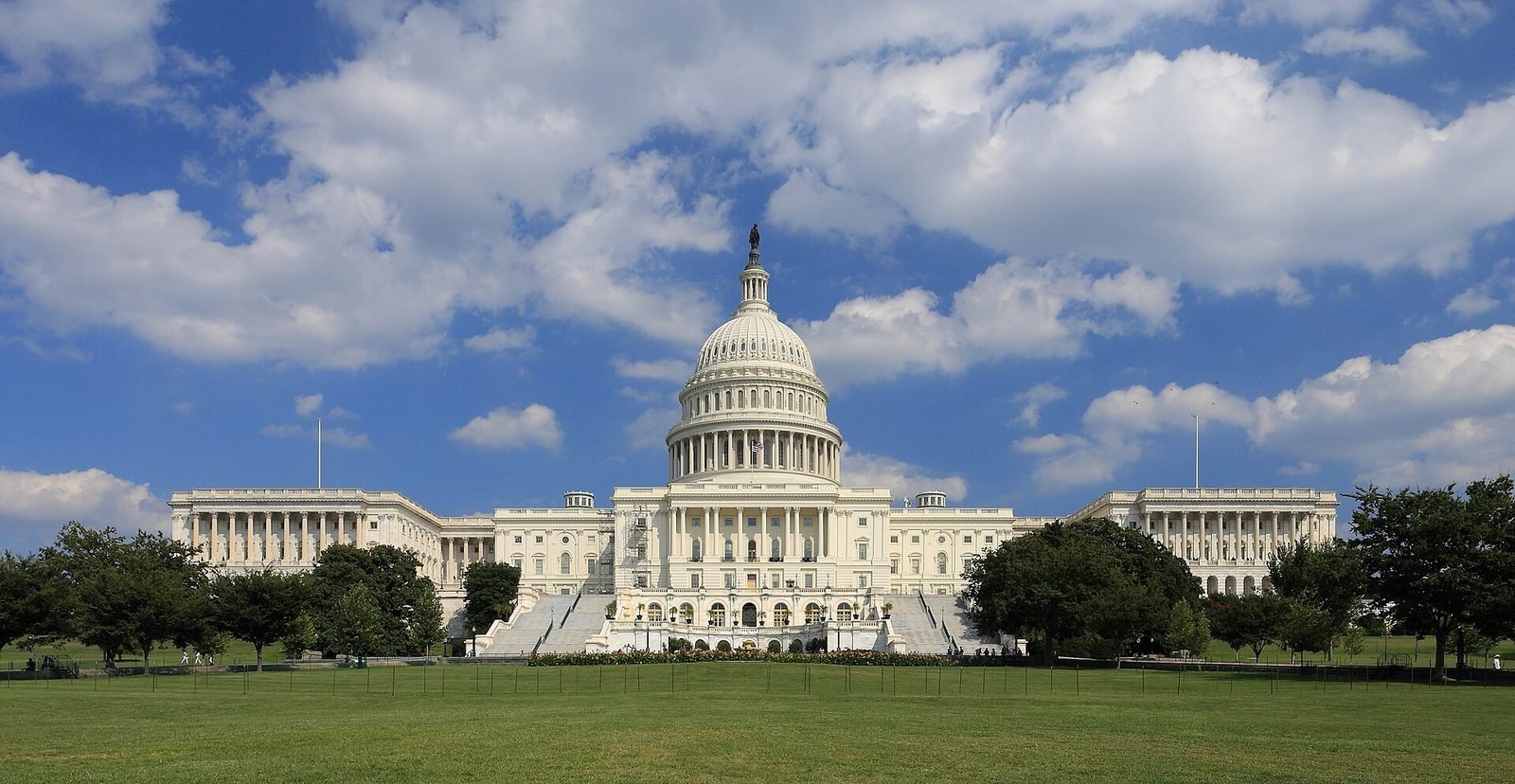
Something important has changed when military recordings, public hearings and archival collections make a formerly marginal subject available for ordinary civic examination. People can ask questions in public, identify a source and inspect more of the record. That change deserves recognition even while the origin of particular phenomena remains unresolved.
Illustration made for this site. Not a photograph of the claim.
Secrecy, officials’ statements, public releases and the hypothesis of preparation for contact.
Reviewed 30 October 2026.
1. Three meanings of disclosure
Something important has changed when military recordings, public hearings and archival collections make a formerly marginal subject available for ordinary civic examination. People can ask questions in public, identify a source and inspect more of the record. That change deserves recognition even while the origin of particular phenomena remains unresolved.
But “disclosure” can name three different developments. It can mean release of information, such as a video or historical file. It can mean institutional openness, such as better reporting, investigation and oversight. It can also mean a planned revelation of already established non-human presence. These developments might connect, but evidence of the first does not establish the third.
The central questions are therefore practical: what was withheld, by whom, for what stated or inferred reason, and what changed? Only after answering those questions should we decide whether a particular sequence is best understood as public preparation for contact.
This chapter gives that possibility serious attention. It also examines competing explanations that could produce some of the same public pattern. An explanation earns strength when it distinguishes itself from alternatives, rather than merely fitting events after they occur.
2. What has actually become public?
The Department of Defense’s April 2020 announcement authorised release of three historical Navy videos, explaining their provenance and the purpose of publication. It did not announce an extraterrestrial identification. ODNI’s June 2021 assessment then publicly described the difficulties of evaluating UAP reports, including limited data and reporting obstacles. [1] [2]
Congressional activity made another kind of material public: attributable statements, questions about access and demands for accountability. Senator Kirsten Gillibrand’s April 2023 prepared remarks called for investigation, adequate data and a functioning reporting process. Luis Elizondo’s November 2024 testimony went further, asserting possession of UAP technology and a secret competition surrounding it. Those are different contributions, even when both appear in a disclosure narrative. [3] [4]
The National Archives’ Record Group 615 adds an observable archival change. Its collection, created following the 2024 National Defense Authorization Act, receives UAP-related records from federal agencies and links readers to catalogue series. The page reviewed in October 2026 describes rolling additions. [5]
This sequence establishes a widening public record. It does not yet tell us whether every participant knows the same thing, whether agencies agree, or whether a single plan explains the sequence.
A useful reading habit is to identify the new information in each event. Was a file released? Was an existing allegation repeated by a new speaker? Was a new witness identified? Was there an actual change in the assessment of an object? Each can matter, but in a different way.

2024 House UAP hearing. Gallaudet, Elizondo, Gold and Shellenberger appear on 13 November 2024.
3. The 2026 programme: coordination that can be identified
By this chapter’s review date, the U.S. government had announced the Presidential Unsealing and Reporting System for UAP Encounters, or PURSUE. The initial announcement, dated 8 May 2026, describes an interagency effort to identify, review and release records. Its public programme description says that unresolved cases can remain unresolved because the available data are insufficient. [6]
A government-attributed statement dated 23 October announces a seventh release and continuing work on further material. This is a documented milestone in the release process; this chapter does not claim a forensic audit of the contents of every tranche. [7]
Here, coordination is more than a viewer’s impression. An initiative has a name, a stated directive, participating institutions and release announcements. We can investigate its procedure and compare its promises with its output.
The purpose still needs to be stated accurately. Coordinating the publication of unresolved records is not the same proposition as coordinating a revelation of confirmed extraterrestrial visitors. If the latter is also happening, additional evidence should identify the knowledge being revealed and the intended sequence.
The programme also creates opportunities for independent inquiry. Researchers can compare versions, seek missing metadata and ask which files support a new conclusion. The strongest response to greater access is to use it, rather than treating the existence of a release as the conclusion of the investigation.
4. Why withhold? Begin with the information inside a record
A UAP record can contain more than an image of an unfamiliar object. It may disclose how an observation was collected, where a platform operated, what a system could detect or which person supplied information. These are distinct from the identity of the object itself.
Consider a hypothetical infrared clip. A sensor specialist might be interested in its performance, an operational commander in the aircraft’s location, and a UAP investigator in the target. Releasing one part while protecting another may be possible. Whether a particular redaction is justified must be assessed against the actual record and the relevant authority; the example alone cannot justify it.
There is also a documented human-technology precedent. CIA historian Gerald Haines describes the effect of U-2 and OXCART reconnaissance activity on UFO reporting and public explanations that protected those programmes. The historical example establishes that secrecy about human systems can shape the public UFO record. It cannot explain every unexplained event merely by analogy. [8]
This is an important overlap with disclosure advocates’ concerns: a public explanation can be incomplete because something real is being protected. The next question is what that something is.
Secrecy about an intelligence platform, uncertainty about an observation and concealment of a non-human artifact would leave different evidential trails. The classification marking alone cannot tell us which history a document belongs to.

5. Why might an institution resist a question it cannot answer?
Uncertainty can itself be awkward. An organisation responsible for airspace security may be reluctant to publicise an event it cannot reconstruct. Personnel may expect ridicule, career damage or a burdensome investigation. Reports may remain separated across offices with different responsibilities.
ODNI’s 2021 assessment explicitly identifies reporting challenges and stigma as obstacles to the evidence base. That makes them more than a speculative explanation invented outside government. It also describes a dataset dominated by government reporting over a particular period, rather than a representative sample of all human encounters. [2]
From this, we can infer a possible feedback loop: fewer reports produce less understanding; less understanding makes the subject harder to discuss; the social cost then discourages further reports. This is the chapter’s institutional interpretation, not a measured finding about every agency.
Such a process can look like organised silence from outside even when no central actor possesses a complete answer. It can also coexist with deliberate concealment in another office. Fragmentation and secrecy are not mutually exclusive.
The remedy is therefore specific. Improve reporting, preserve original observations, allow comparison across cases and protect the distinction between making a report and asserting an extraterrestrial explanation. A pilot should not need a theory of the universe before describing an airspace encounter.
6. The stronger allegation: something extraordinary is being concealed
The central insiders’ claims should not be diluted into the weaker statement that unusual things are sometimes observed. Elizondo’s 2024 written testimony alleges that technologies made by no government are monitoring sensitive installations, that the United States and adversaries possess UAP technology, and that a concealed arms race and intimidation have accompanied secrecy. These are substantial, attributable allegations. [4]
If substantiated, this account would supply a different set of motives: strategic advantage from recovered technology, control of access and protection from accountability. Those motives are conditional explanations for the alleged situation. They are not independent proof that the situation exists.
Karl Nell’s public SALT conversation in May 2024 likewise expresses strong conviction about non-human intelligence and interaction. In the selected passage, his public reasoning draws on a convergence of information and other highly placed people; it does not present physical material for independent examination. [9]
The important questions are about access. Which conclusions arise from personal observation? Which arise from briefing, documents, interviews or trust in colleagues? Which speakers might be relying on the same source?
Agreement among well-placed people can justify focused investigation. It becomes stronger corroboration when their access is genuinely independent and the underlying details agree. It becomes weaker when apparently separate accounts resolve into a single unexamined source. The distinction respects the significance of testimony while asking it the questions necessary to advance the inquiry.
7. What the officials’ differences reveal
Tim Gallaudet’s November 2024 statement describes receiving a Navy safety-related email associated with the GoFast video and later being unable to find the message. He interprets that experience in the context of concealed programmes. His receipt of the communication and his explanation of its disappearance are distinguishable parts of the account. [10]
Marco Rubio’s December 2025 Hannity interview is another useful comparison. In the State Department-attributed transcript, he distinguishes allegations brought to him about programmes from firsthand knowledge, while maintaining concern about unidentified incursions. The qualification belongs beside his interest in the subject, rather than being removed to produce a more dramatic composite statement. [11]
Gillibrand’s prepared hearing remarks, meanwhile, demand an effective investigation without identifying extraterrestrial occupants. Elizondo’s position is more affirmative. Nell’s expressed confidence is also stronger than a request to investigate. [3] [4] [9]
These differences do not make their accounts irrelevant to one another. They reveal what a responsible synthesis must preserve: officials can agree that the subject deserves attention while disagreeing, or possessing different levels of access, about what it ultimately means.
The university chapter should therefore identify each speaker’s role at the time of the statement, the venue and the claimed basis of knowledge. “High-level officials say” is an introduction to the investigation. It is too broad to serve as its final finding.

8. Public reaction: what the Brookings study actually contributes
The 1960 Brookings report Proposed Studies on the Implications of Peaceful Space Activities for Human Affairs is a real commissioned study, catalogued by NASA. Brookings’ own retrospective explains that it considered many social consequences of space activity and included a short discussion of discovering extraterrestrial life or artifacts. [12]
Its relevance is the recognition that a major discovery could affect human institutions and beliefs. Its limits are equally important: studying a hypothetical discovery does not establish that the discovery had already happened. A proposal to study reactions is not, by itself, a government order to conceal visitors.
The wider question remains worth asking. People would encounter a confirmed discovery from different religious, political and personal starting points. Public communication would need to distinguish what was found, how it was identified, what remains unknown and whether there is an immediate practical consequence.
“People would panic” is therefore an inadequate explanation unless attached to evidence: who predicted which reaction, when, using what research, and how did that prediction influence an actual decision? A claimed concern about public welfare should also be compared with other possible interests, including institutional reputation and control over access.
Neither universal panic nor universal readiness should be assumed in advance.
A documented publicity proposal and a disputed disclosure design
The 1953 Robertson Panel report supplies a specific historical example of official interest in public attitudes. Its educational recommendations included reducing the mystery surrounding UFO reports through public education and debunking. Read this in its Cold War security setting, including concern about overloaded reporting channels. A recommendation in a report is evidence of a proposed approach; establishing its implementation requires further records. [17]
This history gives substance to questions about ridicule and information management. It still cannot make every ordinary explanation a coordinated deception, or establish that the panel possessed alien evidence. Those are additional claims with additional evidential requirements.
A more recent dispute concerns the design of disclosure itself. In their 13 December 2023 Senate discussion, Chuck Schumer and Mike Rounds criticised the removal of elements of their proposed UAP disclosure framework, including an independent review board and provisions concerning recovered material. A records-collection framework survived. Their objection documents a political disagreement about access and oversight; it does not certify the existence of everything the proposal sought to investigate. [18]
When teaching this episode, show the proposed text, retained provisions and legislators’ objections separately. A proposal is not an enacted power, and a legislator’s stated concern is not a completed investigation. These distinctions make a claim of obstruction more examinable: what was removed, by whom, with what publicly stated explanation and with what practical effect?
9. Films and the possibility of public preparation
The Age of Disclosure presents a deliberate public argument, assembled by filmmakers and delivered partly through people with government, military and intelligence backgrounds. The official production description establishes the documentary’s framing. It does not establish that every participant endorses every other participant’s account or that the film implements a government directive. [13]
A film can change the conditions of discussion. Familiar voices, repeated images and a coherent narrative can make an unfamiliar proposition easier to consider. That is a plausible cultural effect, whether the film’s strongest claims ultimately prove correct or not.
The further allegation of coordinated government preparation requires a bridge: authenticated instructions, documented partnerships, correspondence about the specific message or other evidence identifying who directed what. Access to officials can be important without establishing official sponsorship.
This distinction also applies to fiction and channelled forecasts. A story can prepare a viewer emotionally for the idea of contact. A teaching can interpret gradual familiarity as part of a non-human plan. Neither interpretation identifies a human government’s operational policy unless evidence connects them.
The overlaps are worth mapping, particularly where a distinctive detail appears before public circulation. But broad themes—secrecy, visitors, fear and eventual revelation—are too flexible to establish a common hidden organiser on their own.

10. Why speak now? Several causes can work together
Greater openness need not have one cause. A witness may want an experience recorded; a legislator may want oversight; an aviator may want safer reporting; an archivist may be carrying out a transfer requirement. A filmmaker may want to persuade an audience. An administration may choose to make releases a public priority.
Some of those motives are visible in the sources already discussed. Gillibrand’s remarks articulate investigation and reporting concerns. The National Archives describes an ongoing transfer and access process. PURSUE gives the current U.S. release effort a stated governmental framework. These provide evidence of particular activities, rather than proof of a shared final explanation. [3] [5] [6]
Canada’s Sky Canada report provides another comparison: an official advisory exercise examines the management of public UAP reporting and proposes improvements. Recommendations about reporting can make the subject more discussable without announcing a discovery of non-human intelligence. [14]
This international comparison matters. Similar institutional problems can produce similar reforms in different countries. That is one explanation for overlap. A coordinated international disclosure plan is another proposition, requiring evidence of actual coordination.
A mixed explanation may fit best in a particular case: sincere pressure from witnesses, political opportunity, better reporting technology and selective official cooperation can all contribute. Calling the result “disclosure” should not prevent us from investigating the separate causes.
11. What would demonstrate a deliberate preparation programme?
A useful hypothesis must take risks. If a public-preparation theory treats an announcement, a delay, a denial and silence as equally confirming, it cannot distinguish a plan from an absence of one.
| Hypothesis | Evidence that would strengthen it | What would remain insufficient by itself |
|---|---|---|
| Routine protection of sensitive collection | A record-specific explanation connecting withholding to a capability or operation | A classification stamp without an account of the protected information |
| Institutional fragmentation | Separate files, incompatible procedures and documented access failures | General speculation that every office is confused |
| Concealed non-human technology | Authenticated programme records, identified custodians and independently examinable material | Rank, repetition or the assertion that evidence exists elsewhere |
| Coordinated release of records | Named directive, responsible institutions and traceable publication steps | A general impression that the subject appears more often |
| Preparation for a known non-human presence | Evidence linking established knowledge to an authorised communication sequence | Films and hearings occurring in the same period |
This comparison does not require every detail to become public immediately. Independent inspection under a clearly described procedure could advance the inquiry while protecting unrelated sensitive information. What matters is whether someone can check the decisive claim and explain the limits of the check.
Christopher Mellon’s public description of the UAP Disclosure Fund includes an emphasis on distinguishing firsthand knowledge from belief or opinion and identifying sources. That standard, expressed by a disclosure advocate, is a useful guide here. [15]
Apply it to everyone: witnesses, government offices, filmmakers and this chapter. Authority should help us locate evidence, not end the search.
12. A public record can expand while the interpretation remains contested
AARO’s 2024 historical report states that its review did not find empirical confirmation of extraterrestrial technology or the alleged reverse-engineering programmes. Some of the insiders discussed here advance directly conflicting accounts. Presenting both positions identifies the dispute; it does not resolve it by averaging their confidence. [16] [4]
The next step is to identify the disputed evidence. Did investigators reach the people and locations alleged? Are witnesses referring to the same programme? Are the underlying records available to a body able to challenge both accounts? What finding would cause each side to revise its position?
This gives us a more precise understanding of “warming up the public”. Public familiarity is increasing through identifiable releases, advocacy, reporting and entertainment. A coordinated U.S. record-release programme is documented. The proposition that this entire process implements a plan to announce an already established non-human presence remains an additional claim requiring evidence of knowledge, intent and execution.
That conclusion leaves the central possibility open. It also protects the inquiry from losing its way in an endlessly postponed announcement. The most consequential disclosure would be information that changes what independent people can establish, rather than only changing what they are invited to expect.
Questions for study
- Choose a release or statement. What became newly inspectable, and what remained an assertion?
- Which proposed reason for secrecy is documented in that case, and which is inferred?
- What would distinguish independent insider convergence from a shared confidential source?
- Which evidence would make a public-preparation hypothesis testable within a defined period?
- How should communication change if an extraordinary discovery is confirmed but its origin or intentions remain uncertain?
Next: Chapter 11 · Before the flying saucer.
The shorter record of official paper, hearings and entertainment is kept at Preparing the public. Observable familiarisation is not, by itself, a demonstrated coordination programme.
References and source notes
The references distinguish a witness’s statement, an investigator’s assessment and the chapter’s own analysis. An official host authenticates a document’s provenance; it does not automatically establish every assertion within it. URLs were checked or their indexed source text consulted during this review.
Department of Defense (2020), Statement on the Release of Historical Navy Videos, 27 April.
Locator: Release statement concerning three videos, their dates and authorised publication. Source type: Official release announcement. Use and limits: Authenticates the released Navy videos as described by the Department; it does not identify their subjects as extraterrestrial.
Office of the Director of National Intelligence (2021), Preliminary Assessment: Unidentified Aerial Phenomena, 25 June.
https://www.dni.gov/files/ODNI/documents/assessments/Prelimary-Assessment-UAP-20210625.pdf
Locator: Executive summary; collection challenges, stigma and reporting sections. Source type: Official intelligence assessment. Use and limits: Used for the assessment’s own scope, reporting obstacles and data limitations. Not treated as a complete global dataset or an assessment of every later case.
Kirsten Gillibrand (2023), prepared opening statement at the Senate UAP hearing, 19 April.
Locator: Prepared remarks on advanced characteristics, unknown origin, sensor data and reporting. Source type: Senator’s official public statement. Use and limits: An independently attributable policy statement by a film participant. It demands investigation; it does not identify extraterrestrial occupants.
Luis Elizondo (2024), written testimony, “Unidentified Anomalous Phenomena: Exposing the Truth”, 13 November.
https://oversight.house.gov/wp-content/uploads/2024/11/Written-Testimony-Elizondo.pdf
Locator: Pp. 1–2, technology, possession, programme and intimidation claims. Source type: Named witness’s statement to Congress. Use and limits: A distinct, attributable public statement by a central film participant. Its allegations are not presented as findings adopted by Congress.
National Archives, Record Group 615: Unidentified Anomalous Phenomena Records Collection; page reviewed 27 October 2026.
https://www.archives.gov/research/topics/uaps/rg-615
Locator: Background; agency series and catalogue links. Source type: Official archival collection and access description. Use and limits: Documents an operating collection and rolling transfers. A catalogue entry or agency submission does not establish the truth of every report it contains.
U.S. Department of War (2026), Presidential Unsealing and Reporting System for UAP Encounters (PURSUE); initial release announcement, 8 May.
https://www.war.gov/ufo/?type=.vid
Locator: Directive and initial announcement: interagency search, review, declassification, rolling releases and unresolved cases. Source type: Official government programme description, consulted through indexed source text. Use and limits: Establishes a coordinated record-release initiative. Direct page access returned restrictions during this review. No claim is made to have examined every released file, to know withheld contents, or to have independently validated the administration’s promotional comparisons with earlier administrations.
U.S. Department of War / Sean Parnell (2026), Department of War Publishes Seventh Release of Unidentified Anomalous Phenomena Files on WAR.GOV/UFO, 23 October; distributed reproduction.
https://www.publicnow.com/view/056DCDDCD56EDE86C99D32BC5A795A8BB9817B4F
https://www.miragenews.com/war-department-releases-seventh-batch-of-ufo-1765699/
Locator: Statement announcing the seventh release and continuing work on further records. Source type: Government-attributed press statement reproduced by distribution sites; indexed text consulted. Use and limits: A dated release milestone, not a content-level audit or a guarantee that no subsequent announcement exists. Direct retrieval of the PublicNow page was restricted.
Gerald K. Haines (1997), “CIA’s Role in the Study of UFOs, 1947–90”, Studies in Intelligence; reproduced by the Federation of American Scientists.
https://sgp.fas.org/library/ciaufo.html
Locator: Sections on U-2 / OXCART and public explanations. Source type: Original institutional historical research, hosted in an attributed reproduction. Use and limits: Supports a documented example of secrecy around human reconnaissance technology. The historian’s broad conclusions are not automatically applied to unrelated UAP events.
Karl Nell / Alex Klokus (2024), SALT iConnections New York conversation, recorded 21 May, uploaded 22 May.
https://www.youtube.com/watch?v=Rpl0FrdJWfs
https://wherearethey.info/video/zero-doubt-non-human-intelligence-on-earth-col-karl-nell-alex
Locator: Approximately 3:15–5:15: existence claim, confidence and public reasoning. Source type: Original conference video; third-party automatic-caption access copy. Use and limits: The claim is attributed and paraphrased. Captions were inspected; no complete audiovisual verification is claimed. These are locators for the SALT video, not film timecodes.
Tim Gallaudet (2024), updated written testimony to the House UAP hearing, 13 November.
https://oversight.house.gov/wp-content/uploads/2024/11/Updated-Testimony-Gallaudet.pdf
Locator: Pp. 1–2, 2015 safety email, attached video and subsequent disappearance. Source type: Retired rear admiral’s firsthand account of receiving information. Use and limits: His receipt of the message is distinct from witnessing the recorded target. His conclusions about classification are identified as inferences.
Marco Rubio / U.S. Department of State (2025), interview with Sean Hannity, 2 December; transcript reproduced by Mirage News on 3 December.
https://www.miragenews.com/sec-rubio-joins-hannity-on-fox-news-1582394/
https://www.foxnews.com/video/6385881667112
Locator: Opening exchange about The Age of Disclosure, before the interview moves to other policy topics. Source type: Department of State-attributed transcript reproduction; broadcaster’s original video link. Use and limits: Rubio distinguishes received programme allegations from firsthand knowledge and maintains his concern about unidentified incursions. The Fox page is a video locator, not the text relied on for his wording.
Donald N. Michael / Brookings Institution (1960), Proposed Studies on the Implications of Peaceful Space Activities for Human Affairs, NASA-CR-55643; Fred Dews / Brookings (2014), institutional retrospective.
https://ntrs.nasa.gov/citations/19640053196
Locator: NTRS document identity and 1 December 1960 date; retrospective paragraphs on “Attitudes and Values” and implications of discovering extraterrestrial life. Source type: Original commissioned study catalogue record plus the originating institution’s retrospective. Use and limits: The discussion here relies on the retrospective’s presentation of the relevant section, not a complete reading of the original report. No unverified PDF page number or claim of a NASA concealment directive is supplied.
Dan Farah (director, 2025), The Age of Disclosure, official description.
https://www.theageofdisclosure.com/about-the-film
Locator: Production description and stated participant count. Source type: Primary filmmaker description. Use and limits: Identifies the documentary’s framing; individual contributors do not automatically endorse every assertion.
Office of the Chief Science Advisor of Canada (2025), Management of Public Reporting of Unidentified Aerial Phenomena in Canada, June.
Locator: Executive summary, project scope and recommendations. Source type: Official scientific advisory report. Use and limits: Used for public reporting and governance recommendations. Recommendations are not presented as proof of implementation or of coordinated worldwide disclosure.
Christopher Mellon (2025), “UAP Disclosure Fund”, 13 May.
https://christopherkmellon.substack.com/p/uap-disclosure-fund
Locator: Board policy on firsthand knowledge, opinion/belief and source disclosure. Source type: Author’s own public statement. Use and limits: Provides an explicit standard from a disclosure advocate. It is used to assess claims, not to dismiss them.
AARO (2024), Report on the Historical Record of U.S. Government Involvement with UAP, vol. I, February; released March.
https://www.aaro.mil/Portals/136/PDFs/AARO_Historical_Record_Report_Vol_1_2024.pdf
Locator: Executive summary. Source type: Official historical assessment. Use and limits: States its lack of evidence for confirmed extraterrestrial technology or reverse-engineering claims. This is a dated institutional assessment, not an exhaustive proof about every possible concealed record.
CIA-released Robertson Panel report, January 1953, document CIA-RDP81R00560R000100030027-0
https://documents.theblackvault.com/documents/ufos/robertsonpanelreport.pdf
Locator: Educational-programme recommendations; archival scan reproduced by The Black Vault. Use and limits: Primary released record hosted by a third party. Recommendations are distinguished from evidence of implementation.
Congressional Record, 13 December 2023, Senate discussion of UAP disclosure
https://www.govinfo.gov/content/pkg/CREC-2023-12-13/pdf/CREC-2023-12-13.pdf
Locator: Senate pages S5930–S5931, Schumer and Rounds. Use and limits: Dated legislative history; not a statement that all proposed provisions became law or that alleged recoveries were verified.